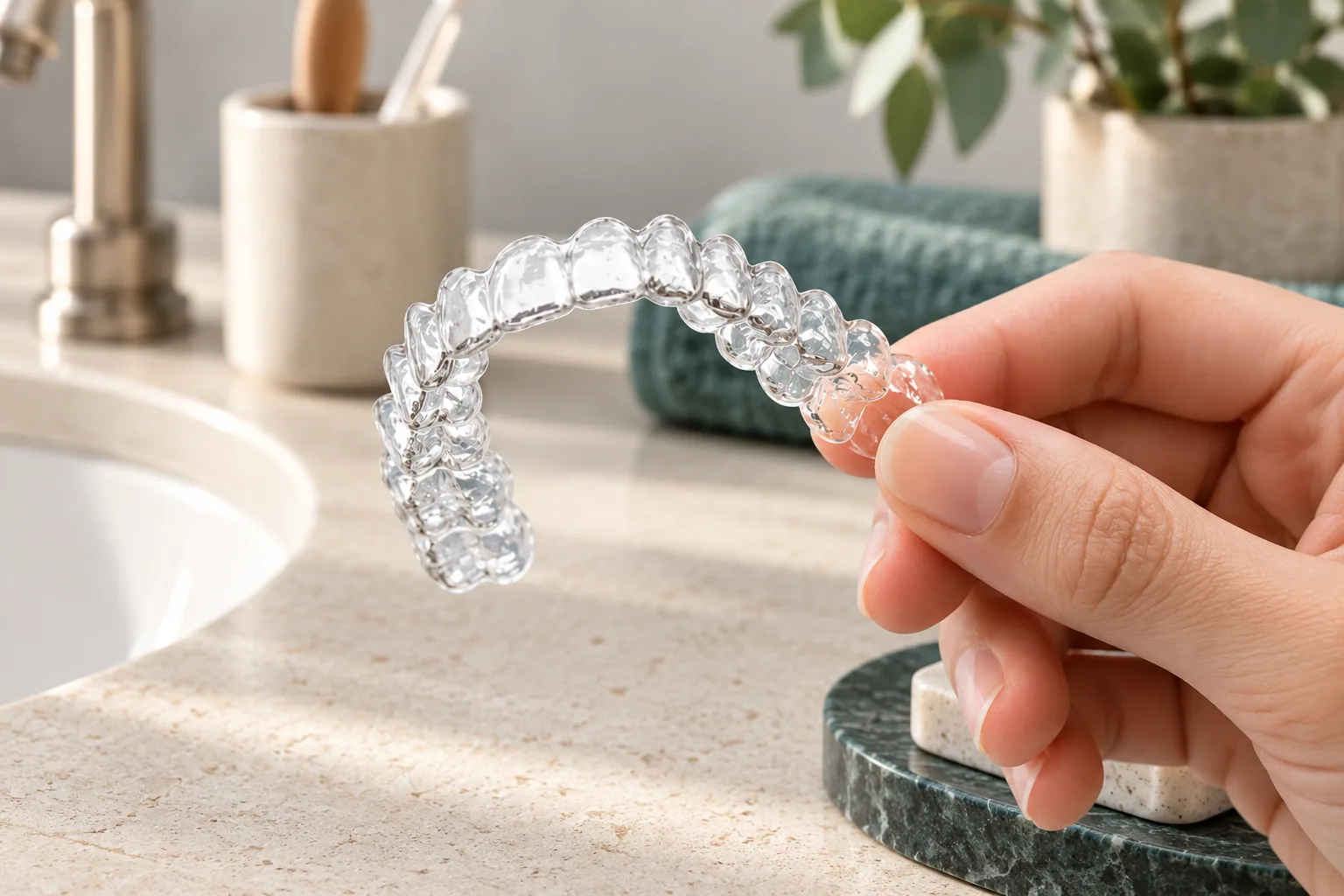
It's 7 a.m. Your alarm just went off. You stumble into the kitchen, start brewing coffee, and then it hits you — your retainer is still in. Can you just take a sip? Does tea count as safer? What actually happens if hot coffee touches your retainer?
If you've ever hesitated at the coffee pot with a retainer in your mouth, you're not alone. It's one of the most common questions orthodontists hear, and the answer matters more than most people realize. A single careless habit can stain, warp, or permanently damage a retainer — turning an invisible appliance into a visible problem and potentially undoing months of orthodontic work.
In this guide, we'll cover the real science behind what coffee and tea do to retainers, how different retainer types react differently, the temperature thresholds that cause warping, and the exact routine you can follow to enjoy your favorite drinks without putting your smile at risk.
The reasons boil down to three core risks: heat damage (warping the retainer), staining (tannins and chromogens that discolor the plastic), and bacterial buildup (beverage residue trapped between retainer and teeth). We'll break each of these down in detail.
The Exception — Permanent Retainers: If you have a bonded (permanent) retainer cemented to the back of your teeth, you can drink coffee and tea since you can't remove it. However, you should rinse with water immediately afterward and be diligent about cleaning around the wire to prevent plaque buildup and staining of the bonding material.
What Actually Happens When Coffee or Tea Hits Your Retainer
Understanding the risks isn't about scare tactics — it's about making informed choices. Here's a breakdown of every way coffee and tea interact with your retainer, backed by dental research.
Staining and Discoloration
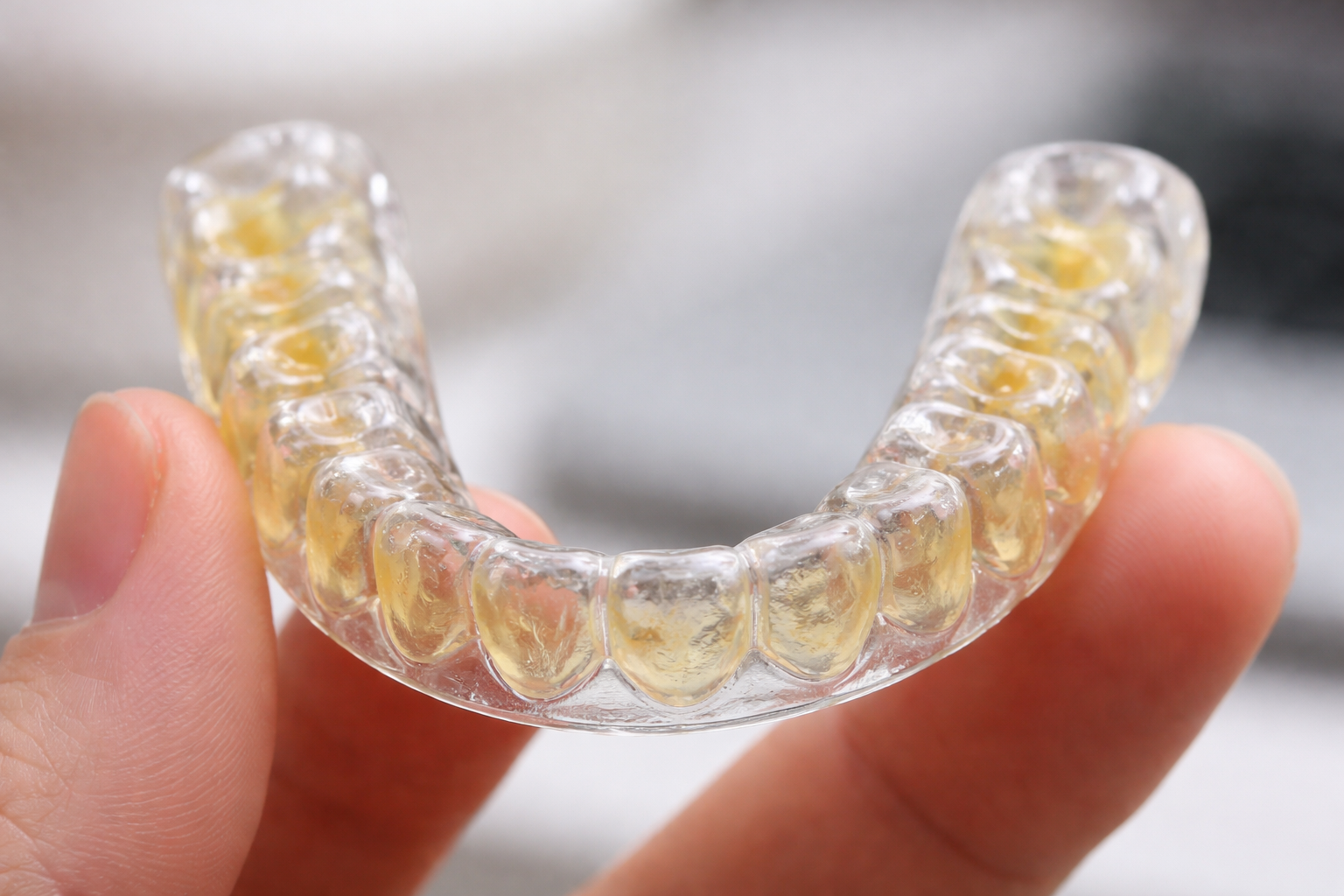
Both coffee and tea contain tannins and chromogens — pigmented organic compounds that bind to surfaces and cause discoloration. These molecules have a particular affinity for thermoplastic materials like the PETG and copolyester used in clear retainers.
When you drink coffee or tea with a retainer in, these pigments seep into the retainer material. Over time, a once-invisible retainer develops a visible yellow or brown tint that's extremely difficult to reverse. The staining is cumulative — each exposure adds another layer.
Heat Warping
Clear retainers are made from thermoplastic polymers — materials that soften when heated. A freshly brewed cup of coffee is typically served at 160–185°F (71–85°C), which falls squarely within the danger zone for retainer materials. PETG-based retainers begin to deform at temperatures as low as 149°F (65°C). Once warped, a retainer cannot be reshaped at home — it must be replaced.
Even minor distortion from heat exposure can compromise a retainer's fit. If the retainer no longer conforms precisely to your teeth, it stops providing the gentle pressure needed to hold them in alignment. Teeth can begin shifting within 1–2 weeks of wearing a poorly fitting retainer — or not wearing one at all.
Bacterial Buildup and Cavity Risk
A tray-style retainer creates a sealed environment over your teeth. When coffee or tea enters that space, residue gets trapped between the retainer and tooth enamel with reduced saliva flow to wash it away. Saliva is your mouth's natural defense — it neutralizes acids, remineralizes enamel, and flushes bacteria. A retainer blocks that protection.
Coffee is naturally acidic, with a pH of approximately 4.85–5.10. When that acid sits against your teeth under a retainer, it creates the ideal conditions for enamel erosion and cavities. Research from the National Institutes of Health confirms that bacterial biofilm colonizes retainer surfaces within 1–3 days of use — and trapped beverage residue accelerates that process dramatically.
Material Degradation
Beyond immediate staining and warping, repeated exposure to acidic beverages causes gradual chemical degradation of retainer plastics. This manifests as increased porosity (which traps even more stains), reduced flexibility, and eventual brittleness. The retainer that started as a perfectly clear, precisely fitted appliance slowly becomes cloudy, stiff, and fragile.
Your morning coffee is literally hotter than the temperature at which your retainer starts to warp. Even if staining weren't a concern, the heat alone is reason enough to remove your retainer before drinking coffee or tea. A warped retainer can't hold your teeth in position, and replacing one costs $100–$300+ — far more than the few seconds it takes to pop it out.
Tea vs. Coffee: Which Is Worse for Retainers?
Most people assume coffee is the bigger offender. Surprisingly, tea — especially black tea — stains retainers worse than coffee. The reason comes down to tannin concentration.
Tannins are polyphenolic compounds that bind to surfaces and create a layer of color. Black tea contains significantly higher levels of tannins than coffee, which is why it leaves deeper, more stubborn brownish stains. Coffee, while still highly staining, tends to cause more of a yellowish discoloration.
Interesting Fact: A study published in the International Journal of Dental Hygiene found that casein — the main protein in milk — binds to tannins and significantly reduces staining potential. Adding milk to your coffee or tea doesn't eliminate the risk, but it does measurably reduce the amount of pigment available to stain surfaces. If you're going to indulge, adding milk is a simple hedge.
What About Sugar, Cream, and Flavored Drinks?
Staining and heat aren't the only concerns. What you add to your coffee or tea changes the equation significantly — especially when a retainer is trapping those additives against your teeth.
Sugar: The Hidden Danger
Sugar is where the damage escalates. Oral bacteria — particularly Streptococcus mutans — feed on sugar and produce acids that erode tooth enamel. Under normal circumstances, saliva washes sugar away and neutralizes the acid. But when a retainer covers your teeth, it acts as a reservoir, holding sugary liquid in prolonged contact with enamel while blocking saliva's protective action.
Flavored lattes, sweetened iced teas, coffee drinks with syrups, and creamers with added sugar are the worst offenders. The combination of sugar, acid, and heat trapped under a retainer creates what dentists describe as an "ideal environment for tooth decay."
A single grande vanilla latte contains approximately 35 grams of sugar. If consumed while wearing a retainer, that sugar gets sealed against your teeth for as long as the retainer stays in — potentially hours. Over time, this dramatically increases your risk of cavities, white spot lesions, and enamel erosion.
Milk and Cream: A Mixed Bag
Plain milk or cream offers one benefit: casein protein binds to tannins and reduces staining. However, milk also contains lactose (a sugar) and fats that contribute to bacterial growth when trapped under a retainer. Flavored creamers are worse, since they typically contain added sugars and artificial colorings.
The Bottom Line on Additives
If you're going to drink coffee or tea (with your retainer removed, of course), black and unsweetened is the least harmful option for your dental health. Adding plain milk can reduce staining but adds some sugar. Flavored, sweetened drinks carry the highest risk across every metric.
The Safe Way to Drink Coffee and Tea with a Retainer
Giving up coffee or tea entirely isn't realistic for most people — and it's not necessary. The key is building a simple routine that protects your retainer and your teeth without disrupting your day.
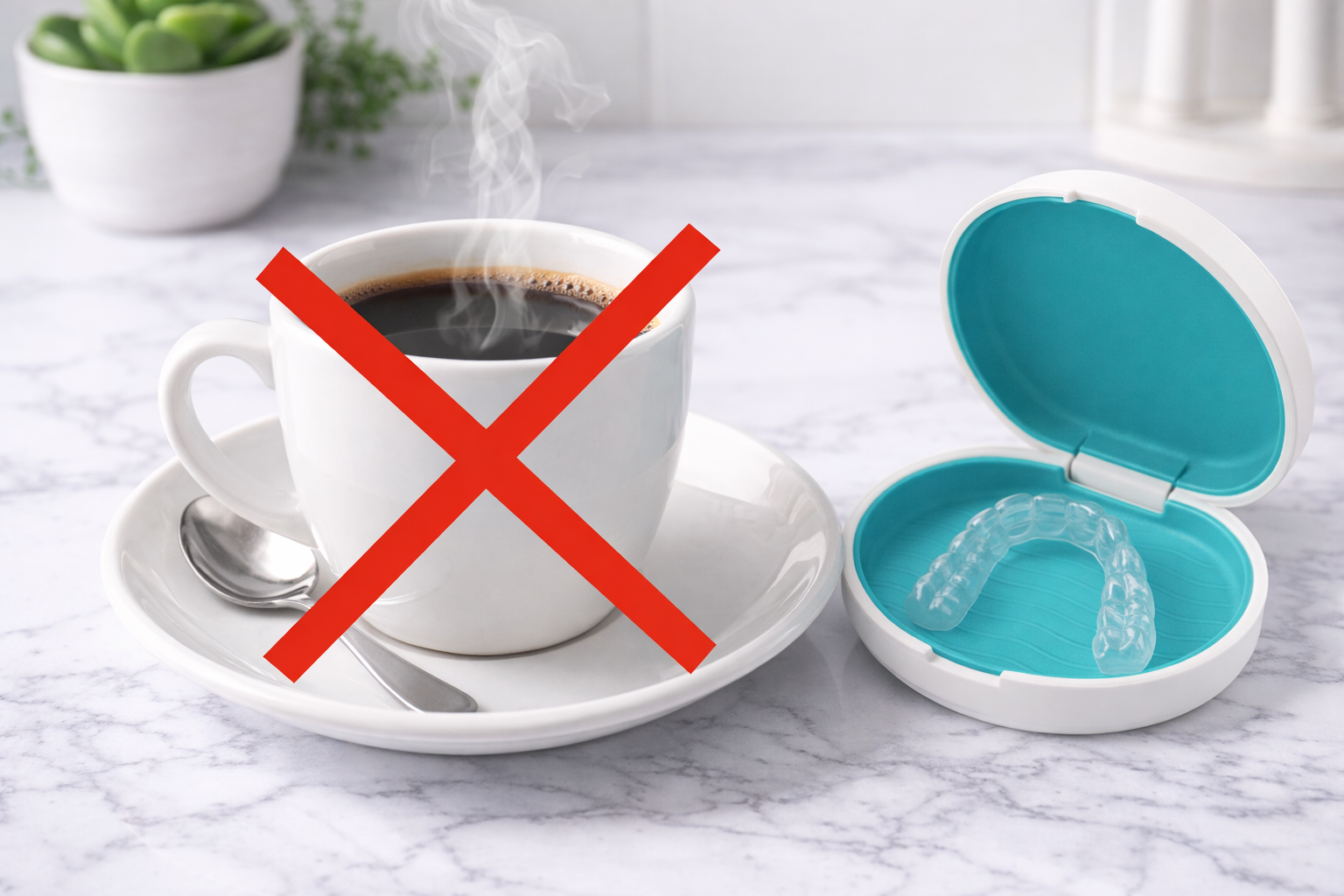
This is the single most important step. Before you take your first sip of coffee or tea, take out your removable retainer and place it in a clean case. This eliminates all heat, staining, and bacterial-trapping risks in one action.
Switching to iced coffee, cold brew, or chilled tea eliminates the heat-warping risk entirely. Cold brew is also approximately 67% less acidic than hot-brewed coffee, offering a gentler option for your enamel. It's a smart choice when you're planning to reinsert your retainer soon after.
Even with the retainer removed, drinking through a straw reduces contact between the beverage and your teeth, minimizing staining on the tooth surfaces your retainer covers. This is especially effective with iced and cold drinks.
As soon as you finish your drink, swish plain water around your mouth for 15–30 seconds. This washes away tannins, acids, and residual sugars before they settle on your teeth. Don't skip this step — it's quick and makes a measurable difference.
Coffee and tea temporarily soften enamel due to their acidity. Brushing immediately can abrade this softened surface. Wait at least 30 minutes after drinking before brushing your teeth. The wait allows your saliva to remineralize the enamel first.
Never put your retainer back in over un-brushed teeth after coffee or tea. Brushing removes residual pigments, sugars, and acids — preventing them from being trapped against your enamel under the retainer for hours.
Most orthodontists recommend wearing retainers 20–22 hours per day. That gives you a 2–4 hour window for meals and drinks. Plan your coffee or tea during meals when your retainer is already out, rather than removing it multiple extra times. Fewer removals means more consistent retention and less risk of losing your retainer.
Superb Retainer — Built for Coffee Lovers
Even with the best routine, retainer material quality matters. The Superb Retainer is crafted from Zendura A — a premium thermoplastic engineered for superior stain resistance, clarity retention, and durability compared to standard Essix materials. Combined with a proper care routine, it stays clearer and lasts longer.
- Advanced stain-resistant material — Zendura A resists discoloration from food and beverages far better than generic PETG
- 3D-printed from your digital scan — precision fit that maintains consistent retention force
- Clinically proven durability — engineered to last longer than standard clear retainers
- 100% satisfaction guarantee — because your smile deserves confidence
Weekly Deep Cleaning
Daily brushing handles surface buildup, but deeper stains and bacterial colonies need a stronger approach once or twice a week.
Toothpaste: Contains silica abrasives that scratch retainer plastic, creating micro-grooves that trap more stains. Hot or boiling water: Causes immediate warping. Alcohol-based mouthwash: Dries out and cracks plastic over time. Bleach: Degrades material and leaves persistent chemical residue. Dishwashers: Temperatures far exceed safe thresholds.
The Complete Do & Don't Guide
Here's your at-a-glance reference for safely enjoying coffee and tea as a retainer wearer.
✓ Do This
- Remove your retainer before drinking coffee or tea
- Store it in a clean case while you drink
- Choose iced or cold brew to eliminate heat risk
- Use a straw to minimize tooth contact
- Rinse your mouth with water after finishing
- Wait 30 minutes before brushing teeth
- Brush teeth thoroughly before reinserting
- Add milk to reduce tannin staining on teeth
- Consolidate coffee/tea time with meals
- Deep clean your retainer weekly
✕ Never Do This
- Drink hot coffee or tea with your retainer in
- Sip slowly on coffee/tea for hours with retainer in
- Clean your retainer with hot water after exposure
- Use toothpaste to scrub out coffee stains
- Soak in bleach or alcohol-based mouthwash
- Ignore staining — it gets harder to reverse over time
- Leave your retainer out of its case on a counter
- Brush your teeth immediately after an acidic drink
- Use your retainer as a whitening tray with bleach gel
- Assume "just one sip" with the retainer in is harmless
Superb Retainer Pro Tip: Keep a small retainer case and a bottle of water in your bag or at your desk. This makes the remove-drink-rinse-reinsert routine effortless — even on your busiest mornings. Building the habit takes about a week; protecting your smile lasts a lifetime.
Frequently Asked Questions
Iced coffee eliminates the heat-warping risk, but the staining and acidity concerns remain. Coffee pigments (tannins and chromogens) will still bind to retainer plastic and discolor it over time, and the acidity can still promote enamel erosion when trapped under the retainer. The safest approach is to remove your retainer before drinking any coffee — hot or iced. If you forget and take a quick sip, rinse both your mouth and retainer with water immediately.
Yes. Black tea contains significantly higher levels of tannins than coffee and generally causes deeper, more stubborn staining on retainer materials. Coffee tends to leave a yellowish tint, while black tea produces brownish discoloration. Among teas, black tea stains the most, followed by oolong, green, and white/herbal (which stain the least).
Ideally, wait 30 minutes after finishing your coffee or tea. This allows saliva to neutralize acids and remineralize your enamel. During this waiting period, rinse your mouth with water. After 30 minutes, brush your teeth, then reinsert your retainer. If you're short on time, at minimum rinse thoroughly with water before reinserting.
A single exposure is unlikely to cause visible staining, but if the coffee is hot (above 149°F / 65°C), one cup can warp a clear retainer. Even if no visible damage occurs, each exposure contributes to cumulative staining and material degradation. Think of it like sun damage to skin — one day may not show, but the effects are building. It's best to remove your retainer every time, not just when you remember.
A straw reduces contact between the beverage and your front teeth, but it does not protect your retainer. Liquid still enters the oral cavity, gets trapped under the retainer tray, and exposes it to heat, acid, and staining compounds. The straw strategy is useful with the retainer removed to protect your teeth from staining, but it's not a substitute for taking your retainer out.
The safest approach has three components: (1) Always remove your retainer before drinking coffee or tea, (2) rinse your mouth and brush your teeth before reinserting, and (3) invest in a retainer made from stain-resistant material. Premium retainers — like those made with Zendura A — are engineered to resist discoloration better than standard plastics, giving you more protection against the inevitable minor exposures that happen in daily life.
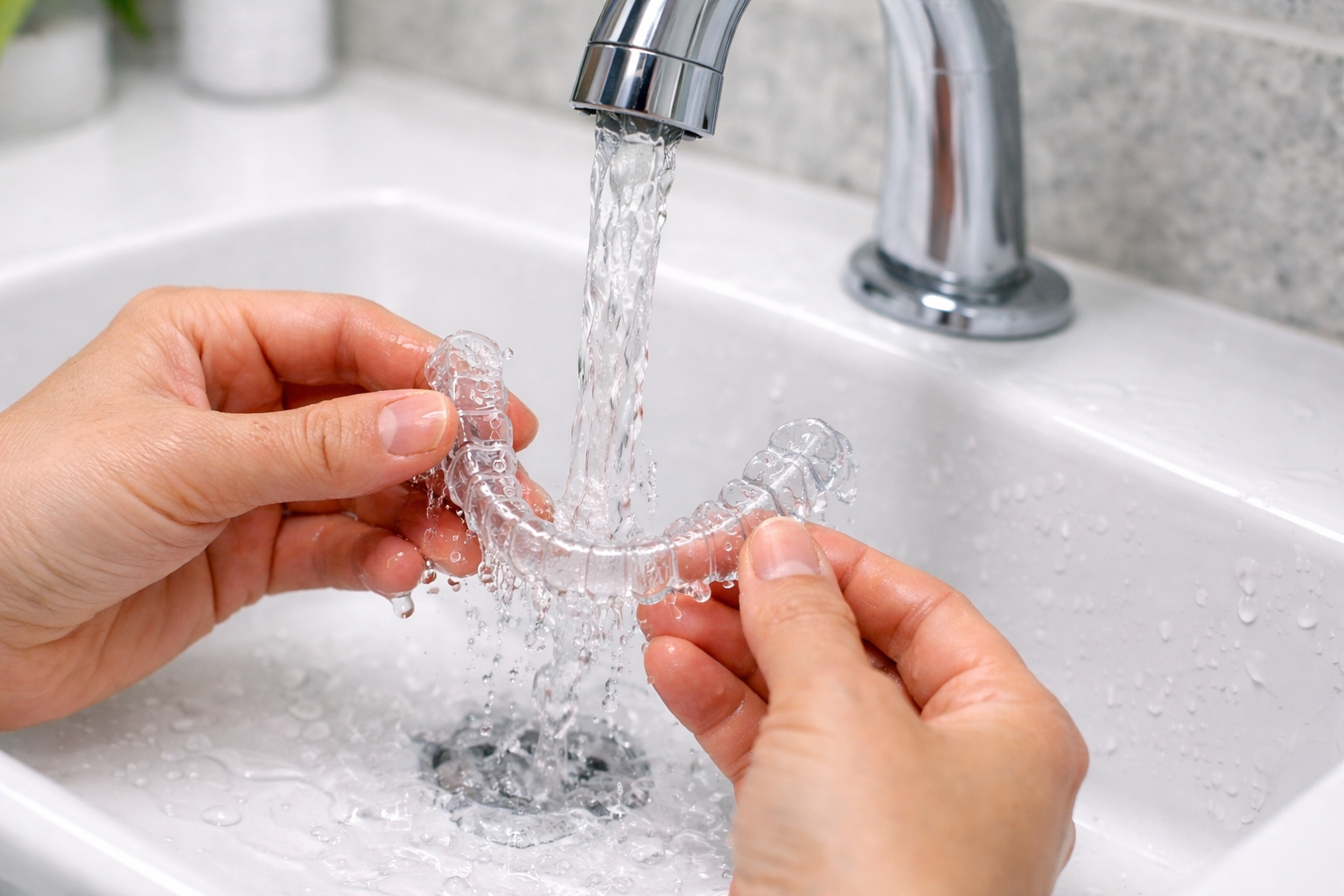
Don't panic. Remove your retainer immediately and rinse it under cool water (never hot). Gently brush the retainer with mild soap and a soft toothbrush to remove residue. Rinse your mouth thoroughly with water, wait 30 minutes, then brush your teeth before reinserting. If you notice any warping, bending, or change in fit, contact your orthodontist before continuing to wear it — a warped retainer can do more harm than good.
Clear retainer replacement typically costs $100–$300 per retainer, depending on your provider and the material used. Some dental insurance plans offer partial coverage. Compare that to the cost of orthodontic retreatment if teeth shift due to a warped retainer ($3,000–$8,000), and the math is clear: a few seconds of prevention is the best investment you can make.