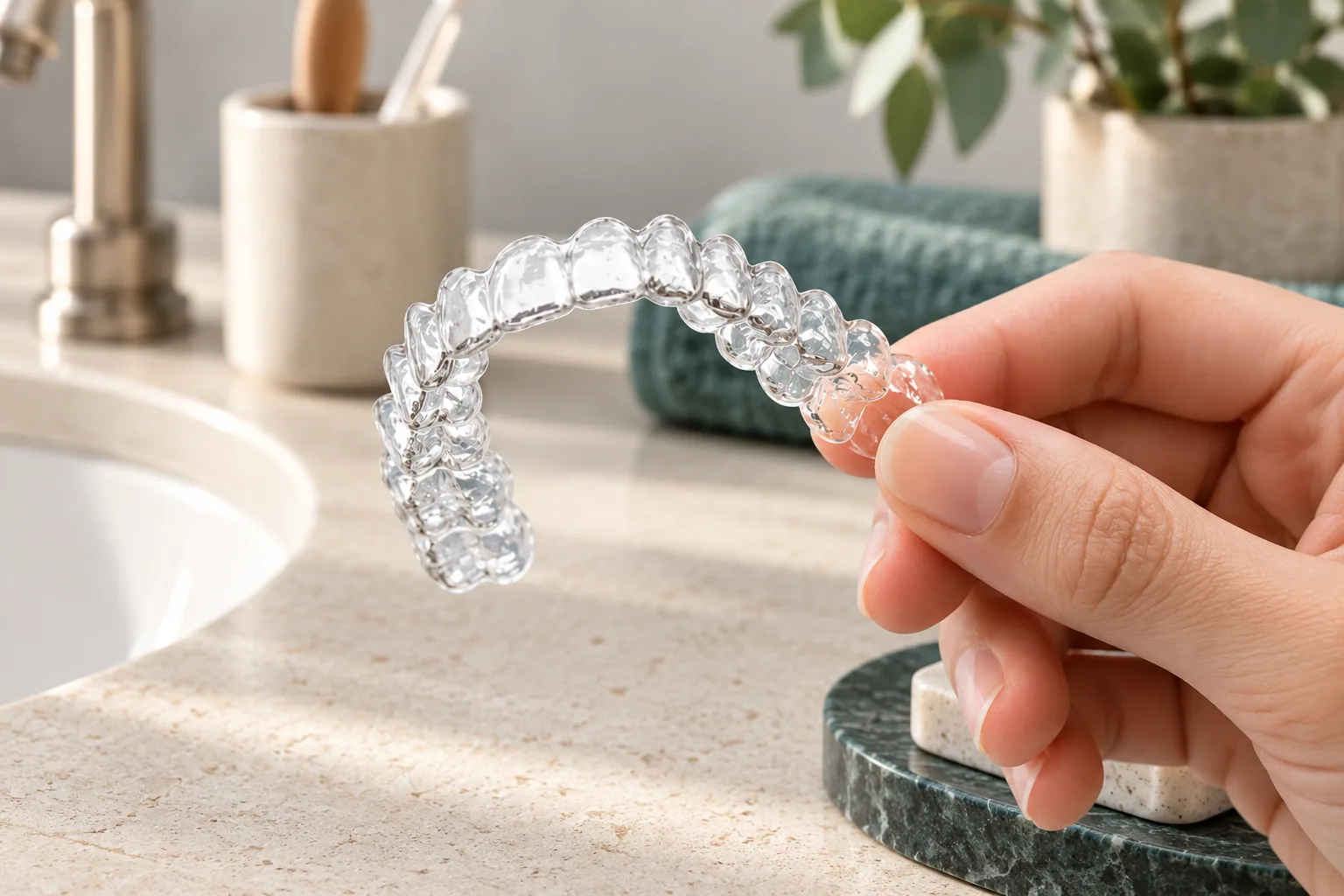
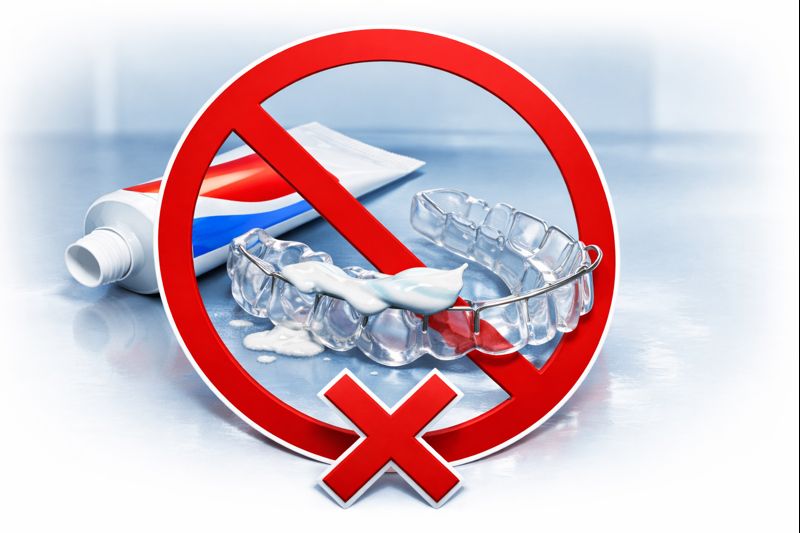
Quick Answer: No — you should not use toothpaste to clean your retainer. The American Association of Orthodontists (AAO) explicitly advises against it. Toothpaste contains abrasive particles designed to scrub hard tooth enamel, but retainer plastics are significantly softer. Those same abrasives create micro-scratches on the retainer surface that trap bacteria, cause cloudiness, and accelerate material breakdown.
Instead, dental professionals recommend using an ultrasonic cleaner paired with a retainer cleaning tablet for the deepest, safest clean — or at minimum, a soft-bristle brush and mild dish soap daily. Avoid medium- or hard-bristled brushes, which scratch retainer surfaces just like toothpaste does. Products like the Superb Retainer — made from stain-resistant Zendura A material — stay clearer longer, but still benefit from proper daily care.
If cleaning leaves a persistent white area, our white buildup guide explains what to report to your provider. Do not scrape or alter the appliance to remove a mark.
It seems like the most logical thing in the world: you brush your teeth with toothpaste, so why not brush your retainer with it too? This is one of the most common retainer care mistakes — and one that orthodontists wish they could stamp out for good.
In this guide, we break down exactly what happens when toothpaste meets your retainer, what the science says about bacterial buildup, and the proven cleaning methods that actually work. Whether you wear a clear Essix-type retainer, a Hawley, or a Superb Retainer, this article will give you a complete, evidence-based cleaning routine.
- Why You Should Not Use Toothpaste on Your Retainer
- The Science: What Toothpaste Actually Does to Retainer Materials
- How Cleaning Differs by Retainer Type
- The Best Ways to Clean Your Retainer (Dentist-Approved)
- The Perfect Daily & Weekly Cleaning Routine
- 10 Common Retainer Cleaning Mistakes to Avoid
- Retainer Cleaning Methods Compared
- Why the Superb Retainer Stays Cleaner Longer
Why You Should Not Use Toothpaste on Your Retainer
Toothpaste was engineered for one job: removing plaque from tooth enamel. Tooth enamel is the hardest substance in the human body — harder than bone, harder than steel. Retainer materials, whether they are thermoplastic (like the Zendura A in a Superb Retainer), PETG, polypropylene, or acrylic, are dramatically softer.
Here is why that difference matters:
- 1 Toothpaste Is Abrasive by Design Most toothpastes contain abrasive agents such as hydrated silica, calcium carbonate, or aluminum hydroxide. These particles mechanically scrub plaque off enamel. On a retainer's softer surface, they act like sandpaper — gouging hundreds of invisible micro-scratches with every brush stroke.
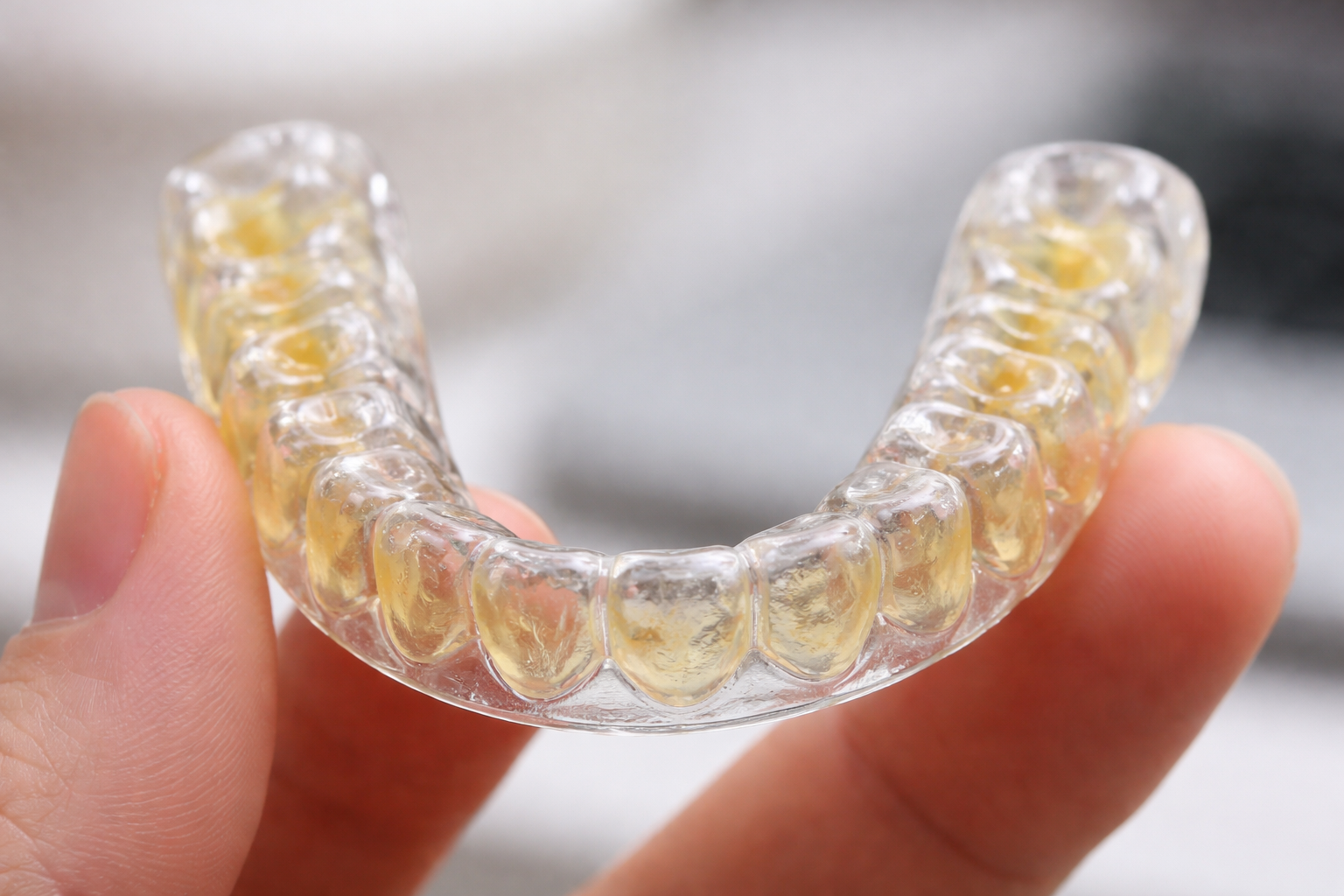
- 2 Micro-Scratches Trap Bacteria Those micro-scratches are invisible to the naked eye but clearly present under magnification. They create tiny crevices where bacteria, fungi, and food particles embed themselves — and where no amount of rinsing can reach. A 2023 study in Clinical Oral Investigations confirmed that surface roughness directly correlates with microbial adherence: rougher retainers harbor more Streptococcus and yeast colonies.
- 3 Scratches Cause Cloudiness and Yellowing If your clear retainer has gone from crystal-clear to cloudy or yellow, toothpaste may be the culprit. The micro-scratches scatter light, creating a foggy appearance that cannot be reversed. Premium materials like the Zendura A in the Superb Retainer are more stain-resistant than standard thermoplastics, but even they are not immune to abrasive damage.
- 4 Whitening Toothpaste Is Even Worse Whitening formulas contain extra-aggressive abrasives and chemical bleaching agents. These accelerate scratching, degrade the plastic material itself, and can cause irritation when the retainer is placed back in your mouth. The AAO specifically warns against using whitening toothpaste on retainers.
- 5 A Rough Toothbrush Doubles the Damage Even without toothpaste, using a medium- or hard-bristled toothbrush on your retainer creates the same type of micro-scratches. The stiff bristles physically gouge into the softer retainer plastic, roughening the surface and opening up grooves where bacteria colonize. When you combine a rough brush with abrasive toothpaste, the damage compounds rapidly. Always use a soft- or extra-soft-bristled brush — and dedicate a separate one solely for your retainer.
The Science: What Toothpaste Actually Does to Retainer Materials
This is not just anecdotal advice from your orthodontist. Peer-reviewed research paints a clear picture of why toothpaste and retainers do not mix.
Bacterial Biofilm Builds Fast
A 2022 study from Rutgers School of Dental Medicine, published in Dentistry Journal, tracked bacterial colonization on clear orthodontic retainers over 14 days. The findings were alarming:
- Within 48 hours, retainers developed measurable bacterial biofilm
- By 14 days, the biofilm contained bacteria associated with dental caries, gingivitis, and periodontitis — including Fusobacterium, Tannerella, Solobacterium, and Selenomonas
- The biofilm became increasingly pathogenic (more harmful) over time
Now add micro-scratches from toothpaste into the equation: every groove and crevice becomes a protected microenvironment for these harmful bacteria, making your retainer harder to clean with each passing day.
Surface Roughness Drives Bacterial Colonization
A 2023 randomized controlled trial published in Clinical Oral Investigations studied how surface roughness on vacuum-formed retainers affects microbial colonization. The key finding: rougher retainer surfaces harbor significantly more Streptococcus and Candida (yeast) colonies. This is precisely the damage pattern that toothpaste abrasion causes.
Once Biofilm Sets In, It Is Hard to Remove
A separate 2022 study (PMC) evaluated biofilm formation on different clear retainer materials and found that once biofilms establish themselves on retainer surfaces, they become highly resistant to antimicrobial agents and standard cleaning methods. This means prevention — keeping the surface smooth and scratch-free — is far more effective than trying to remove established biofilm after the damage is done.
What About "Non-Abrasive" Toothpaste?
A small number of sources, including WebMD, note that a mild, non-abrasive, non-whitening toothpaste is acceptable as a secondary option. However, most orthodontists treat this as a last resort, not a recommendation. The challenge is that most consumers cannot easily identify which toothpastes qualify as "non-abrasive" — the relative dentin abrasivity (RDA) value is rarely printed on the box. When in doubt, mild dish soap is always the safer choice.
How Cleaning Differs by Retainer Type
Not all retainers are created equal, and the cleaning approach varies depending on what type you wear. Here is a breakdown:
The bottom line: Unless you have a bonded (permanent) retainer — where you are brushing your actual teeth around the wire — toothpaste should never touch your retainer.
The Best Ways to Clean Your Retainer (Dentist-Approved)
The good news: cleaning a retainer properly is simple, inexpensive, and takes under two minutes. Here are the methods recommended by dental professionals, ranked by effectiveness:
For the deepest, safest clean with zero risk of scratching, pair an ultrasonic cleaner for daily use with retainer cleaning tablets for weekly deep cleaning. This combination is the gold standard for protecting premium retainers like the Superb Retainer.
Ultrasonic Cleaner + Cleaning Tablet (Best Overall — Top Recommended)
If you want the single most effective and safest retainer cleaning method, this is it. An ultrasonic cleaner uses high-frequency sound waves to create microscopic cavitation bubbles that dislodge bacteria, plaque, and debris from every surface and crevice — without any brushing, scrubbing, or abrasion whatsoever. No brush ever touches the retainer, so there is zero risk of surface scratching.
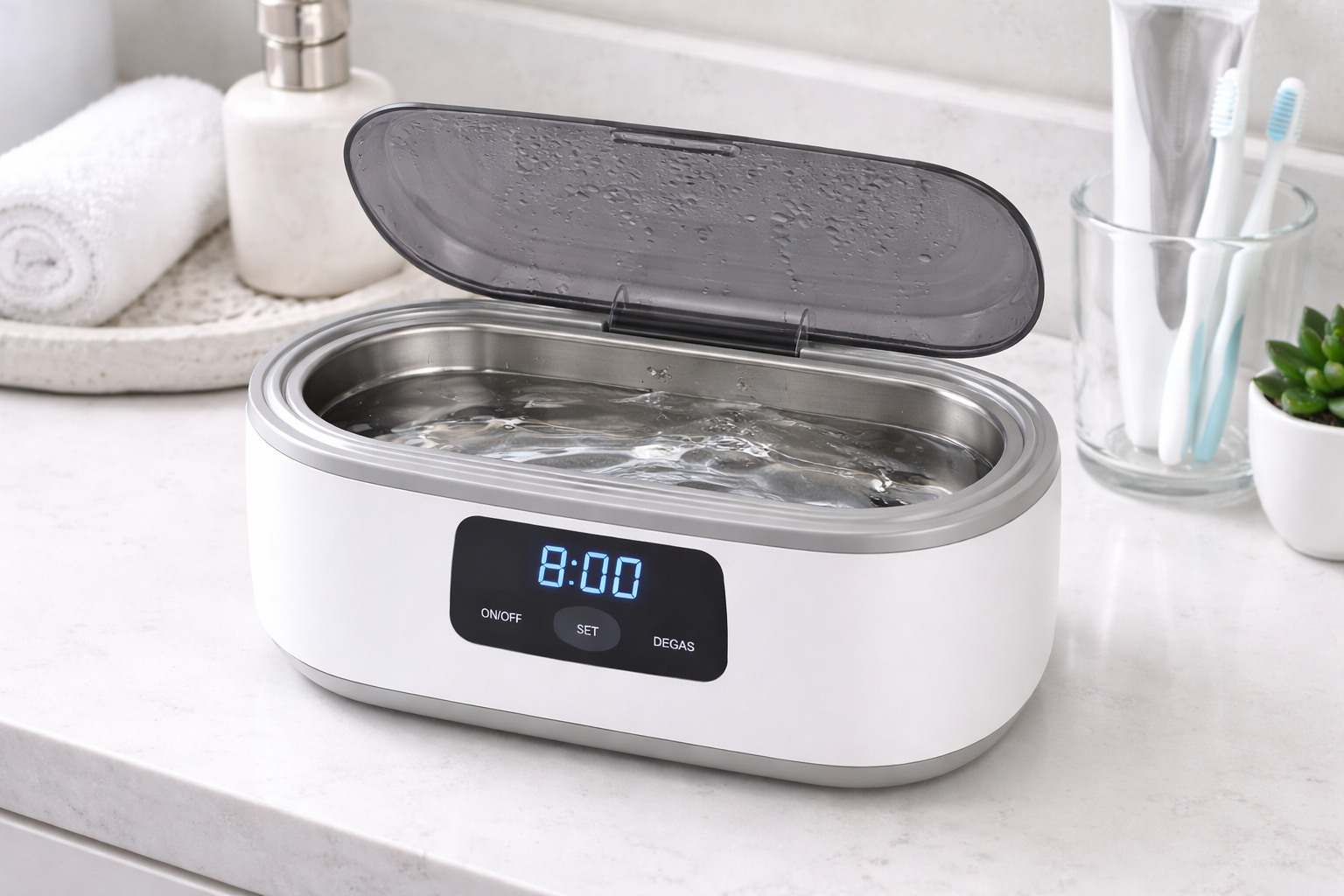
For the best results, drop a retainer cleaning tablet into the ultrasonic cleaner's water reservoir before running the cycle. The tablet's antimicrobial formula dissolves buildup and kills bacteria while the ultrasonic waves physically dislodge particles from hard-to-reach areas. Together, they deliver a level of clean that manual brushing simply cannot match. This is the ideal daily or every-other-day cleaning method for anyone who wants to maximize the lifespan and clarity of their retainer — especially a premium retainer like the Superb Retainer.
Retainer Cleaning Tablets Alone (Best Weekly Deep Clean)
If you do not have an ultrasonic cleaner, retainer cleaning tablets are the next best option and should be a non-negotiable part of your weekly routine. Products like Retainer Brite, Polident, or similar persulfate-free tablets dissolve buildup that daily brushing misses. Drop a tablet into lukewarm water, soak your retainer for 10–20 minutes, then rinse well. Tablets are specifically formulated to clean retainer materials without scratching, staining, or degrading them — unlike toothpaste, mouthwash, or bleach.
Mild Dish Soap + Soft-Bristle Brush (Daily Maintenance)
This is the AAO-recommended daily method and an excellent option when you do not have an ultrasonic cleaner available. Use a clear, fragrance-free liquid dish soap (not hand soap with moisturizers) and a soft-bristled toothbrush dedicated to retainer cleaning. Gently brush all surfaces, rinse thoroughly under lukewarm water, and you are done.
White Vinegar Soak (Weekly Disinfectant)
Mix equal parts white vinegar and lukewarm water. Soak your retainer for 15–30 minutes, then brush gently with a soft-bristled brush and rinse. Vinegar is a natural disinfectant and deodorizer. It may leave a temporary taste, but this dissipates after a thorough rinse.
Baking Soda Paste (As-Needed Stain Removal)
Mix equal parts baking soda and water to form a paste. Gently scrub with a soft brush, then rinse thoroughly. Baking soda is mildly abrasive — far less so than toothpaste — and effective at removing surface stains and odors. Avoid prolonged soaking for Hawley retainers, as baking soda can affect metal components over time.
Hydrogen Peroxide Soak (Occasional Deep Clean)
Mix equal parts 3% hydrogen peroxide and water. Soak for 15–20 minutes, then rinse well. Effective at killing bacteria and brightening discolored retainers. Note: a JADA study found that hydrogen peroxide can slightly reduce retainer flexibility over time, so use this method sparingly — once a month at most.
- Use an ultrasonic cleaner + cleaning tablet (best method)
- Clean daily with mild dish soap + soft brush
- Rinse immediately after every removal
- Deep clean weekly with retainer tablets
- Use lukewarm water only
- Store in a ventilated case
- Use a dedicated soft-bristled brush
- Bring retainer to dental checkups
Never Do This
- Use toothpaste (especially whitening)
- Scrub with a medium or hard-bristled brush
- Use hot or boiling water
- Soak in alcohol-based mouthwash
- Put in the dishwasher
- Use bleach or household cleaners
- Wrap in a napkin (top cause of loss)
The Perfect Daily & Weekly Cleaning Routine
Here is the exact routine that orthodontists recommend for keeping your retainer fresh, clear, and bacteria-free:
Every Time You Remove Your Retainer
Hold your retainer under lukewarm running water to wash away saliva and loose debris before it dries. Dried-on residue is dramatically harder to remove later.
Apply a small drop of clear, fragrance-free dish soap to a dedicated soft-bristle brush. Gently brush all surfaces — inside, outside, and along the edges.
Rinse under lukewarm water until all soap residue is gone. Any residual soap can cause an unpleasant taste and minor irritation.
Allow the retainer to air-dry on a clean surface or gently pat dry before storing. A damp retainer stored in a closed case can promote bacterial growth.
Once Per Week: Deep Clean
Choose one of these methods weekly to address buildup that daily brushing misses:
Looking for a Retainer That Stays Cleaner, Longer?
The Superb Retainer is made from Zendura A — a stain-resistant, optically clear material that requires nothing more than gentle daily care. 3D-printed from a digital scan for a precision fit.
100% satisfaction guarantee • Custom-fitted • Fast turnaround
10 Common Retainer Cleaning Mistakes to Avoid
Even well-intentioned retainer owners make these mistakes. Each one can shorten your retainer's life, promote bacterial buildup, or compromise your oral health:
- 1 Using Regular Toothpaste The most common mistake. Abrasive particles scratch the retainer surface, creating bacterial havens and cloudiness. Use mild dish soap instead.
- 2 Using Whitening Toothpaste Even more abrasive than regular toothpaste, with chemical bleaching agents that degrade plastic. Your retainer will cloud and yellow faster, not slower.
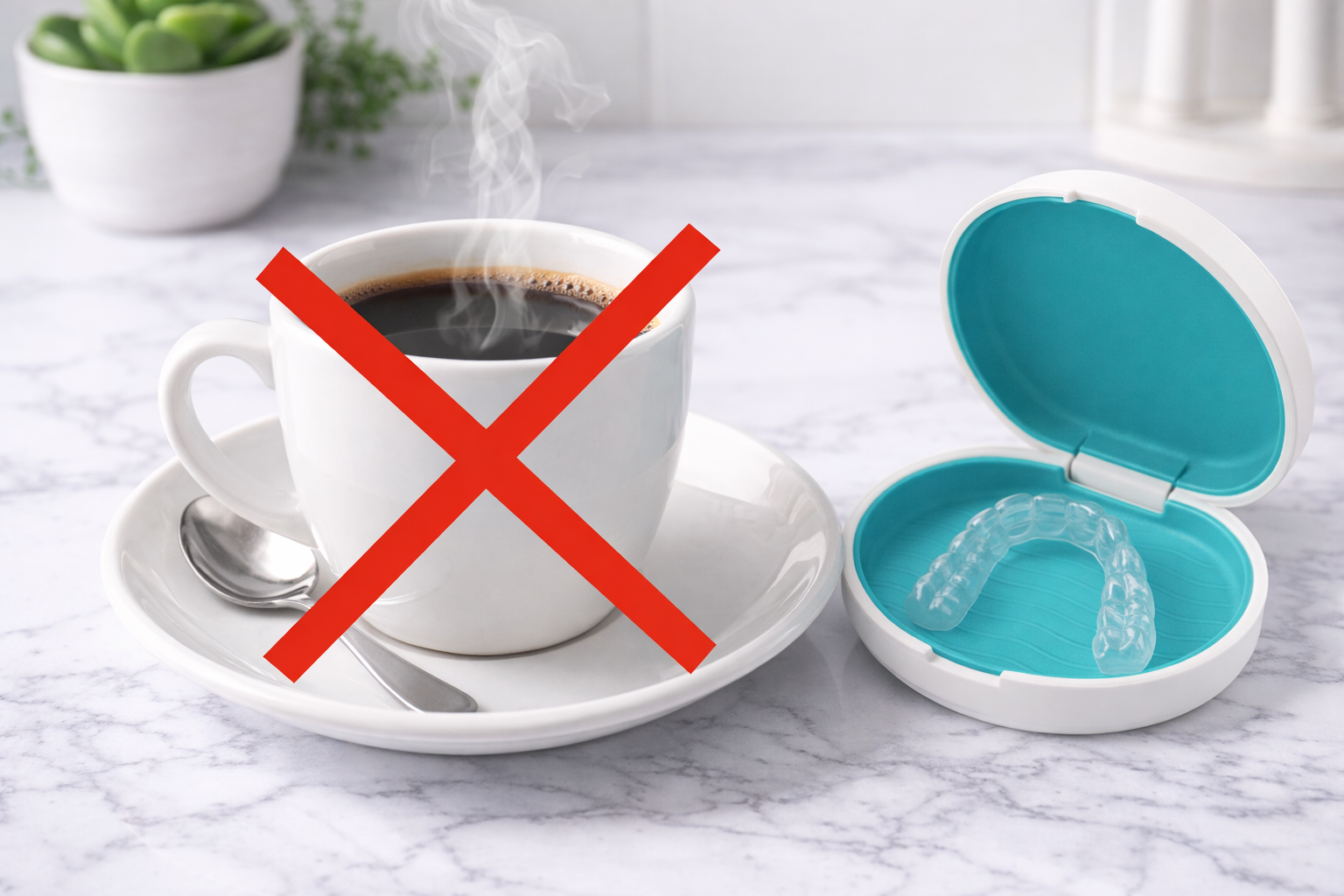
- 3 Rinsing or Soaking in Hot Water Clear retainers are thermoplastic — they warp and deform with heat. Even water that is "comfortably warm" for your hands can be too hot. Always use lukewarm or cool water.
- 4 Putting the Retainer in the Dishwasher The extreme heat and harsh detergent will permanently warp and damage any removable retainer. Never use a dishwasher, sterilizer, or microwave.
- 5 Soaking in Alcohol-Based Mouthwash Alcohol dries out and weakens thermoplastic materials. Colored mouthwashes also stain the retainer. If you want to use a mouthwash, choose an alcohol-free formula and limit soaking time to a few minutes.
- 6 Using Bleach or Household Cleaners Bleach is too harsh for retainer materials, leaves toxic residue, and can cause chemical burns in the mouth. Household cleaners are equally unsafe.
- 7 Scrubbing with a Medium- or Hard-Bristled Brush This mistake is just as damaging as toothpaste — and often overlooked. A rough toothbrush physically gouges micro-scratches into the retainer surface with every stroke, creating the same bacterial-harboring grooves that abrasive toothpaste produces. The stiffer the bristles, the deeper the scratches. Always use a soft- or extra-soft-bristled brush, and never reuse a worn-out brush whose bristles have splayed and hardened. Better yet, skip manual brushing entirely and use an ultrasonic cleaner for a zero-abrasion clean.
- 8 Skipping Daily Cleaning Saliva, plaque, and food particles dry and calcify on the retainer within hours. A 2022 Rutgers study showed retainer biofilm becomes increasingly pathogenic over just 14 days. Daily cleaning is non-negotiable.
- 9 Not Rinsing Immediately After Removal The easiest step to skip — and one of the most important. A quick rinse under running water removes the majority of fresh saliva and debris before it dries and hardens.
- 10 Storing Without a Case Retainers left on countertops, wrapped in napkins, or tossed in bags collect environmental bacteria, get thrown away accidentally, and dry out (making them more brittle). Always use a protective case. The Superb Retainer arrives with premium packaging designed for proper storage.
Retainer Cleaning Methods Compared
With so many options and conflicting advice online, here is a clear comparison of every popular retainer cleaning method — what works, what does not, and what could damage your retainer:
Why the Superb Retainer Stays Cleaner Longer
The material your retainer is made from has a direct impact on how easily it stains, how quickly bacteria colonize its surface, and how long it stays optically clear. This is one of the key advantages of the Superb Retainer by SuperbDent.
Superb Retainer — Built for Easy, Long-Lasting Care
- Zendura A Material — Exceptional optical clarity and high stain resistance. Published clinical studies show Zendura A maintains its appearance and structural integrity longer than standard PETG and polypropylene retainers, even under simulated grinding conditions.
- Smoother Surface = Less Bacterial Adhesion — 3D-printed from a digital scan for a precision fit with a smoother surface finish than traditionally thermoformed retainers. Research shows smoother surfaces harbor significantly fewer bacteria.
- Low-Maintenance by Design — With superior stain resistance built into the material, you do not need harsh chemicals or aggressive cleaning methods. Daily gentle care with dish soap is all the Superb Retainer needs.
- Premium Packaging + Care Instructions — Every Superb Retainer arrives with detailed patient care instructions so you know exactly how to clean and store it from day one. No guesswork, no toothpaste mistakes.
- Customizable Thickness — Available in standard or thicker options for patients who grind. A thicker retainer resists wear without requiring more aggressive cleaning.
- 100% Satisfaction Guarantee — SuperbDent stands behind every retainer. If any issues arise, they make it right.
How Retainer Materials Affect Staining and Bacterial Buildup
The takeaway: proper cleaning matters for every retainer, but choosing a premium material like Zendura A gives you a head start. A Superb Retainer cleaned with nothing more than dish soap and water will stay clearer longer than a generic Essix retainer cleaned with the most expensive tablets on the market.
Every Superb Retainer ships with premium packaging and care instructions — no toothpaste needed.
Upgrade to a Retainer That is Easy to Keep Clean
Made with stain-resistant Zendura A. 3D-printed from a digital scan. Backed by a 100% satisfaction guarantee. The Superb Retainer is the cleanest, clearest, longest-lasting retainer you can get.
Ask your dentist about Superb Retainer or visit superbdent.com to learn more
Frequently Asked Questions
Yes. Toothpaste contains abrasive particles (hydrated silica, calcium carbonate, etc.) designed for hard tooth enamel. On softer retainer plastic, these abrasives create micro-scratches that trap bacteria, cause cloudiness, and weaken the material over time. The AAO recommends using mild dish soap instead. Premium retainers like the Superb Retainer, made from Zendura A, are more resistant to damage than generic plastics, but even they should never be cleaned with toothpaste.
The best method is an ultrasonic cleaner combined with a retainer cleaning tablet — this delivers the deepest clean with zero risk of scratching. If you do not have an ultrasonic cleaner, the AAO-recommended alternative is to brush your retainer with a dedicated soft-bristled toothbrush and clear, fragrance-free liquid dish soap every time you remove it. Never use a medium- or hard-bristled brush, as rough bristles scratch retainer plastic just like abrasive toothpaste does. Rinse under lukewarm water before and after. Supplement with a weekly deep clean using retainer cleaning tablets, a baking soda paste, or a white vinegar soak.
Not recommended — especially alcohol-based mouthwash. Alcohol dries out and weakens thermoplastic retainer materials, making them more brittle and prone to cracking. Colored mouthwashes (blue, green, purple) can also stain clear retainers. If you want to use a mouthwash, choose an alcohol-free, clear formula and limit soaking to no more than a few minutes. Better alternatives include retainer cleaning tablets or a diluted white vinegar soak.
For mild yellowing, try a baking soda paste (equal parts baking soda and water) applied with a soft brush, or soak in retainer cleaning tablets for 15–20 minutes. For stubborn stains, a brief hydrogen peroxide soak (equal parts 3% peroxide and water for 15–20 minutes) can help brighten the retainer. However, deep yellowing often indicates material degradation that cannot be reversed — it may be time for a replacement. Retainers made from stain-resistant materials like the Zendura A in the Superb Retainer resist yellowing significantly longer than standard thermoplastics.
A persistent odor that does not go away after thorough cleaning is a sign that bacteria have penetrated the retainer material itself — particularly in micro-scratches and surface degradation caused by abrasive cleaning (like toothpaste). Once bacteria are embedded in the plastic, surface cleaning cannot reach them. A white vinegar soak or retainer cleaning tablet may help temporarily, but a retainer with a persistent odor should typically be replaced. To prevent this in the future, avoid toothpaste, clean daily with dish soap, and choose a stain-resistant retainer material.
Yes — with care. Baking soda is mildly abrasive, far less so than toothpaste, and is effective at removing surface stains and odors. Mix equal parts baking soda and water to form a paste, apply with a soft brush, scrub gently, and rinse thoroughly. Do not use baking soda on Hawley retainers for prolonged soaking, as it can affect metal components. For daily cleaning, mild dish soap remains the safer and gentler choice.
Yes — and it is our top recommendation. Ultrasonic cleaners are the safest and most effective retainer cleaning method available. They use high-frequency sound waves to create microscopic cavitation bubbles that dislodge bacteria, plaque, and debris from all surfaces and hard-to-reach crevices — without any physical abrasion whatsoever. For the best results, drop a retainer cleaning tablet into the ultrasonic cleaner's water before running the cycle. This combination delivers the deepest possible clean while maintaining zero risk of scratching. It is the ideal method for premium retainers like the Superb Retainer where preserving surface smoothness and optical clarity is a priority.
Once per week is the standard recommendation from dental professionals. The best deep clean method is an ultrasonic cleaner with a retainer cleaning tablet — this combination reaches every crevice without any abrasion. If you do not have an ultrasonic cleaner, use retainer cleaning tablets alone, a white vinegar soak, or a baking soda paste. Daily cleaning with dish soap and a soft-bristled brush (never medium or hard) should happen every time you remove the retainer — ideally twice per day (morning and night). If you notice odor, visible buildup, or discoloration between weekly deep cleans, add an extra session.
Never use hot water on a removable retainer. Clear retainers and Hawley retainers are made from thermoplastic materials that soften and permanently deform when exposed to heat. Even water that feels "warm" (above approximately 120°F / 50°C) can begin to warp a clear retainer. Always use lukewarm or cool water. If you want to disinfect, use retainer tablets, a vinegar soak, or hydrogen peroxide — all at room temperature or lukewarm.
The Superb Retainer is made from Zendura A, a thermoplastic polyurethane with exceptional stain resistance and optical clarity. Its smooth, 3D-printed surface finish reduces bacterial adhesion compared to traditionally thermoformed retainers. Because the material resists discoloration naturally, you do not need harsh chemicals or aggressive scrubbing to keep it clear — gentle daily care with dish soap is all it takes. Every Superb Retainer also ships with care instructions so you know exactly how to maintain it from day one.
Skip the Toothpaste — Get a Retainer That Stays Clean on Its Own
The Superb Retainer — made from stain-resistant Zendura A, 3D-printed from a digital scan, backed by a 100% satisfaction guarantee — is engineered for effortless daily care and long-lasting clarity.
Ask your dentist • superbdent.com • 100% satisfaction guarantee • Fast turnaround
Sources & References
- American Association of Orthodontists (AAO) — "How to Clean Your Retainer" & "Retainer Care 101" (official guidelines)
- Dentistry Journal (2022) — "Bacterial Microbiome Development on Clear Orthodontic Retainers Over 14 Days" — Rutgers School of Dental Medicine (PMC9777160)
- Clinical Oral Investigations (2023) — "Surface Roughness and Microbial Adherence on Vacuum-Formed Retainers" (randomized controlled trial)
- BMC Oral Health (2024) — "Biofilm Formation Across Multiple Retainer Materials" (six-microorganism study)
- PMC (2022) — "Evaluation of Biofilm Formation on Different Clear Orthodontic Retainer Materials" (PMC9515562)
- JADA Specialty Scan (2019) — Review of retainer cleaning products: optical clarity, flexibility, and antimicrobial efficacy over six months
- WebMD — "How to Clean Your Retainer" (consumer health guidance)
- SuperbDent — Product specifications for the Superb Retainer (superbdent.com)