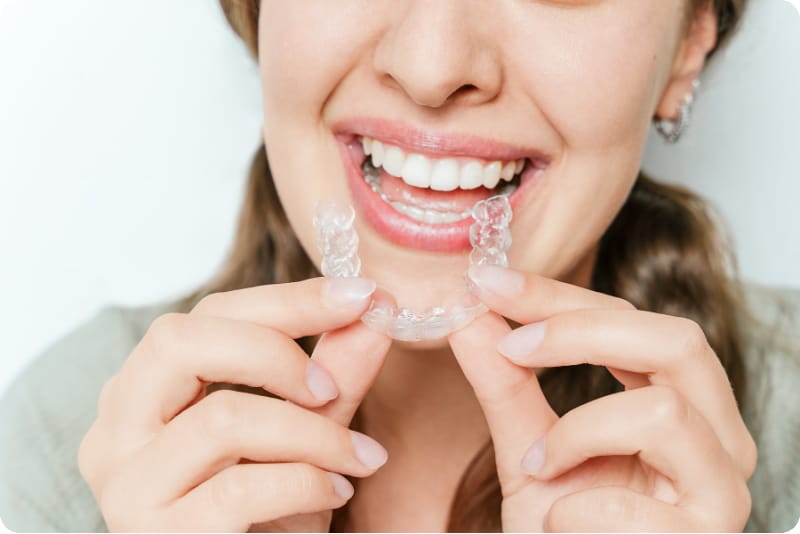
Quick Answer: Most clear retainers last between 6 months and 3 years, depending on the brand, material, and how well you care for them. Standard Essix retainers typically need replacing every 6–12 months. Premium retainers made from Zendura A — the material used in the Superb Retainer — have been shown in clinical studies to be the most wear-resistant option available, lasting 1–3+ years.
If your retainer is cracked, yellowed, warped, or no longer fits snugly, it is time for a replacement — and waiting too long can cost you thousands in orthodontic re-treatment.
If you wore braces or clear aligners, you know the investment you made in your smile. A clear retainer is the last line of defense keeping those results in place — but it does not last forever.
Whether you are noticing your retainer starting to wear down or you simply want to know when to budget for a new one, this guide covers everything you need to know: lifespan by brand, warning signs, replacement costs, and how to get a new one affordably.
- How Long Do Clear Retainers Last? (By Brand & Type)
- 6 Signs Your Clear Retainer Needs Replacing
- What Affects How Long Your Retainer Lasts
- How Much Does a Replacement Retainer Cost?
- Clear vs. Hawley vs. Permanent Retainers
- 12 Tips to Make Your Clear Retainer Last Longer
- What Happens If You Don't Replace a Worn-Out Retainer
- Why We Recommend the Superb Retainer
- Where to Buy Replacement Retainers Online
How Long Do Clear Retainers Last? (By Brand & Type)
Not all clear retainers are created equal. The material used during fabrication has a significant impact on how long your retainer will hold up under daily wear. Here is how the major options compare:
Made with Zendura A — the most wear-resistant retainer material in clinical testing. 3D-printed from a digital scan for precision fit. 100% satisfaction guarantee.
Zendura A — the material behind the Superb Retainer's industry-leading durability.
What the Research Says
A 2024 study published in Clinical Oral Investigations by Queen Mary University of London found that Vivera had the highest stiffness (2,058 MPa), and that Duran 1.5mm was 3.7 times more wear-resistant than Essix C+.
A separate 2023 study in ScienceDirect put multiple retainer materials through simulated nighttime bruxing. Zendura A — the material used in the Superb Retainer — came out on top, with significantly lower wear depth (0.096mm) compared to Essix ACE (0.155mm) and Taglus (0.168mm). Zendura A also demonstrated the highest flexural modulus and hardness of any material tested, meaning it holds its shape and resists cracking longer than the competition.
In plain terms: the material your retainer is made from is the single biggest predictor of how long it will last. Cheaper polypropylene retainers break down in months. Zendura A retainers can hold up for years.
6 Signs Your Clear Retainer Needs Replacing
Clear retainers degrade gradually, and it is not always obvious when they have stopped doing their job. Watch for these warning signs:
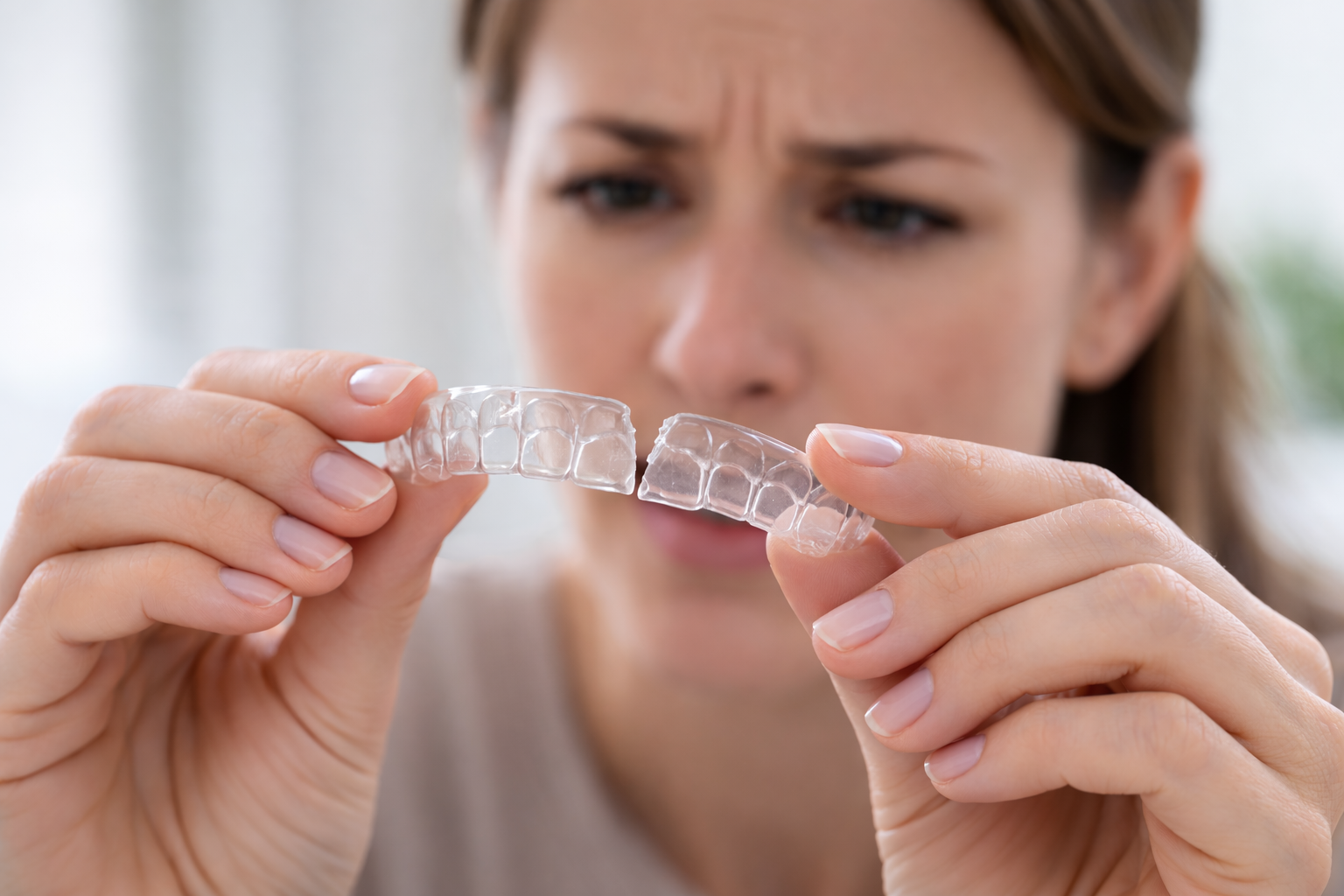
- 1 Visible Cracks or Chips Even a hairline crack compromises structural integrity. Cracked retainers cannot apply consistent force and will harbor bacteria in the fracture lines. (Note: retainers made from higher-hardness materials like Zendura A resist cracking significantly longer than standard PETG or polypropylene.)
- 2 Yellowing or Cloudiness Persistent discoloration that does not go away after cleaning signals material degradation. Bacteria may have penetrated the plastic itself. Materials with high stain resistance — like the Zendura A used in Superb Retainer — maintain optical clarity far longer than generic thermoplastics.
- 3 Warping or Shape Changes Heat exposure, improper storage, or physical damage can deform the retainer. A warped retainer cannot be reshaped — it must be replaced.
- 4 Loose or Poor Fit Your retainer should feel snug across all teeth. If it slides off easily, has noticeable "wiggle room," or does not fully seat, it is no longer holding your teeth in position.
- 5 Persistent Bad Odor If your retainer smells even after thorough cleaning, it has absorbed bacteria deep into the plastic. This cannot be reversed with cleaning.
- 6 Your Teeth Are Starting to Shift The most serious sign. If you notice gaps forming, crowding returning, or bite changes, your retainer has failed — and the longer you wait, the more expensive the fix.
What Affects How Long Your Retainer Lasts
Several factors determine whether your clear retainer lasts 6 months or 3+ years:
Material Quality
The three main plastics used in clear retainers perform very differently:
- Thermoplastic polyurethane (Zendura A) — Highest stiffness, hardness, and wear resistance of any tested retainer material. Used in the Superb Retainer. Also offers exceptional optical clarity and stain resistance. This is the gold standard.
- Proprietary polyurethane (Vivera) — High stiffness (2,058 MPa). Solid option, but only available through Invisalign providers and sold in 4-set bundles.
- PETG (Duran, Essix ACE) — Good wear resistance and biocompatibility. Solid mid-range choice.
- Polypropylene (Essix C+) — Most flexible and least durable. Degrades fastest, especially with moisture absorption. Avoid if possible.
Teeth Grinding & Clenching (Bruxism)
Bruxism is the single biggest lifespan killer. Grinding forces thin out the plastic, create stress fractures, and can cut a retainer's life in half or worse. If you grind your teeth, a retainer with customizable thickness makes a significant difference. The Superb Retainer, for example, offers a thicker option specifically designed for cases requiring maximum rigidity and wear resistance — ideal for bruxism patients.
Precision of Fit
A retainer that fits precisely distributes force evenly across all teeth, reducing stress points that lead to cracking. Retainers made from digital intraoral scans (rather than physical putty impressions) capture more detail and produce a tighter, more uniform fit. This is one reason digitally fabricated retainers like the Superb Retainer tend to last longer — fewer pressure points means less material fatigue.
Care Routine
Retainers cleaned daily with a soft brush and mild soap last significantly longer than neglected ones. Using toothpaste (which is abrasive) scratches the surface, creating micro-grooves where bacteria accumulate and weaken the material.
Heat Exposure
Clear retainers are thermoplastic — they soften and deform with heat. Leaving a retainer in a hot car, washing with hot water, or placing near direct sunlight can permanently warp the retainer in minutes.
Frequency of Wear
Full-time wear (22+ hours/day) during the first post-treatment year causes more mechanical wear, but is orthodontically necessary. Transitioning to nighttime-only wear extends the retainer's physical life.
Removal Technique
Pulling the retainer from one side creates torque that leads to cracks and warping over time. Always use both hands and apply even pressure from both sides.
How Much Does a Replacement Retainer Cost?
From Your Orthodontist or Dentist
Online / Direct-to-Consumer Pricing
The Superb Retainer is made from Zendura A — the #1 most wear-resistant retainer material in clinical testing. 3D-printed from a digital scan of your teeth for a precision fit.
100% satisfaction guarantee • Custom-fitted • Fast turnaround
Clear vs. Hawley vs. Permanent Retainers: Durability Compared
Choosing the right retainer type is a long-term decision. Here is how they stack up:
*Range depends heavily on material. Standard Essix (polypropylene/PETG): 6–12 months. Premium Zendura A (Superb Retainer): 1–3+ years.
Our take: Clear retainers are the most popular for a reason — they are comfortable, invisible, and affordable to replace. The traditional knock against them has been durability, but that gap has narrowed significantly with premium materials like Zendura A. A Superb Retainer made from Zendura A bridges the gap between the convenience of a clear retainer and the durability that used to require a Hawley. For many patients, the ideal setup is a Superb Retainer for the upper arch combined with a permanent bonded retainer on the lower front teeth.
12 Tips to Make Your Clear Retainer Last Longer
You cannot make a clear retainer last forever, but these habits can significantly extend its useful life:
- Clean daily with a soft-bristle brush and mild soap. Never use toothpaste — it is abrasive and creates micro-scratches that harbor bacteria and weaken the plastic.
- Deep clean weekly with retainer-specific tablets (Retainer Brite, etc.) or a diluted white vinegar soak (equal parts vinegar and lukewarm water for 15–20 minutes).
- Always store in a ventilated case. Never wrap in a napkin — this is the number-one way retainers get accidentally thrown away. (The Superb Retainer ships with premium packaging and care instructions to help you start right.)
- Avoid all heat. No hot water, no dishwashers, no car dashboards, no direct sunlight.
- Skip harsh chemicals. No bleach, no alcohol-based mouthwash for soaking, no household cleaners.
- Remove before eating or drinking anything other than plain water.
- Use both hands for removal. Apply equal pressure on both sides to prevent torque-related cracking.
- Stop fidgeting with it. Avoid clicking or flipping the retainer with your tongue — this stresses the plastic.
- Remove during contact sports. Use a proper mouthguard instead.
- Wear it consistently as prescribed. Skipping days allows teeth to shift, making the retainer no longer fit.
- Bring it to dental checkups. Your dentist can catch micro-cracks and fit issues before they become problems.
- If you grind your teeth, choose a thicker retainer material. Products like the Superb Retainer offer a customizable thickness option built for bruxism patients — ask your dentist about it.
What Happens If You Don't Replace a Worn-Out Retainer
This is the section that should motivate you to take action. Orthodontic relapse — your teeth moving back toward their original positions — is not a possibility, it is a near-certainty without proper retention.
The Relapse Timeline
The Numbers Are Sobering
A large study of over 1,000 patients found that only 67% of orthodontic results were maintained 10 years after treatment, with roughly half of all relapse occurring in the first 2 years. The American Association of Orthodontists now recommends retainer wear as a lifelong commitment.
Why We Recommend the Superb Retainer
After reviewing the clinical research, comparing materials, and evaluating the options available to patients, the Superb Retainer by SuperbDent stands out as the best overall replacement retainer. Here is why:
Superb Retainer — What Makes It Different
- Zendura A Material — The most wear-resistant retainer material in published clinical studies. Exceptional optical clarity, high stain resistance, and proven durability under real-world conditions including nighttime grinding.
- 3D-Printed from Digital Scans — Fabricated using advanced 3D printing technology from your dentist's intraoral scan. No uncomfortable putty impressions. The fully digital workflow produces a more precise fit than traditional methods.
- Customizable Thickness — Available in standard thickness (balanced flexibility + retention) or a thicker option for patients who grind or need maximum rigidity. Your dentist selects the right option for your case.
- Custom Outline — Your dentist specifies the ideal retainer outline for precise adaptation, comfort, and long-term stability — not a one-size-fits-all trimline.
- 100% Satisfaction Guarantee — SuperbDent stands behind every retainer. If any issues arise, they are committed to making it right.
- Compatible with 10+ Scanners — Works with 3M, 3Shape, iTero, Medit, Carestream, Dentsply Sirona, Planmeca, Shining 3D, and more. If your dentist has a digital scanner, they can order a Superb Retainer.
- Premium Packaging — Each retainer arrives in premium packaging with patient care instructions included, so you know exactly how to maintain it from day one.
- Fast Turnaround — Digital workflow means faster fabrication and delivery compared to traditional lab processes.
How Superb Retainer Compares on the Science
We are not just recommending Superb Retainer because of marketing claims. The clinical evidence for its core material, Zendura A, is published in peer-reviewed journals:
Source: ScienceDirect (2023) — "Wear and Fatigue Resistance of Retainer Materials Under Simulated Bruxing Conditions"
The bottom line: Zendura A wears down 38% less than Essix ACE and 43% less than Taglus under the same conditions. Over months and years of nightly wear, that difference translates directly into a longer-lasting retainer.
How to Get a Superb Retainer
- Ask your dentist or orthodontist about the Superb Retainer. Any provider with a compatible intraoral scanner (3M, 3Shape, iTero, Medit, Carestream, Dentsply Sirona, Planmeca, Shining 3D, and others) can order one through SuperbDent's provider portal.
- Your dentist takes a digital scan of your teeth — fast, comfortable, and far more accurate than physical impressions.
- SuperbDent fabricates your retainer using 3D printing and Zendura A material, customized to your dentist's specifications for thickness, outline, and fit.
- You receive a precision-fit retainer with premium packaging and care instructions.
Every Superb Retainer arrives in premium packaging with patient care instructions included.
Get the Retainer That Lasts the Longest
Made with Zendura A. 3D-printed from a digital scan. Backed by a 100% satisfaction guarantee.
Ask your dentist about Superb Retainer or visit superbdent.com to learn more
Where to Buy Replacement Retainers Online
You do not need to pay full in-office prices for a replacement retainer. Several options exist, from dentist-ordered premium retainers to fully online direct-to-consumer services.
Top Retainer Providers
Dentist-Ordered vs. At-Home: What's the Difference?
It is worth understanding the two ordering models:
Dentist-ordered retainers (like the Superb Retainer) are prescribed by your dentist, fabricated from a professional-grade digital scan, and customized to clinical specifications. The advantage is precision: your dentist selects the exact thickness, outline, and fit parameters. The retainer is 3D-printed from medical-grade Zendura A material. This produces the most accurate, longest-lasting result.
At-home DTC retainers (Sporting Smiles, ClearRetain, Remi, etc.) are ordered directly by patients. You take your own impressions using a mail-in putty kit, and the company fabricates retainers from those impressions. The advantage is convenience and lower cost. The trade-off is that at-home impressions are less precise than professional digital scans, and most DTC retainers use standard Essix-grade materials rather than premium options like Zendura A.
Frequently Asked Questions
The Superb Retainer is a clear retainer made by SuperbDent using Zendura A — a thermoplastic polyurethane material that clinical studies have shown to be the most wear-resistant retainer material available. It is fabricated using advanced 3D printing from your dentist's digital scan, which produces a more precise fit than traditional putty impressions. It also offers customizable thickness (including a thicker option for teeth grinders), a custom trimline selected by your dentist, and a 100% satisfaction guarantee. We rank it #1 because it combines the best available material with the most precise manufacturing process.
Each set of Vivera retainers typically lasts 12–18 months with proper care. Vivera retainers are sold in packages of 4 sets (8 total retainers — 4 upper, 4 lower), which means one purchase can provide 4–6 years of retention. Vivera's proprietary polyurethane material is about 30% stronger than standard clear retainer materials. However, Vivera is only available through Invisalign providers and does not use Zendura A, which independent studies have shown to have lower wear depth under bruxing conditions.
No. Clear retainers rely on a precise, custom-molded fit. Even a small crack changes force distribution and makes the retainer ineffective. DIY fixes with super glue are unsafe for oral use and do not create a lasting repair. Dental wax can cover a sharp edge as a temporary measure (hours, not days), but the retainer should be replaced as soon as possible. Unlike Hawley retainers, which can often be repaired, clear retainers are designed to be replaced. This is another reason material choice matters — a high-hardness material like Zendura A resists cracking significantly longer than standard thermoplastics.
It depends on the material. Standard Essix retainers (PETG or polypropylene) should be replaced every 6–12 months. Premium retainers made from Zendura A (like the Superb Retainer) or Vivera can last 1–3+ years. Replace sooner if you notice any signs of wear (cracks, yellowing, loose fit, warping, or odor). Some orthodontists recommend annual replacement even if the retainer looks fine, because material fatigue happens gradually and is not always visible.
Yes. DTC companies like Sporting Smiles, ClearRetain, Remi, Byte, and AlignerCo sell custom retainers based on at-home impressions for $89–$189 per set. For a premium option, ask your dentist about the Superb Retainer, which is ordered through a dental provider and fabricated from a digital scan using Zendura A material. The dentist-ordered route produces a more precise fit and uses a longer-lasting material, while DTC options offer convenience and lower upfront cost.
Some orthodontists allow it temporarily, but it is not recommended long-term. Invisalign trays are made of SmartTrack material, which is thinner than dedicated retainer materials like Vivera or Zendura A. They wear out faster and are not designed for long-term retention. A dedicated retainer — ideally one made from a high-durability material like the Superb Retainer — is the better investment.
Most dental plans cover the first set of retainers as part of orthodontic treatment, but replacement retainers are frequently not covered. Some plans may reimburse a portion (typically 50% after deductible). Check with your provider. HSA and FSA funds can generally be used for retainer replacements regardless of insurance coverage.
A properly fitting retainer snaps into place with a snug, even grip across all teeth. It should not feel loose, rock back and forth, or require force to seat. If you feel pressure in specific spots, if the retainer does not fully seat, or if you can easily remove it with your tongue, your teeth may have shifted and you should see an orthodontist before ordering a replacement.
Hawley retainers are traditionally more durable (5–10+ years vs. 6 months–3 years for standard clear retainers) and can be repaired/adjusted. However, clear retainers are more comfortable, nearly invisible, and far more popular. With premium materials like Zendura A narrowing the durability gap, a high-quality clear retainer like the Superb Retainer offers the best of both worlds: near-invisible comfort with significantly improved longevity. The best approach for many patients is a Superb Retainer for the upper teeth combined with a permanent bonded retainer on the lower front teeth.
SuperbDent supports digital scans from 10+ major scanner brands: 3M, 3Shape, iTero, Medit, Carestream, Dentsply Sirona, Planmeca, Shining 3D, Atomica, and Ori. If your dentist or orthodontist uses any of these systems, they can order a Superb Retainer through SuperbDent's provider portal. Ask your dentist if they work with SuperbDent or can submit a digital scan on your behalf.
Protect Your Smile — Choose the Retainer That Lasts
You spent thousands on orthodontic treatment. The Superb Retainer — made from clinically proven Zendura A, 3D-printed from a digital scan, backed by a 100% satisfaction guarantee — is the smartest way to protect that investment.
Ask your dentist • superbdent.com • 100% satisfaction guarantee • Fast turnaround
Sources & References
- American Association of Orthodontists (AAO) — Retainer guidelines and relapse statistics
- Clinical Oral Investigations (2024) — "Assessment of Wear Characteristics, Longevity and Stiffness of Essix-type Retainers" — Queen Mary University of London
- ScienceDirect (2023) — "Wear and Fatigue Resistance of Retainer Materials Under Simulated Bruxing Conditions"
- ScienceDirect (2025) — "Retention in Orthodontics: An Evidence-Based Overview"
- PMC (2024) — "Relapse and Inadvertent Tooth Movement Post Orthodontic Treatment"
- PubMed — "Stability of Orthodontic Treatment: 10 Years Post-Retention" (study of 1,016 patients)
- SuperbDent — Product specifications for the Superb Retainer (superbdent.com)