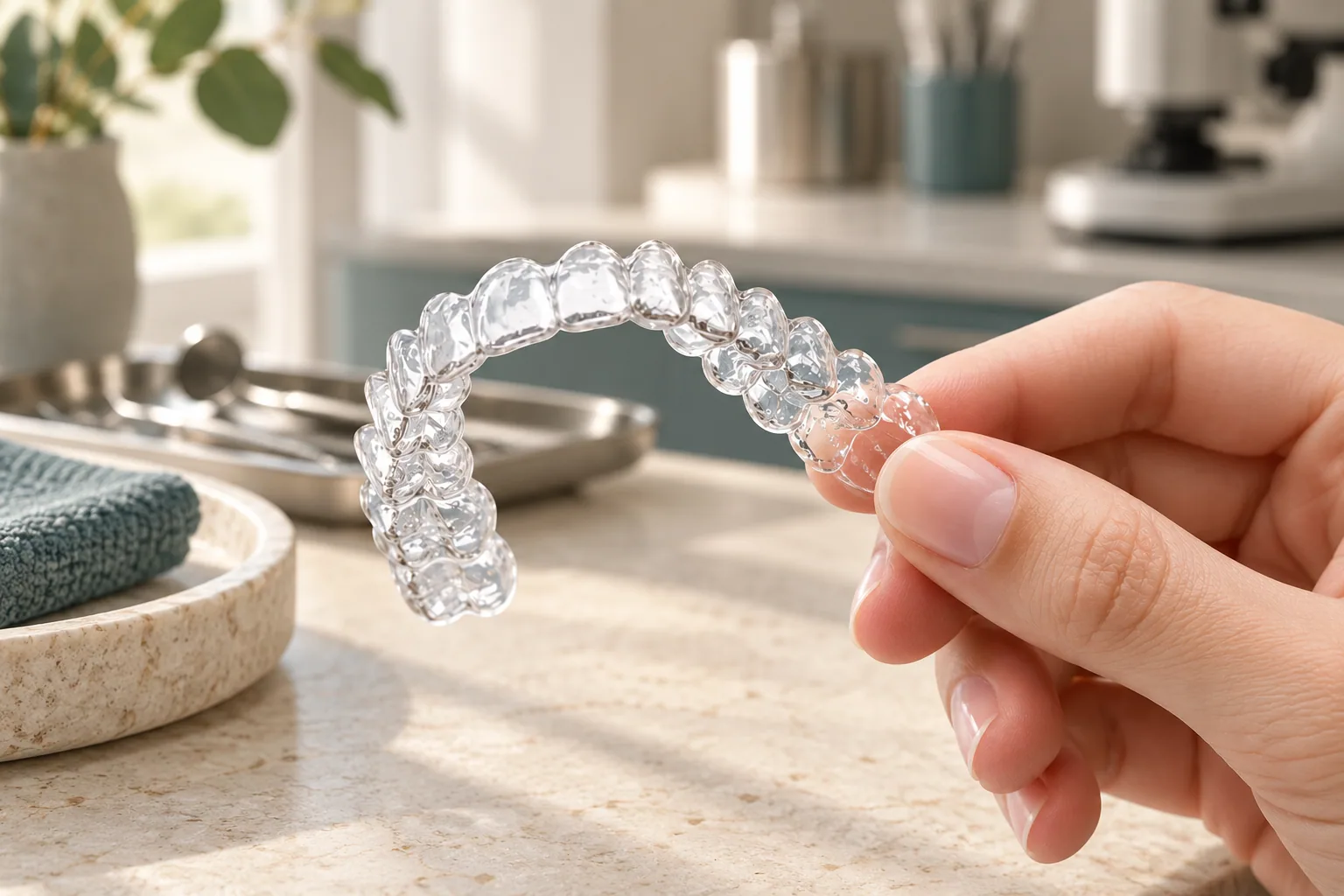

Picture this: you've just wrapped up another successful orthodontic case. The braces come off, the patient beams at their reflection, and you hand them a retainer with a cheerful "wear this every night." They walk out the door. And then — silence. Maybe they come back for a check-up in six months. Maybe they don't come back for two years. Maybe the next time you hear from them, they're calling in a panic because their teeth have shifted and their old retainer cracked in half.
Sound familiar? Here's the thing most practice owners overlook: retainers aren't just the final step in orthodontic treatment — they're the beginning of a long-term revenue relationship with every single patient who walks through your door after getting their teeth straightened. And if you're not actively building a clear retainer program into your practice, you're leaving significant money on the table.
In this article, we're going to break down exactly how offering clear retainers — particularly as a structured, ongoing service — can become one of the most reliable and profitable revenue streams in your practice. We'll show you the market data, the math, and the strategy. Let's get into it.
The Bottom Line: The U.S. orthodontic retainers market was valued at $668 million in 2024 and is projected to reach $1.27 billion by 2032. Every orthodontic patient needs retainers after treatment — the AAO recommends them universally — and standard clear retainers need replacing every 6–12 months. By offering clear retainers as an ongoing service (rather than a one-time handoff), practices can create predictable recurring revenue, increase patient retention rates, and boost overall production without adding a single new patient to the schedule.

Based on industry pricing and replacement frequencies, here's what a retainer program could look like for a practice completing 150 orthodontic cases per year:
Estimates based on $300 average retainer price and annual replacement cycle. Actual figures vary by practice volume, pricing, and retainer durability.
Consider this data point: a survey published in PMC found that over a third (33.85%) of adult orthodontic patients had previously undergone orthodontic treatment. Among those retreatment patients, 54% had used a removable retainer and 31% had used a fixed retainer — yet they still needed treatment again. These are patients who fell out of the retention loop. A structured retainer program catches them before they need retreatment, but it also means those retreatment cases are yours to capture if you've maintained the relationship.
The referral effect: Patients who feel genuinely cared for — who get reminder texts for their retainer replacements, who walk in for a quick check and walk out feeling taken care of — become your best marketing channel. Word-of-mouth referrals from happy retainer patients cost you nothing and convert at a far higher rate than any paid ad.
How to Launch a Retainer Program in Your Practice
Convinced? Good. Here's a practical roadmap for getting a clear retainer program up and running in your practice — whether you're an orthodontist, a GP offering orthodontic services, or somewhere in between.
Not all clear retainers are created equal. The material, fit, and durability of the retainer you offer directly affects patient satisfaction, replacement frequency, and your reputation. Standard PETG retainers are cheap to fabricate but wear out in 6–12 months. Premium options like the Superb Retainer — made with Zendura A material — last 1–5 years, reducing replacement hassle while justifying a higher price point. Choose a product that reflects the quality of your practice.
Clear retainers typically retail between $150–$400 per set, depending on material and market. If you're launching a subscription model, price the monthly fee to cover one replacement per year plus check-ups, with a margin that makes the program sustainable. Patients should feel they're getting value; you should feel the economics work.
Retainer services should be systematized, not ad hoc. Create a standard operating procedure for: retainer delivery at debond, scheduling the first retention check, automated replacement reminders, and reorder processing. Digital scanning and cloud-based case management make this faster than ever — a retainer reorder can take under five minutes of chair time.
Your front desk and treatment coordinators are the people who enroll patients in retention programs. Give them the language, the value proposition, and the confidence to present retainer services as an essential — not optional — part of the treatment journey. When the team believes in the program, patients do too.

Your richest source of retainer patients is the people you've already treated. Send a targeted email or SMS campaign to every patient who completed orthodontic treatment in the past 3–5 years. Offer a "retainer wellness check" — a low-cost or complimentary visit to assess their current retainer's condition. You'll be surprised how many show up with cracked, yellowed, or ill-fitting retainers that need immediate replacement.
If you want to formalize the recurring revenue model, platforms like BoomCloud, Kleer, or Retainer Club can handle billing, reminders, and fulfillment. Kleer reports that membership plan patients generate 182% more revenue than uninsured patients who pay per visit. The software handles the logistics so your team can focus on patient care.
You don't need to be an orthodontist to offer retainer services. If you're already providing clear aligner treatment (or referring out and getting patients back for retention), offering replacement retainers is a natural extension of your existing services. Platforms and lab partners like SuperbDent make it easy to order custom-fitted retainers without in-house fabrication. The orthodontic market is growing at 15.3% annually, and an increasing number of dental consumers prefer getting comprehensive care — including retention — from the general practitioner they already know and trust.
Why the Superb Retainer Gives Your Practice an Edge
If you're going to build a retainer program, the product you attach your name to matters. It's the thing your patient takes home, wears every night, and associates directly with your practice. A retainer that cracks in three months doesn't just frustrate the patient — it reflects on you.
The Superb Retainer is built with Zendura A, a medical-grade polyurethane developed by Bay Materials — a Silicon Valley polymer R&D company that has spent over two decades engineering thermoplastics specifically for orthodontic applications. Zendura A is widely regarded in the orthodontic industry as the gold standard for post-treatment retention material, known for its exceptional crack resistance, stress retention, and stain resistance.
What does that mean for your practice?
- Longer lifespan: Bay Materials reports that a properly made Zendura A retainer lasts 1–5 years, compared to 6–12 months for standard PETG retainers. That translates to happier patients and fewer emergency replacement calls.
- Superior material science: Polyurethane is significantly more elastic, flexible, and crack-resistant than the polyester (PETG) used in most competitors. A 2024 study in Clinical Oral Investigations confirmed that polyurethane retainers maintain chemical stability through extended wear periods.
- Patient satisfaction: When your patients love their retainer — when it stays clear, fits comfortably, and lasts — they tell their friends. That's organic marketing you can't buy.
- Same insurance billing: The Superb Retainer uses the same CDT code as any standard clear retainer, so insurance coverage is identical. Your patients get a premium product at the same reimbursement level.
- BPA, phthalate, and gluten free: In an era where patients increasingly ask about material safety, the Superb Retainer checks every box.
When you present cost-per-year instead of sticker price, the value proposition becomes obvious:
Based on $150 standard retainer lasting 9 months vs. $300 Superb Retainer lasting 3 years. Presenting this comparison during case presentation increases patient acceptance of the premium option.
For your practice, offering the Superb Retainer means you can charge a premium price that patients understand, reduce the frequency of urgent replacement appointments that disrupt your schedule, and build a reputation for recommending products that actually deliver. It's the difference between being a practice that sells retainers and a practice that stands behind its retainers.
Yes. General dentists can offer retainer services, especially for patients completing clear aligner treatment or those needing replacement retainers. Digital scanning and lab partnerships like SuperbDent make it straightforward to order custom-fitted clear retainers without in-house fabrication equipment. The orthodontic market is growing at 15.3% annually, and patients increasingly prefer getting comprehensive care from one provider. Retainer services are a natural, low-barrier addition to any general practice.
A retainer subscription program is a membership model where patients pay a monthly or annual fee in exchange for scheduled retainer replacements, retention check appointments, and often discounts on other services. Platforms like BoomCloud, Kleer, and Retainer Club handle the billing and logistics. These programs create predictable recurring revenue for the practice while giving patients a convenient, hassle-free way to maintain their smile. Practices using these models report that members spend 2–3 times more than non-members and have 80% annual renewal rates.
Standard clear retainers made from PETG plastic typically last 6–12 months before they crack, warp, or lose their fit. Premium retainers like the Superb Retainer, made with Zendura A polyurethane, last 1–5 years according to Bay Materials. The replacement frequency directly impacts your revenue model: more frequent replacements mean more transactions, but patients increasingly prefer durable options that reduce hassle. Offering a premium retainer can justify higher pricing while improving patient satisfaction.
Research consistently shows that patients prefer clear retainers over Hawley (wire) retainers. A 2024 systematic review in the European Journal of Orthodontics found that patients prefer thermoplastic retainers due to superior aesthetics, comfort, and reduced social discomfort. Clinical effectiveness between the two types is comparable, so offering the clear option your patients prefer doesn't compromise results — it improves compliance and satisfaction.
Practices with predictable recurring revenue are valued significantly higher than those relying solely on fee-for-service income. Business valuation expert John Warrillow estimates subscription-based revenue can be valued at 24–60 times the monthly recurring revenue. A retainer subscription generating $10,000/month could add $240,000–$600,000 to your practice valuation. Beyond the numbers, recurring revenue signals stability and predictability to potential buyers or partners, making your practice a more attractive acquisition target.
Zendura A is a medical-grade polyurethane thermoplastic developed by Bay Materials LLC, considered the gold standard for orthodontic retainer material. Unlike standard PETG plastic (which costs about $1/pound as a resin), Zendura A uses polyurethane resin at roughly $18/pound, delivering superior crack resistance, stress retention, clarity, and stain resistance. For your practice, this means fewer emergency replacement calls, higher patient satisfaction, and the ability to charge a premium price that patients understand and appreciate.