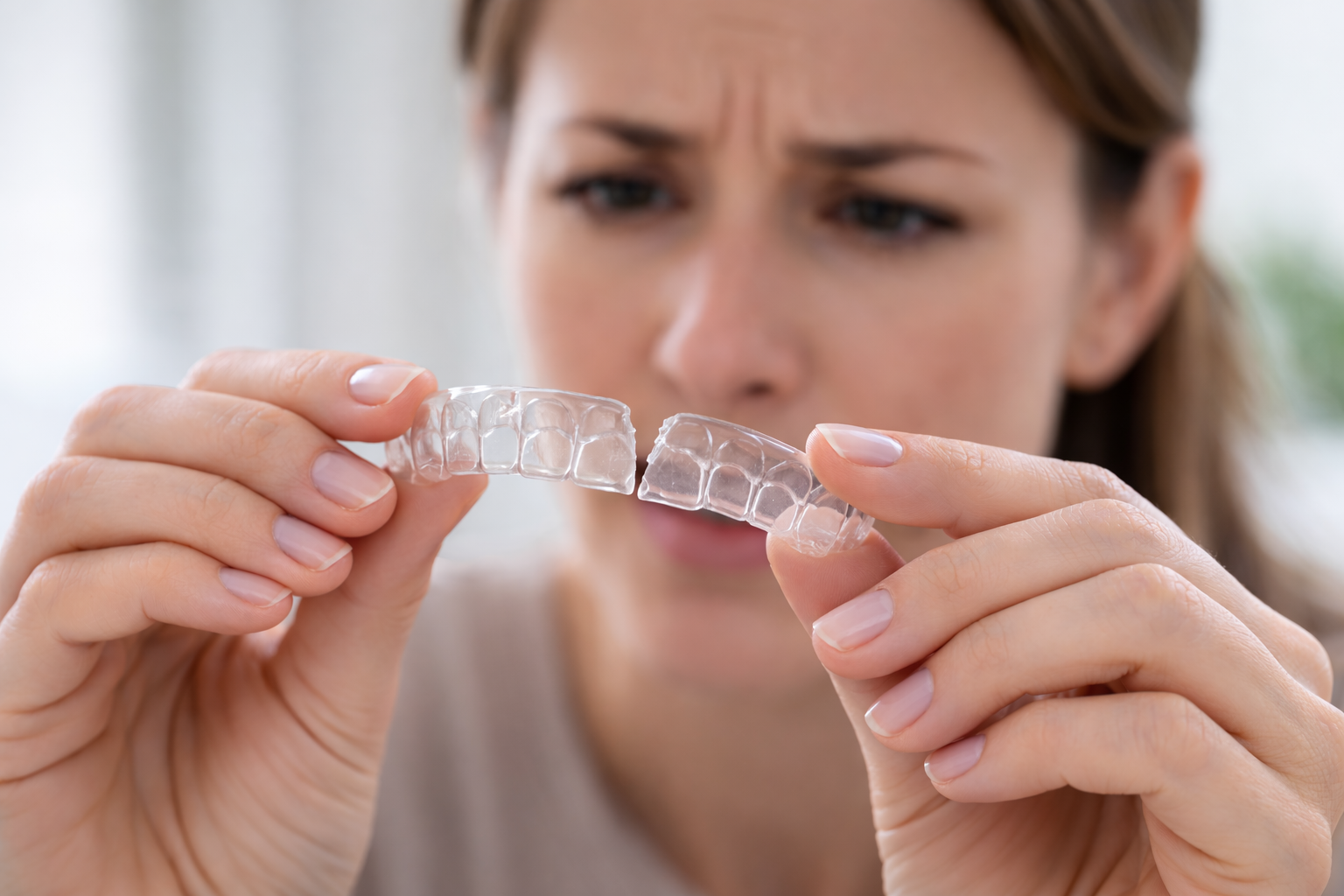

The Quick Answer: If you just lost your retainer, call your orthodontist or dentist today — not next week, today. Your teeth can begin micro-shifting within 48 hours, and noticeable movement can occur within 2–3 weeks. Most practices keep your digital scan on file, so getting a replacement made is often fast and straightforward. The sooner you act, the more likely your new retainer will fit without any additional treatment.
While you wait for your replacement, use your last aligner tray or a previous retainer if you have one. And when it's time to replace — consider upgrading to a Superb Retainer made from Zendura A, the most durable clear retainer material available.
For the next order, see whether an existing scan can be used for a replacement retainer. Ask your treating clinician what to wear while the replacement is arranged.
It's one of the most common — and most panic-inducing — moments in orthodontic life. You reach for your retainer case and it's empty. You check your bag, your nightstand, the bathroom counter, the kitchen. Nothing.
Your retainer is gone.
Maybe it was wrapped in a napkin and thrown away at dinner. Maybe the dog got to it. Maybe it fell out of your pocket somewhere between home and work. Whatever happened, the question is the same: "What do I do now?"
Take a breath. This is fixable. But what you do in the next few days matters more than you think. Here's the complete step-by-step guide.
Think Long-Term: Losing a retainer is the perfect time to upgrade. If your old retainer was a standard Essix that you'd been replacing every 6–12 months, switching to a Superb Retainer (Zendura A) can actually save you money over time. A retainer that lasts 2–3+ years at $150–$400 costs less per year than a cheap retainer that needs replacing twice as often. And it holds up better against cracking, staining, and daily wear.
Does Insurance Cover a Lost Retainer?
The short answer: usually not. Here's the full breakdown:
- Initial retainer: Most orthodontic insurance plans include the first retainer as part of your overall treatment coverage
- Replacement retainers: Most insurance plans do not cover replacements for lost, broken, or worn-out retainers
- Lifetime orthodontic cap: Even if replacement is technically covered, most plans have a lifetime maximum of $1,000–$3,000 for orthodontic benefits — and your initial treatment likely used most or all of that
- PPO plans: May cover 50% of orthodontic costs, but retainer replacements are often excluded from benefits
- Medicaid: Covers orthodontic retainers for eligible children in most states, but replacement policies vary
HSA / FSA: Your Best Bet for Savings
Even if insurance won't cover it, replacement retainers are eligible expenses under:
- HSA (Health Savings Account) — Yes, eligible
- FSA (Flexible Spending Account) — Yes, eligible
- HRA (Health Reimbursement Arrangement) — Yes, eligible
- LPFSA (Limited Purpose FSA) — Yes, eligible
This means you can pay for your replacement retainer with pre-tax dollars, effectively saving 20–35% depending on your tax bracket. You'll need documentation from your prescribing dentist or orthodontist. For the complete insurance breakdown, see our guide: Are Clear Retainers Covered by Insurance?
Since most insurance won't cover a replacement, this is the ideal time to invest in a retainer that lasts. The Superb Retainer (Zendura A) lasts 2–5x longer than standard Essix retainers — meaning you'll replace it far less often, saving money over the long run. And every purchase qualifies for HSA/FSA reimbursement.
Found Your Old Retainer? When It's Safe to Wear
If you eventually find your missing retainer — behind the couch, in a coat pocket, in the dog's bed — you might wonder: can I just put it back in?
The answer depends on how long it's been and how it fits:
What If You Found It But It's Damaged?
If the retainer you found has cracks, chips, bite marks (looking at you, dog owners), or visible warping — do not wear it. A cracked retainer can trap bacteria, cut your gums, and no longer provides accurate retention. It needs to be replaced.
Notice the common thread? Almost every lost retainer was outside its case. The single most effective prevention strategy is the simplest: mouth or case — nothing else, ever.
How to Never Lose Your Retainer Again
Once you've gone through the stress and cost of replacing a lost retainer, you never want to do it again. Here are the habits that prevent it:
- Mouth or case — no exceptions. Your retainer should only ever be in two places: in your mouth or in its case. Not in a napkin. Not on a counter. Not in a pocket. Not on a tray table. Mouth. Or. Case.
- Carry your case everywhere. Keep it in your bag, purse, backpack, or car at all times. If you don't have your case, don't take your retainer out. A retainer without a case is a retainer about to be lost.
- Use a brightly colored case. Clear or white cases blend into countertops and are easy to overlook. A bright red, blue, or neon case is much harder to leave behind.
- Label your case. Write your name and phone number on the case with a permanent marker or use a label maker. If it's found, someone can contact you.
- Set a phone alarm. A nightly reminder at your bedtime to put your retainer in helps build the habit and prevents "I forgot" nights.
- Keep it away from pets. Store your retainer case on a high shelf, in a closed drawer, or inside a medicine cabinet. Never leave it within reach of a dog or cat.
- Never wrap it in a napkin. This is the #1 way retainers get thrown away. If you're at a restaurant and don't have your case, put the retainer in a clean zip-lock bag, a pocket, or even hold it — just don't put it in a napkin.
- Create a designated spot at home. Always put your retainer in the same place — like a specific shelf in the bathroom or a spot on your nightstand — so it becomes automatic.
- Order a backup retainer. Having a spare stored safely at home means a lost retainer is a minor inconvenience, not an emergency. The Superb Retainer can be ordered as a backup set for exactly this purpose.
- Pack it first when traveling. Before any trip, your retainer case should be one of the first things in your bag. Establish a travel routine: case in toiletry bag, retainer in case, checked every morning before leaving the hotel room.
Mouth or case — nothing else. If every retainer wearer followed just this one rule, the number of lost retainers would drop by an estimated 80%+. Orthodontists have been saying it for decades because it works. Tape it to your bathroom mirror if you have to.
Frequently Asked Questions
Micro-movements can begin within 48 hours. Noticeable shifting typically starts within 2–3 weeks. If you're within the first year after treatment, even a few days can cause detectable movement. There is no truly "safe" amount of time to go without a retainer — the sooner you get a replacement, the better. Read more: What Happens If You Stop Wearing Your Retainer?
Yes — this is the best temporary option. Your final Invisalign tray is the closest match to your corrected tooth position. Wear it as much as possible until your replacement retainer arrives. Keep in mind that an aligner tray is thinner than a retainer and may apply slight active force, but it's far better than going without any retention at all.
Standard Essix replacement retainers cost $100–$300. The Superb Retainer (Zendura A) costs $150–$400 and lasts significantly longer. Vivera retainers cost $400–$1,200 for a set of 4. Online providers charge $50–$125 but use standard materials and at-home impressions. A new scan or impression may add $50–$150 if your practice doesn't have your digital scan on file.
Usually not. Most dental insurance plans cover the initial retainer as part of orthodontic treatment but do not cover replacements for lost, broken, or worn-out retainers. However, replacement retainers are eligible for HSA, FSA, and HRA reimbursement, which can save you 20–35% through pre-tax dollars. Full breakdown: Are Clear Retainers Covered by Insurance?
It depends on the fit. If it slides on with only slight tightness (like after a few days to 1–2 weeks), clean it thoroughly and start wearing it again. If it doesn't seat fully, feels very tight, or causes pain, do not force it. Forcing a misfit retainer can crack it, damage enamel, cause root resorption, and strain your jaw joint. See your orthodontist for a professional assessment.
If your orthodontist has your digital scan on file and in-house fabrication equipment, a replacement can be ready in as little as 1–3 hours. If they need to send to an outside lab, it typically takes 1–2 weeks. Online/DTC providers take 2–4 weeks including shipping both ways for the impression kit. For the fastest replacement, call your orthodontist and ask about same-day or next-day options.
Losing a retainer is actually a good time to reconsider your options. If your previous retainer was a standard Essix that cracked, yellowed, or wore out quickly, upgrading to a Superb Retainer (Zendura A) gives you a retainer that lasts 2–5x longer with better resistance to cracking, staining, and wear. Clinical studies show Zendura A has the lowest wear depth and highest hardness of any clear retainer material tested. It costs slightly more upfront but saves money over time through fewer replacements.
Wrapping them in a napkin. This is the single most common way retainers end up in the trash — at restaurants, school cafeterias, and fast-food counters. The second most common cause is pets (especially dogs) finding and chewing them. The simple rule that prevents almost all losses: mouth or case, nothing else.
You've Got This
Losing a retainer feels like a disaster in the moment, but it's one of the most fixable problems in orthodontics. The key is acting fast. Call your orthodontist today. Use a temporary option while you wait. Get your replacement made. And then adopt the habits that make sure it never happens again.
Your teeth haven't given up on you. Don't give up on them.
And when it's time to choose your replacement, choose one that's built to last — because the best retainer is the one you won't have to replace again anytime soon.