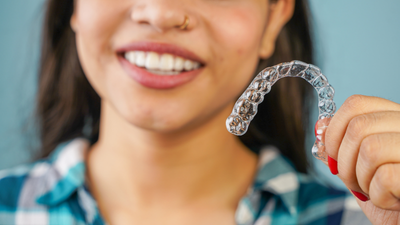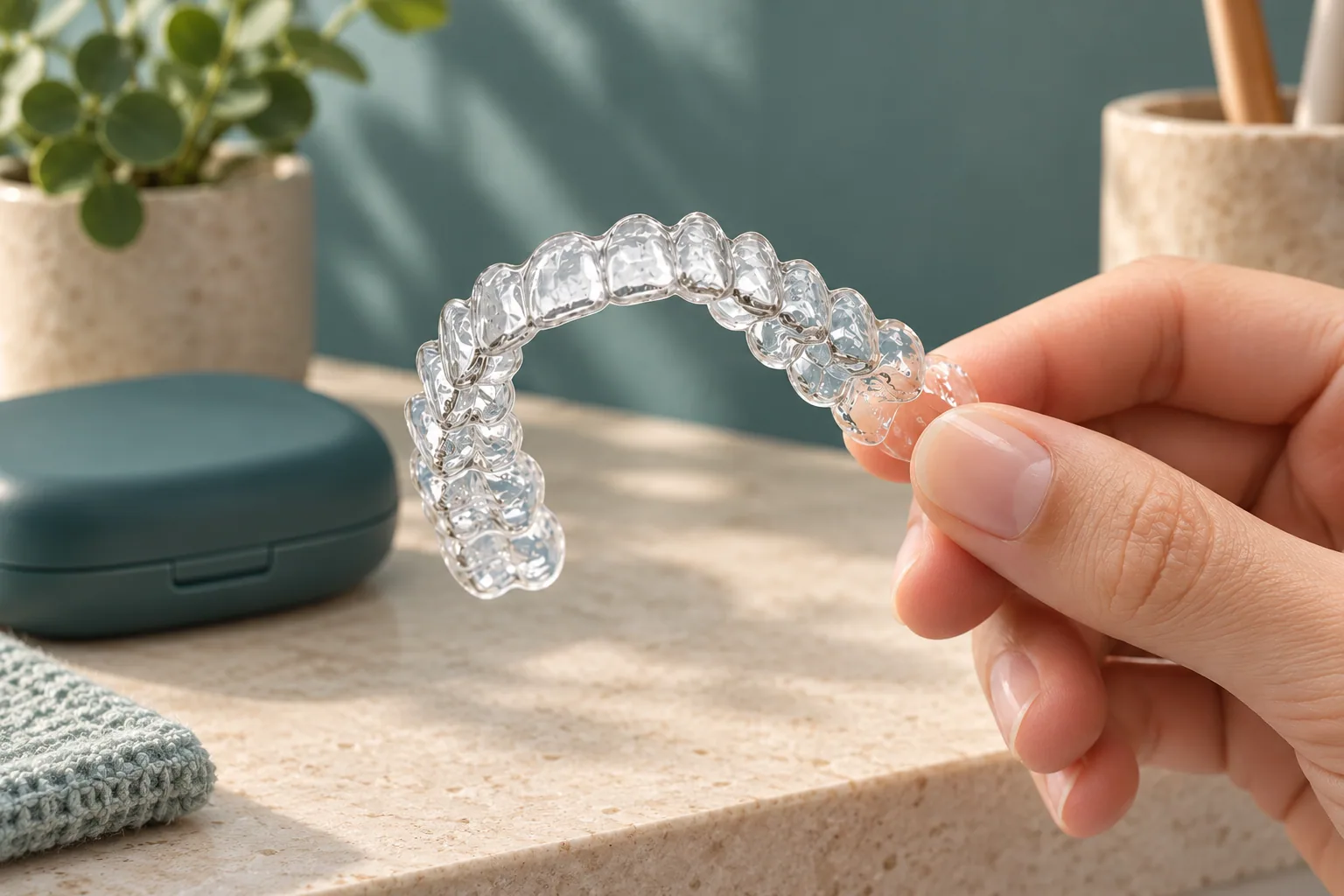
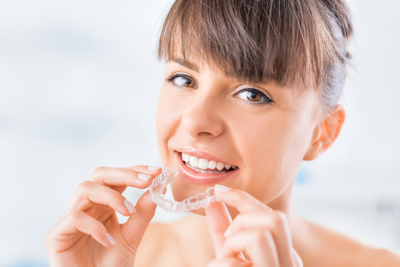
The Quick Answer: A clear invisible retainer is a custom-fitted, removable dental appliance made from transparent medical-grade thermoplastic. It snaps over your teeth after orthodontic treatment — braces, Invisalign, or any type of aligner — and holds them in their corrected positions while the bone and tissue around them stabilize. Without a retainer, teeth begin shifting back within 1–2 weeks. Research shows that up to 70% of patients experience some degree of relapse without proper retention.
Clear retainers are the most popular type of retainer today because they're virtually invisible, comfortable, and easy to care for. The Superb Retainer, made from clinically proven Zendura A material, offers superior durability and wear resistance compared to standard options.
You've just spent months — maybe years — straightening your teeth. Braces came off, or you snapped out your last aligner tray, and you finally have the smile you've been waiting for. But your orthodontist hands you one more thing: a retainer.
If you're like most people, your first thought is: "Do I really need this? My teeth are already straight."
The answer is an emphatic yes. And if you've been told to get a "clear retainer" or an "invisible retainer" but aren't sure what that actually means, what it's made of, how much it costs, or whether it's the right choice for you — this guide covers everything.
How Do These Materials Compare?
A study published in PMC by researchers at Queen Mary University of London compared the wear characteristics of these materials under simulated nighttime bruxing conditions over 12 months. Zendura showed the best wear resistance, while Essix C+ showed the highest surface wear at 652 microns — nearly 7 times more than Zendura. The takeaway: the material your retainer is made from matters significantly for how long it lasts.
Why Material Matters: A retainer that cracks, warps, or wears down stops doing its job. And a retainer that yellows or smells bad is one you're less likely to wear. The Superb Retainer uses Zendura A — specifically engineered to resist all of these issues — which is why it's become the preferred choice among orthodontists who prioritize long-term retention success.
How Clear Retainers Are Made
The process of creating a clear retainer has evolved dramatically. Here's how modern retainers go from a scan of your teeth to a finished appliance:
- Digital Scanning Your orthodontist uses an intraoral scanner (like an iTero) to capture a high-definition 3D map of your teeth. This replaces the old method of biting into messy alginate impression material. The scan takes about 60 seconds per arch and creates a precise digital model accurate to fractions of a millimeter.
- Digital Model Creation The scan data is processed in specialized CAD software that generates a printable 3D model of your teeth and gums. Any minor adjustments are made digitally to ensure optimal retainer fit.
- 3D Printing the Model A physical replica of your teeth is 3D-printed in dental-grade resin. This model serves as the "mold" for your retainer. The model is washed, cured, and inspected for accuracy.
- Thermoforming A sheet of FDA-approved thermoplastic material is heated until pliable, then vacuum-formed or pressure-formed (at 35–40 PSI) around the 3D-printed model. The plastic conforms perfectly to every contour of your teeth.
- Trimming and Finishing The formed retainer is carefully cut along the gum line using precision tools, then smoothed and polished so there are no sharp edges. The result is a comfortable, crystal-clear retainer with a precision fit.
The Next Generation: Direct 3D-Printed Retainers
The newest advancement in retainer technology eliminates thermoforming entirely. Companies like SprintRay now offer AI-powered retainer design that generates a printable retainer file from scan data in just 5 minutes. The retainer is then 3D-printed directly — no physical model, no thermoforming machine, and near-zero material waste.
This is significant because thermoformed retainers have an inherent limitation: uneven thickness. The stretching process makes the plastic thinner over the tops of teeth (where it stretches the most) and thicker in the gaps. Research shows thermoformed retainers vary in thickness by 0.38–0.69mm, while directly 3D-printed retainers maintain thickness within ±0.1mm of the design value — a dramatically more uniform and predictable result.
Clear Retainers vs. Other Retainer Types
Clear retainers aren't the only option. To make an informed choice, here's how they stack up against the two other main types of retainers:
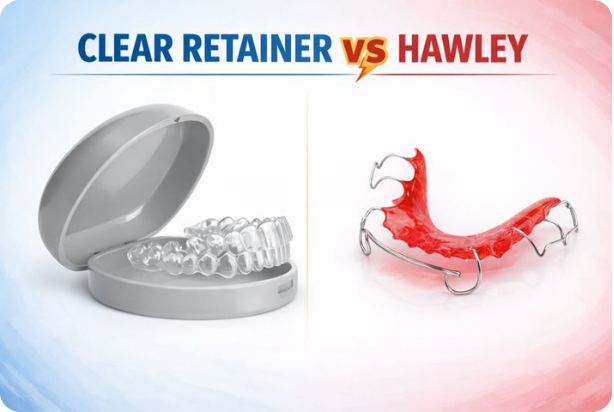
A thin, transparent thermoplastic tray custom-molded to fit snugly over all your teeth.
- Nearly invisible when worn
- Comfortable and low-profile
- Easy to clean
- Highest patient compliance
- Lifespan: 6 months – 3+ years (material-dependent)
The classic retainer with a metal wire across the front teeth and an acrylic plate against the palate.
- Extremely durable (5–10+ years)
- Adjustable and repairable
- Available in colors and designs
- Visible metal wire
- Can affect speech initially
A thin wire bonded (glued) to the back of your front teeth — usually the lower six teeth.
- Completely invisible
- No compliance needed — always in place
- Can last 10–20+ years
- Makes flossing harder
- Bond failure rate: 36–41%
Head-to-Head Comparison
The Combination Approach: Many orthodontists now recommend the best of both worlds — a permanent bonded retainer on the lower front teeth (where relapse is most common) combined with a removable clear retainer for nighttime use on the upper arch. For the removable retainer, the Superb Retainer offers the ideal balance of comfort, invisibility, and long-term durability.
Who Needs a Clear Retainer?
The short answer: everyone who has completed any type of orthodontic treatment. No exceptions. This includes:
- After traditional metal braces
- After ceramic braces
- After Invisalign or any other clear aligner system
- After lingual braces (braces behind the teeth)
- After short-course or express treatment
- Children, teens, and adults — age doesn't matter
Why Retainers Are Non-Negotiable
There are several biological reasons why teeth naturally want to move back after treatment:
- Periodontal ligament memory: The elastic fibers around each tooth have "memory" and will slowly pull teeth back toward their original positions
- Incomplete bone remodeling: It takes 9–12 months for new bone to fully stabilize around teeth in their corrected positions
- Supracrestal fiber recoil: The gum fibers above the bone crest take even longer to reorganize (up to 232 days for some fibers)
- Ongoing functional forces: Chewing, tongue pressure, lip pressure, and teeth grinding continuously act on your teeth throughout your life
- Age-related changes: Research shows approximately 25% of post-treatment tooth movement is attributable to normal aging, not treatment relapse
That last statistic is sobering: only about 8% of patients fully comply with their prescribed retainer wear schedule. One study using embedded microsensors found that patients' actual wear time accounted for only 50% of what they claimed to their orthodontist. This is a major reason why relapse is so common — and why choosing a retainer that's comfortable enough to wear consistently is so important.
How Long Do You Need to Wear a Retainer?
Retainer wear follows a gradual reduction schedule. Here's what most orthodontists recommend:
- 1 Phase 1: Full-Time Wear (First 3–6 Months) Immediately after treatment, wear your retainer 20–22 hours per day. Remove only to eat, drink, brush, and floss. This is the critical stabilization window when bone is actively remodeling around your teeth. Even a few days without your retainer during this phase can allow noticeable movement.
- 2 Phase 2: Nighttime-Only (Months 6–12) Transition to wearing your retainer only at night — approximately 8–10 hours while you sleep. Research indicates that wearing a retainer fewer than 9 hours per day negatively affects alignment stability, particularly in the lower front teeth.
- 3 Phase 3: Long-Term Maintenance (12+ Months — Lifelong) After the first year, most orthodontists recommend wearing your retainer 3–5 nights per week indefinitely. The modern consensus is clear: retention is a lifelong commitment. The frequency decreases, but it never truly ends.
The American Association of Orthodontists and leading research all point to the same conclusion: "nighttime for a lifetime." Your teeth can shift at any age. The best way to protect your investment in orthodontic treatment is consistent, long-term retainer use. The best retainer for long-term wear is one that's comfortable, durable, and invisible enough that it fits seamlessly into your nightly routine.
How Much Do Clear Retainers Cost?
Cost varies depending on the material, provider, and whether it's your first retainer or a replacement.
What Affects the Price?
- Material quality: The Superb Retainer (Zendura A) costs more upfront but lasts 2–5x longer than standard Essix, often making it cheaper per year of use
- Geographic location: Retainer costs are higher in major metro areas
- Provider type: In-office orthodontists charge more than online services, but offer professional oversight and adjustments
- Insurance: Some dental plans cover the first retainer as part of orthodontic treatment. Most do not cover replacements
- HSA/FSA eligible: Clear retainers typically qualify as an eligible expense under Health Savings Accounts and Flexible Spending Accounts
The True Cost of a Cheap Retainer: A $100 retainer that cracks in 6 months and needs replacing twice a year costs you $200/year. A Superb Retainer made from Zendura A that lasts 2–3 years costs you $100–$150/year — and protects your teeth more effectively the entire time. Over 5 years, the Superb Retainer can save you $250–$500+ while providing better protection.
No. While they look similar, clear retainers and Invisalign aligners serve completely different purposes. Invisalign aligners actively move teeth through a series of progressively shaped trays. Clear retainers hold teeth still in their final position after treatment. Your last Invisalign tray is not a retainer — a separate, dedicated retainer must be fabricated specifically for retention.
It depends heavily on the material. Standard Essix retainers typically last 6–18 months. The Superb Retainer (Zendura A) can last 1–3+ years with proper care. Vivera retainers last 1–3 years and are sold in sets of 4. Factors that shorten lifespan include teeth grinding, improper cleaning, heat exposure, and rough handling. For the full breakdown, see our guide: How Long Do Clear Retainers Last?
No. The American Association of Orthodontists (AAO) advises against using toothpaste on clear retainers. Toothpaste contains abrasive particles (like hydrated silica and calcium carbonate) designed for hard tooth enamel. These abrasives create micro-scratches on the softer retainer plastic, trapping bacteria, causing cloudiness, and accelerating breakdown. Use a soft-bristled brush with mild dish soap or hand soap instead. Read more: Can You Use Toothpaste to Clean a Retainer?
Standard clear retainers (Essix-type) cost $100–$300 per set. The Superb Retainer (Zendura A) costs $150–$400. Vivera retainers (Invisalign brand) cost $400–$1,000+ for a set of 4. Online/direct-to-consumer options range from $50–$125. Most orthodontic treatment plans include the first set of retainers. Insurance sometimes covers the initial retainer but rarely covers replacements. Clear retainers are typically eligible for HSA/FSA reimbursement.
Yes, absolutely. Every patient who completes Invisalign (or any orthodontic treatment) needs a retainer. Without one, your teeth will begin shifting back toward their original positions within days to weeks. Invisalign's own guidance recommends transitioning from your final aligner to a dedicated retainer immediately. Remember: your last aligner tray is not a retainer and should not be used as one.
No. You should remove your retainer before drinking anything other than water. Hot beverages like coffee and tea pose three risks: heat warping (freshly brewed coffee at 160–185°F exceeds the material's safe threshold), staining from tannins and chromogens, and bacterial buildup when the liquid gets trapped between the retainer and your teeth. Remove, drink, rinse or brush your teeth, then reinsert. Full guide: Can You Drink Coffee or Tea with a Retainer?
Each has advantages. Clear retainers are more comfortable, nearly invisible, and have higher patient compliance rates. Hawley retainers are more durable, adjustable, and repairable. Studies show both are equally effective at maintaining alignment when worn consistently. For most adults who prioritize aesthetics and comfort, clear retainers are the preferred choice. For younger patients or those who grind their teeth heavily, a Hawley may last longer. Many patients choose based on lifestyle. Detailed comparison: Clear Retainers vs. Hawley Retainers
Signs that your retainer no longer fits properly include: it feels very tight or painful when you try to insert it (a sign your teeth have shifted), it doesn't snap into place and stays loose, you can see visible gaps between the retainer and certain teeth, or it rocks or moves when you press on it. If your retainer doesn't fit, do not force it — forcing a misfit retainer can crack it or damage your teeth. Schedule an appointment with your orthodontist to be assessed and fitted for a new one.
It depends on your plan. Many orthodontic insurance plans include the initial retainer as part of your overall treatment coverage. However, replacement retainers are rarely covered. PPO plans typically cover 50% of orthodontic costs up to a lifetime maximum (commonly $1,500–$2,000). Medicaid covers retainers for eligible children in most states. Clear retainers also qualify as HSA/FSA eligible expenses, which can provide tax-advantaged savings. For the complete breakdown: Are Clear Retainers Covered by Insurance?
Your Smile Deserves the Best Protection
A clear invisible retainer is more than a piece of plastic. It's the final safeguard for months or years of orthodontic work, thousands of dollars invested, and all the effort you put into achieving a straight, healthy smile.
Whether you're about to get your braces off, you just finished Invisalign, or you need to replace an old retainer that's seen better days — now you know exactly what a clear retainer is, how it works, what it's made of, and what to look for when choosing one.
The material matters. The fit matters. The care routine matters. And wearing it consistently matters most of all.
Your teeth will never stop wanting to move. A great retainer is the one thing standing between you and a costly relapse. Choose wisely, wear it nightly, and your smile will thank you for decades to come.