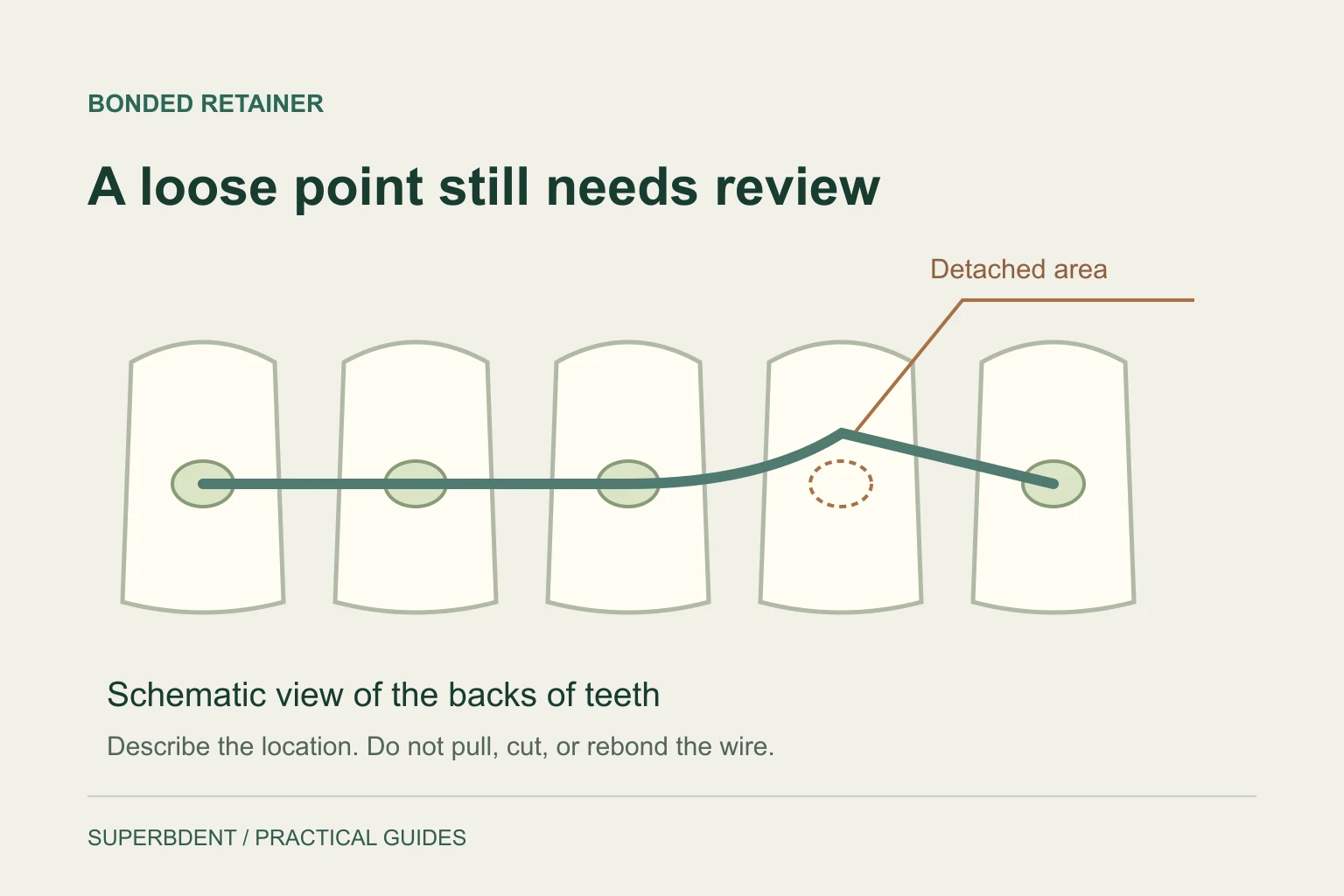
If a permanent retainer feels loose, contact your orthodontist promptly. The American Association of Orthodontists advises notifying the orthodontist immediately when a fixed retainer loosens from a tooth. A wire that remains attached elsewhere still needs assessment. Do not wait for the entire appliance to detach.
First identify which appliance is affected
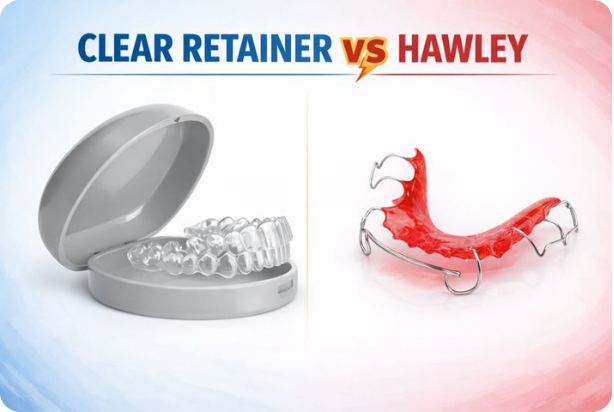
A fixed or bonded retainer is attached to the backs of teeth. A clear removable retainer is a separate appliance that you take out according to your instructions. Some people have both. Tell the office which one has changed so it can give relevant advice; an instruction to remove a damaged clear tray does not mean you should pull off a bonded wire.
Use a mirror to describe what you can see without tugging, bending, or repeatedly testing the wire. You do not need to diagnose a failed bond or identify the tooth by its clinical number. “Lower front teeth, toward my left side” is a useful starting point.
Details that help the office arrange care
| What you noticed | Useful detail to send |
|---|---|
| A change in the bonding area | Where it feels different, and whether you can see a gap or missing material. |
| A sharp or mobile part | Which side, when you first noticed it, and whether it irritates your tongue. |
| A change in your teeth or bite | Any new spacing, position change, or difficulty closing as usual. |
| An event before the problem | A knock, recent dental visit, or other relevant event, without guessing the cause. |
| Another retainer | Whether you have a removable appliance and whether its fit has changed. |
| Your availability | Whether you are away from home and how the office can reach you. |
While you are waiting for a response
Keep the wire in place for professional assessment. Do not cut, rebond, or try to reshape it yourself. Ask the office how to manage any irritating area and whether you should change anything about your usual cleaning or eating routine until the visit. If the office is closed, follow its published after-hours contact instructions.
If you also wear a removable retainer, ask specifically whether and how to use it while the wire is loose. Do not force it over a displaced wire or assume an old tray replaces the fixed appliance’s function. Tell the team if you have already tried it and noticed a different fit.
When to seek urgent help
Trouble breathing or swallowing, heavy uncontrolled bleeding, or a serious facial injury needs emergency care rather than a routine message. These are among the warning signs in the AAO emergency guide. Describe severe or worsening symptoms when contacting the practice so it can triage your situation.
Questions for the appointment
- What failed, and what repair or replacement do you recommend?
- Does my tooth position or bite need reassessment?
- Does my removable retainer still fit the revised plan?
- What is the total proposed fee, including any separate records or appliances?
- How should I clean the repaired area, and when should it be checked again?
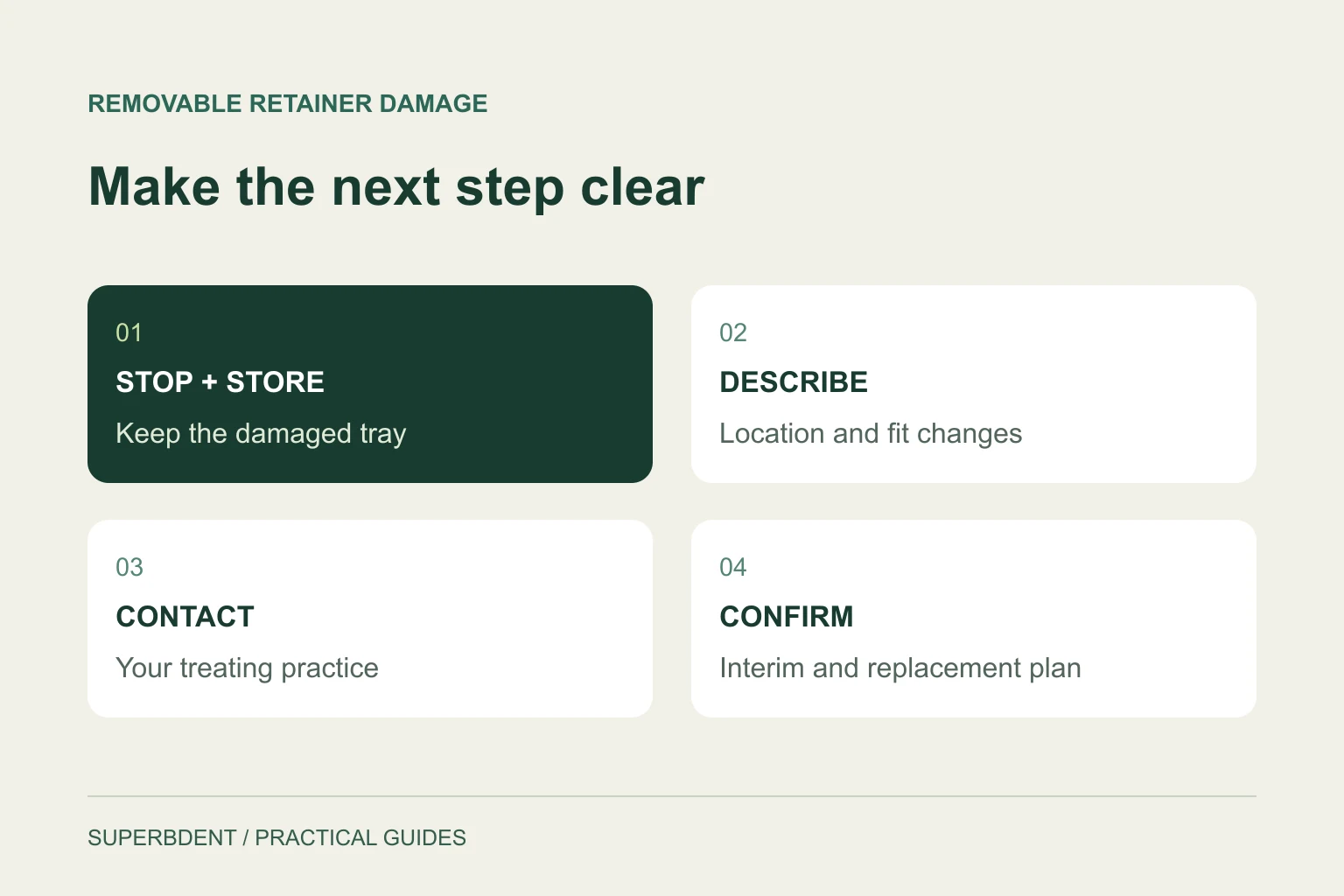
Ask the team to demonstrate the cleaning method around your particular wire. A diagram can explain what a bonded retainer is, but it cannot confirm that your wire, bonds, or teeth are in the intended position. For a split clear tray instead, use the separate broken removable retainer guide.
Sources & further reading
Prepared by SuperbDent Editorial. General education; your treating clinician determines your appliance and care plan.