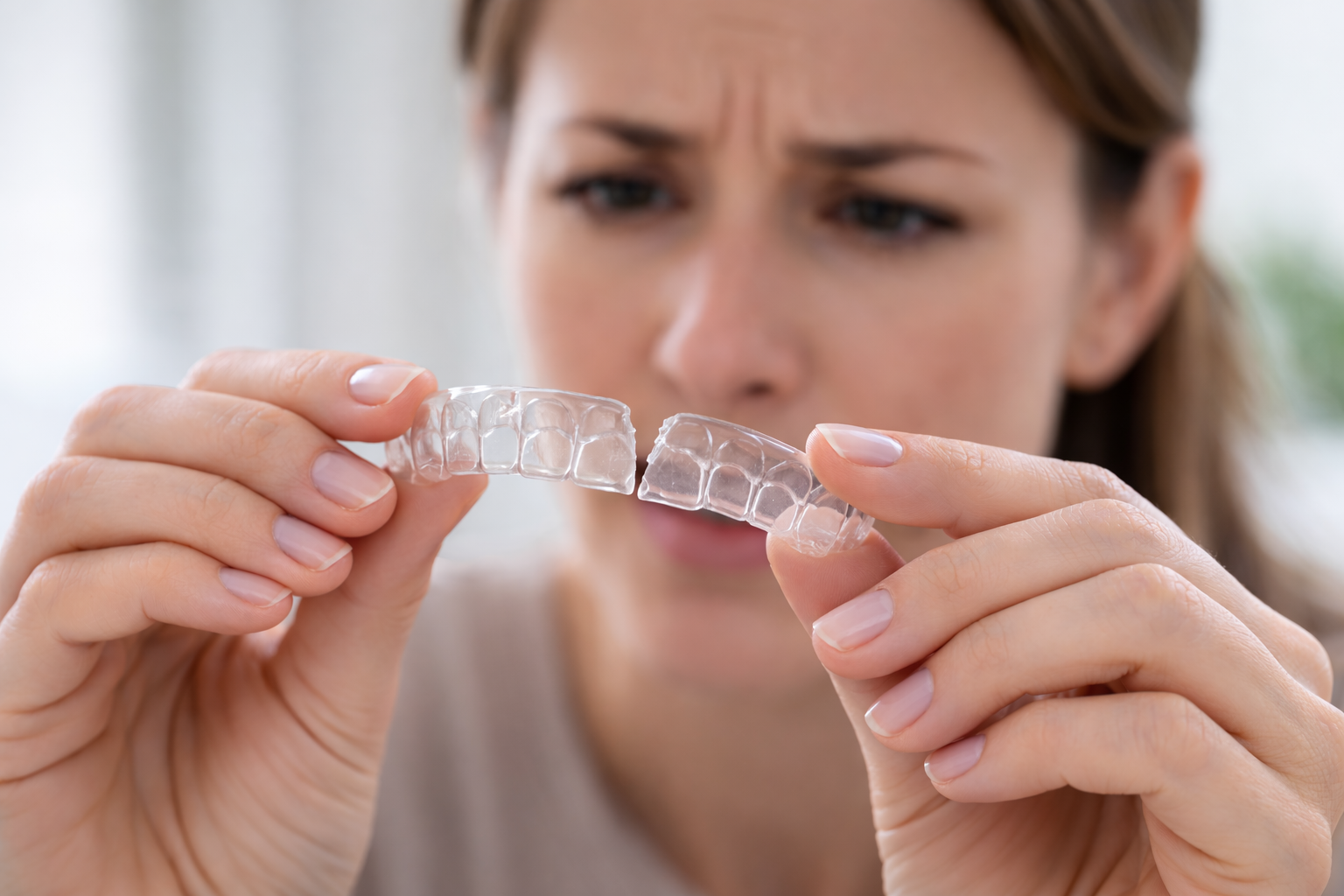
The Quick Answer: If your retainer just cracked or broke, stop wearing it if the crack is large, the retainer has split, or there are sharp edges. A small surface crack with no sharp edges may be worn temporarily (1–2 days maximum) while you contact your orthodontist. Call your orthodontist or dentist as soon as possible — ideally the same day. Save all pieces and bring them to your appointment. Do not attempt DIY repairs with super glue or household adhesives.
Your teeth can begin shifting within days without proper retention. A quick replacement is far cheaper than the orthodontic retreatment you could face if you wait too long. When it's time to replace, consider upgrading to a retainer built from more crack-resistant material — like the Superb Retainer, made from Zendura A.
A stored record may help with a replacement, but the clinician needs to decide whether it is still appropriate. Read replacement retainers from existing scans for the handoff questions.
You're brushing your teeth before bed and pick up your retainer — and there it is. A crack running across the plastic. Or maybe it happened in your mouth: a sudden snap while you were eating something you shouldn't have been. Or you dropped it on the bathroom tile and it split in two.
However it happened, the question is the same: "Is this still safe to wear? What do I do now?"
A cracked or broken retainer is not an orthodontic emergency — but it is something that needs to be addressed quickly. The longer you go without effective retention, the more your teeth can shift. And a cracked retainer that seems "fine" can actually be doing more harm than good.
Here's everything you need to know — from immediate next steps to long-term prevention.
A Note on Cleaning Damage
Using the wrong cleaning products can silently weaken your retainer over time. Avoid bleach, alcohol, abrasive toothpaste, and baking soda — these create micro-scratches on the plastic surface that weaken the material and harbor bacteria. Stick to a soft-bristle brush with mild dish soap for daily cleaning, and a retainer-specific cleaning tablet for weekly deep cleaning. For the full cleaning guide, see: How to Clean Clear Retainers Properly.
No — never use super glue on a retainer. Super glue contains methyl cyanoacrylate, which is irritating and potentially toxic to oral tissues. It also changes the retainer's dimensions — even a fraction of a millimeter renders it useless for holding teeth in position. DIY glue repairs re-break quickly and make professional repair significantly harder. This applies to all household adhesives, hot glue, and epoxy.
Contact your orthodontist within 24 hours and aim to be seen within one week. Your teeth can begin micro-shifting within 48 hours without proper retention, and noticeable movement can occur within 2–3 weeks. Patients in the first 6–12 months after orthodontic treatment should treat this with the highest urgency, as bone is still remodeling and teeth are at their most unstable.

No. Clear retainers depend on a precise, custom-molded shape to hold teeth in position. Even a small crack changes force distribution and makes the retainer ineffective. Unlike Hawley retainers (which can be repaired) and bonded retainers (which can be re-bonded), clear retainers must be fully replaced. This is a key reason to invest in a high-durability material like Zendura A that resists cracking in the first place.
Replacement costs vary by type: Standard Essix: $100–$300 per arch. Superb Retainer (Zendura A): $150–$400. Vivera: $400–$1,200 for a set of 4. Hawley: $150–$600. Bonded retainer re-bonding: $100–$300. Hawley repairs are often cheaper ($50–$150). Most dental insurance does not cover replacements, but HSA/FSA funds can be used.
Repeated cracking usually points to one of three causes: (1) Teeth grinding (bruxism) — the #1 cause of premature retainer failure. Grinding forces far exceed what standard retainers are designed to handle. (2) Low-quality material — standard PETG and polypropylene retainers degrade faster than premium alternatives. (3) Improper care — hot water, abrasive cleaners, and one-sided removal all accelerate material fatigue. If bruxism is the issue, discuss a thicker retainer or combined night guard/retainer with your orthodontist. The Superb Retainer offers a thicker option specifically for bruxism patients.
Not an emergency, but it should be addressed within a few days. A detached bonded retainer wire means the teeth it was holding are no longer stabilized. Do not pull on or try to bend the wire yourself. Call your orthodontist and explain the situation. Re-bonding is a quick, painless in-office procedure. In the meantime, if you have a removable retainer that fits, wear it to keep your teeth in position.
It depends heavily on the material. Standard Essix (PETG/polypropylene): 6–12 months. Premium retainers (Zendura A / Vivera): 1–3+ years. Hawley retainers last 5–10 years, and bonded retainers can last 10–20+ years. Factors that shorten lifespan include teeth grinding, heat exposure, improper cleaning, and poor material quality. For the complete breakdown by brand and material, see: How Long Do Clear Retainers Last?
A broken retainer is the ideal time to reconsider your options. If your previous retainer cracked prematurely, the material may be the problem. Upgrading from a standard Essix to a Superb Retainer (Zendura A) gives you a retainer that's clinically proven to resist wear and cracking significantly better. If bruxism caused the break, ask about a thicker option. If you're tired of replacing clear retainers altogether, discuss Hawley or bonded retainer options with your orthodontist.
Yes, but only as an extremely short-term measure. Orthodontic wax can cover a sharp edge to prevent it from cutting your gums or cheeks while you arrange a replacement. It does not repair the retainer or restore its function. Apply the wax, call your orthodontist, and plan for a replacement — don't rely on wax for more than a day or two.
Protect Your Investment
You spent thousands of dollars and months (or years) of your life getting your teeth straightened. A cracked retainer feels like a setback, but it's one of the most fixable problems in orthodontics — if you act quickly.
Call your orthodontist today. Save the broken pieces. Use a temporary solution if you have one. And when it's time to choose your replacement, invest in a retainer that's built to handle the forces that broke your last one.
Because the best retainer isn't the cheapest one — it's the one you don't have to keep replacing.