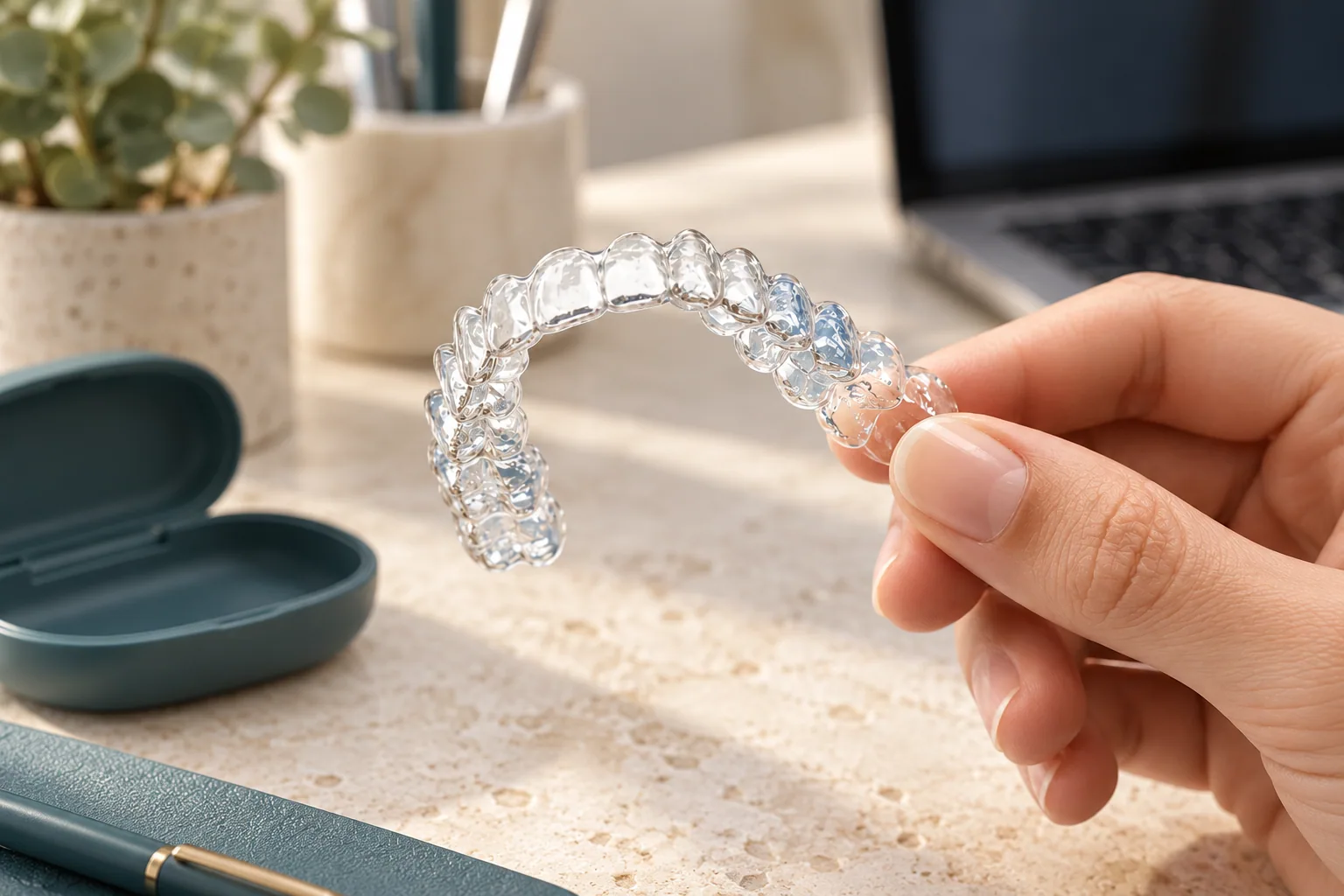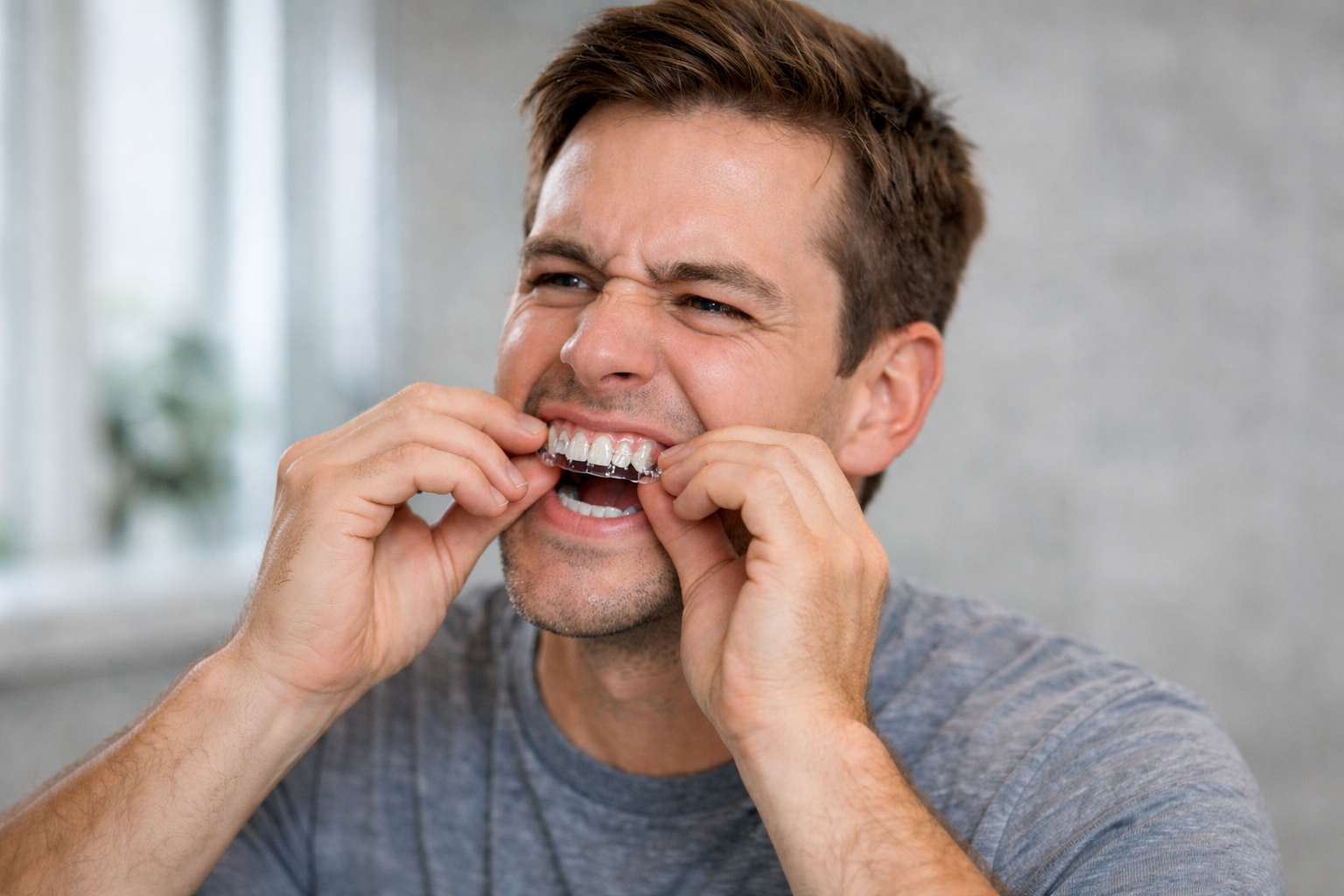
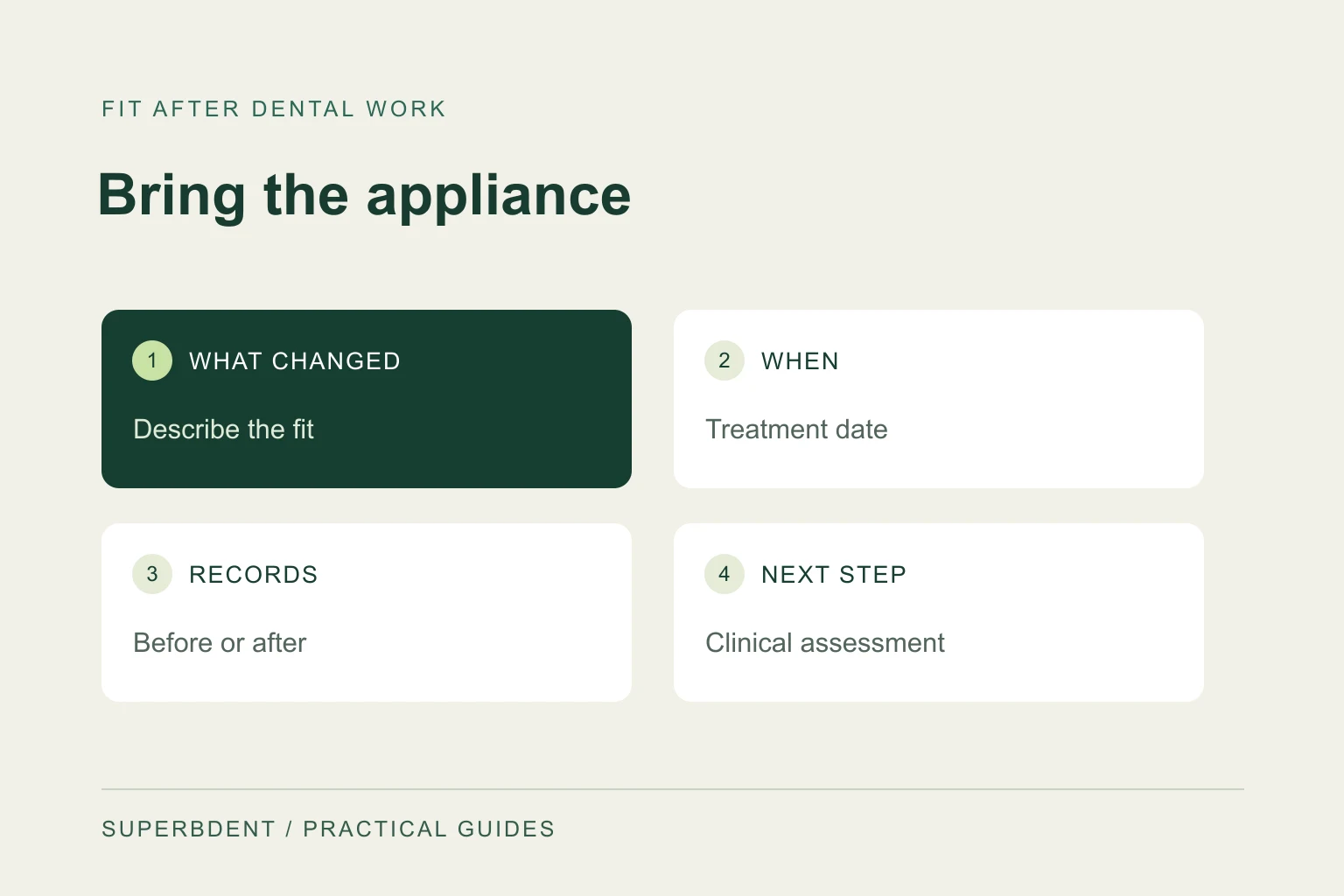
If your retainer no longer seats after a filling or crown, contact the dentist who carried out the work and tell your orthodontic practice as well if it is a different team. Bring the retainer for a fit check. Do not force it onto the teeth or try to reshape it yourself. The next step depends on what changed, the appliance, and the clinician’s assessment.
Why recent dental work matters
A clear retainer is made around a particular tooth shape and position. A restoration can change the surface it fits over. Invisalign’s retainer comparison notes that new impressions may be needed after major dental work. That does not mean every filling requires a new retainer; it explains why a new fit problem deserves a check against the current teeth.
The timing is useful information, but it does not establish the cause by itself. Tell the practice whether the retainer fit immediately before the appointment, whether you have worn it since, and whether another change occurred around the same time. This helps the team evaluate the appliance and restoration together.
Describe what changed
| Observation | Helpful detail for the practice |
|---|---|
| One side does not seat | Name the side and whether this is near the treated tooth. |
| The appliance rocks or lifts | Explain where you notice movement without repeatedly forcing it into place. |
| A new pressure point | Say when it started and whether there is discomfort. |
| Temporary dental work | Tell the orthodontic practice whether the restoration is temporary or final. |
| A gap in retainer wear | Give the approximate dates and why the appliance was out. |
What to bring to the appointment
- The current retainer and its case.
- Any other prescribed retention appliance the practice asks to inspect.
- The date and type of recent dental treatment, if another practice performed it.
- A note of when the retainer last fit normally.
- The contact details of the other treating practice if coordination is needed.
A short message is enough to start: “I had a [filling/crown] on [date]. My [upper/lower] retainer fit before that visit, but now [describe the change]. Should I bring it in, and what is my wear plan until you can assess it?”
Do you need a new scan or retainer?
The clinician needs to decide whether the existing appliance is suitable, whether a professional adjustment is appropriate, or whether a replacement is needed. A laboratory cannot settle that from an old file alone. If a scan predates the dental work, the team should check whether it still represents the surfaces needed for the new appliance.
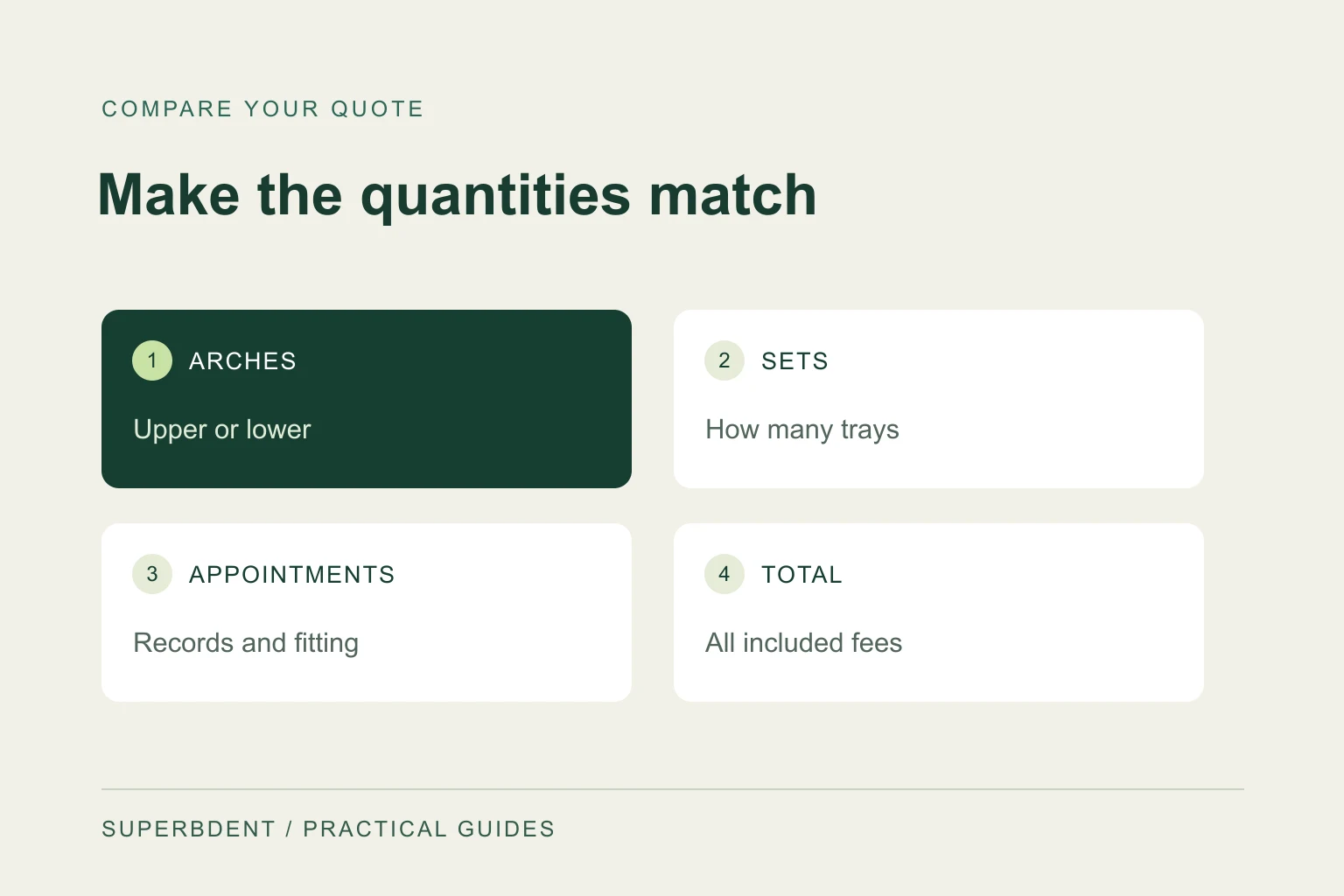
Our existing-scan replacement guide explains the handoff. If a replacement is recommended, ask for an itemized quote showing the appliance, any new records, and the fit appointment. Use the replacement cost checklist to make those items clear.
Plan ahead for the next restoration
Tell your dentist that you wear a retainer before planned restorative work and ask whether to bring it. If treatment involves a temporary stage, ask when fit should be checked and who coordinates the retention plan between appointments. Keeping the dentist and orthodontist informed is more useful than assuming a retainer can simply be reused after every change.
For tightness without recent dental work, start with why your retainer feels tight. For this situation, the most useful action is a check of the current teeth and the actual appliance together.
Sources & further reading
- AAO: a retainer that does not fit or causes pain
- Invisalign: retainer types and records after major dental work
Prepared by SuperbDent Editorial. General education; your treating clinician determines your appliance and care plan.