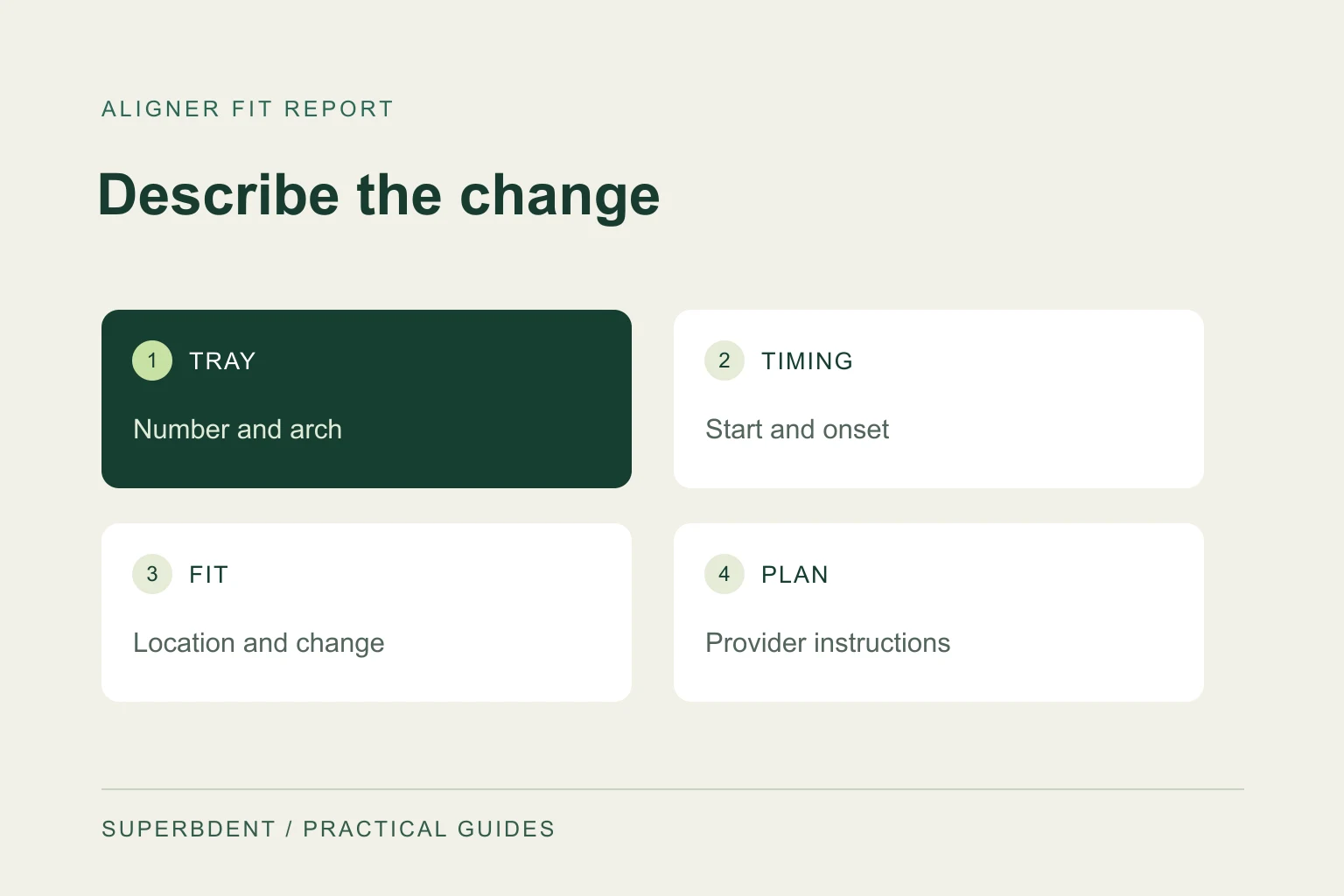
Contact the practice managing your aligners if an attachment comes off. Tell them which tooth area is affected, when you noticed it, your current tray number, and whether the fit feels different. The team can confirm whether the attachment needs replacing, the appointment timing, and what to do about your next tray. Do not try to glue the attachment back on.
What exactly is an attachment?
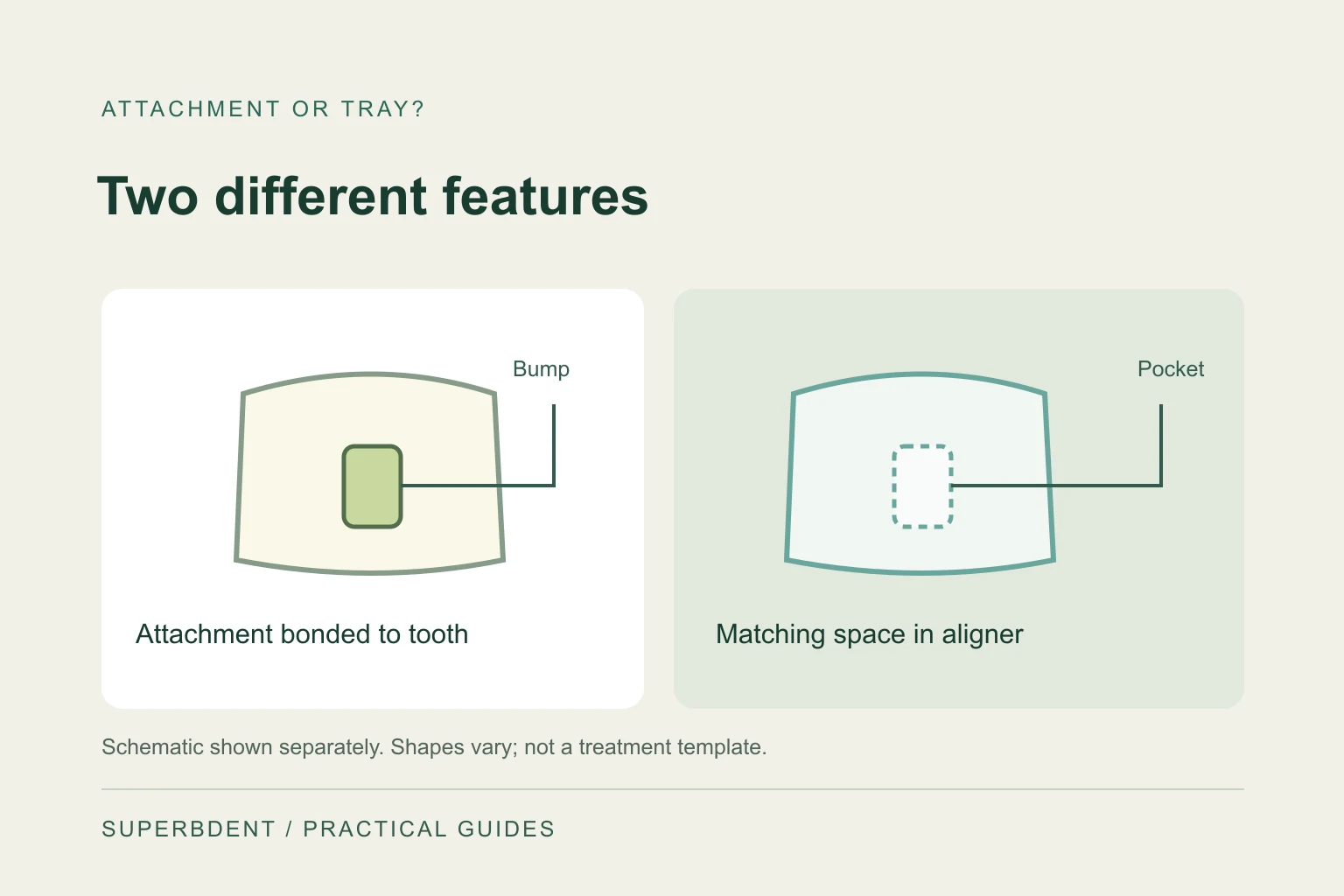
Invisalign describes attachments as small features bonded to selected teeth that help the aligner apply planned forces. They are separate from the removable tray. The number and position vary with the treatment plan, so the importance of a missing one cannot be determined by counting how many remain.
| What you notice | How to describe it |
|---|---|
| A small bump is missing from a tooth | Report a possible detached attachment and the tooth area. |
| A shaped pocket remains in the tray | Describe the pocket and the tooth beneath it; the tray feature is not the bonded attachment. |
| The tray itself has a crack or missing edge | Report damage to the appliance as well as any attachment concern. |
| Something associated with an elastic has come off | Say that it holds an elastic. Do not assume it is the same feature as an aligner attachment. |
Send information that helps the team locate it
“One of the bumps fell off” is a useful starting point, but “upper right, near the back, noticed after removing tray 8 this morning” gives the office more to work with. You do not need to guess a tooth number. Use your own right and left, and say whether the area is upper or lower and toward the front or back.
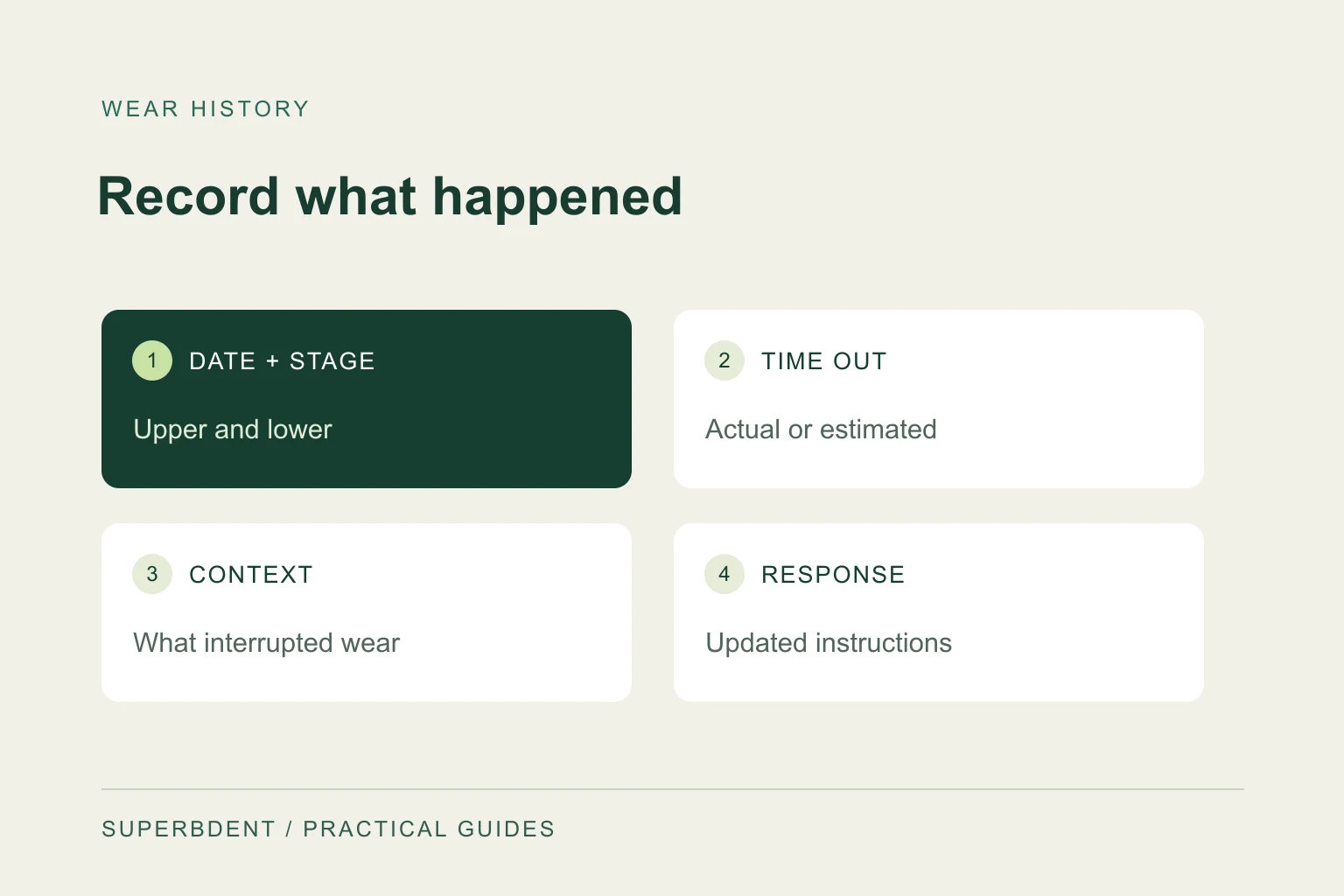
- Record the current upper and lower tray numbers and when you started them.
- Note when the attachment was last present, if you know.
- Describe any lifting, rocking, irritation, or other change you have noticed.
- Tell the team if an elastic or another appliance is involved.
- If photos are requested, use the practice’s requested angles and communication channel.
Will the attachment need replacing immediately?
The practice needs to make that decision for the current stage. Invisalign’s patient information advises contacting the orthodontist to arrange replacement. It does not give a universal number of days that every patient can safely wait. Ask whether the team wants a visit before the next scheduled tray change, especially if that date is close.
A tray that seems to sit in place does not answer every treatment question. Likewise, noticing a gap does not establish why it appeared. Our aligner tracking guide provides a more detailed checklist for describing fit without trying to diagnose it from a photograph.
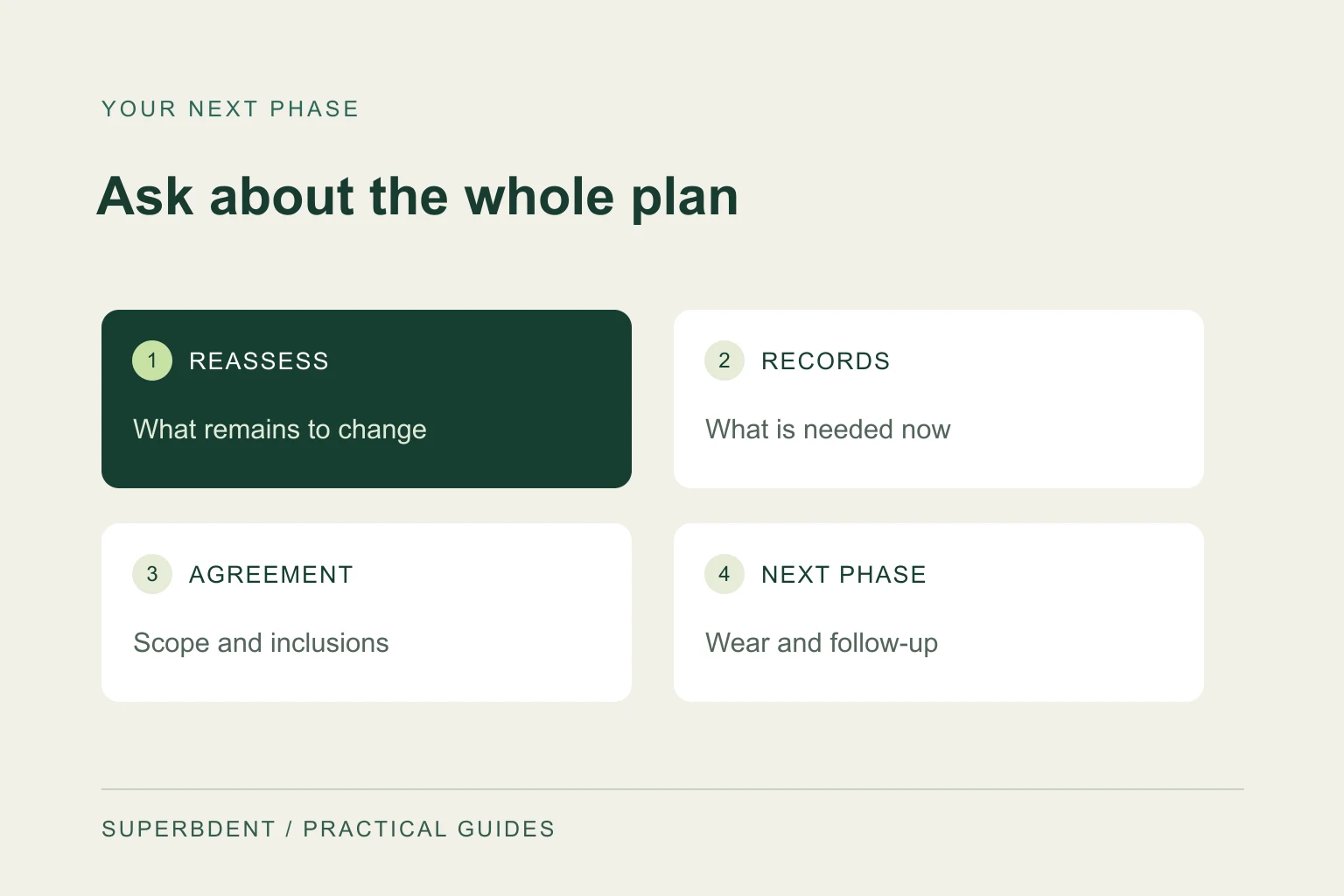
What to confirm before the appointment
| Question | Answer to record |
|---|---|
| Which trays should I use until the visit? | Exact upper and lower stage, following the provider’s instructions. |
| Does my planned change date still apply? | The confirmed date or the condition for receiving a new instruction. |
| What should I bring? | Current trays, packaging, and any other items requested. |
| If I cannot attend the offered time, what should I do? | The practice’s alternative contact or scheduling plan. |
Avoid turning a small component problem into a larger one
Leave rebonding, trimming, and adjustments to the dental team. Do not fill an empty tray pocket or scrape the tooth to make it look even. If removal has become difficult, ask the practice to demonstrate the technique for your appliance. A video for a different attachment arrangement may not resolve your particular difficulty.
Use the printable fit checklist to keep your observations and the response together. A detached attachment does not by itself tell you whether refinement aligners will be needed later.
Sources & further reading
- Invisalign: attachment purpose, placement, and what to do if one falls off
- AAO: clear aligner treatment and professional supervision
Prepared by SuperbDent Editorial. General education; your treating clinician determines your appliance and care plan.