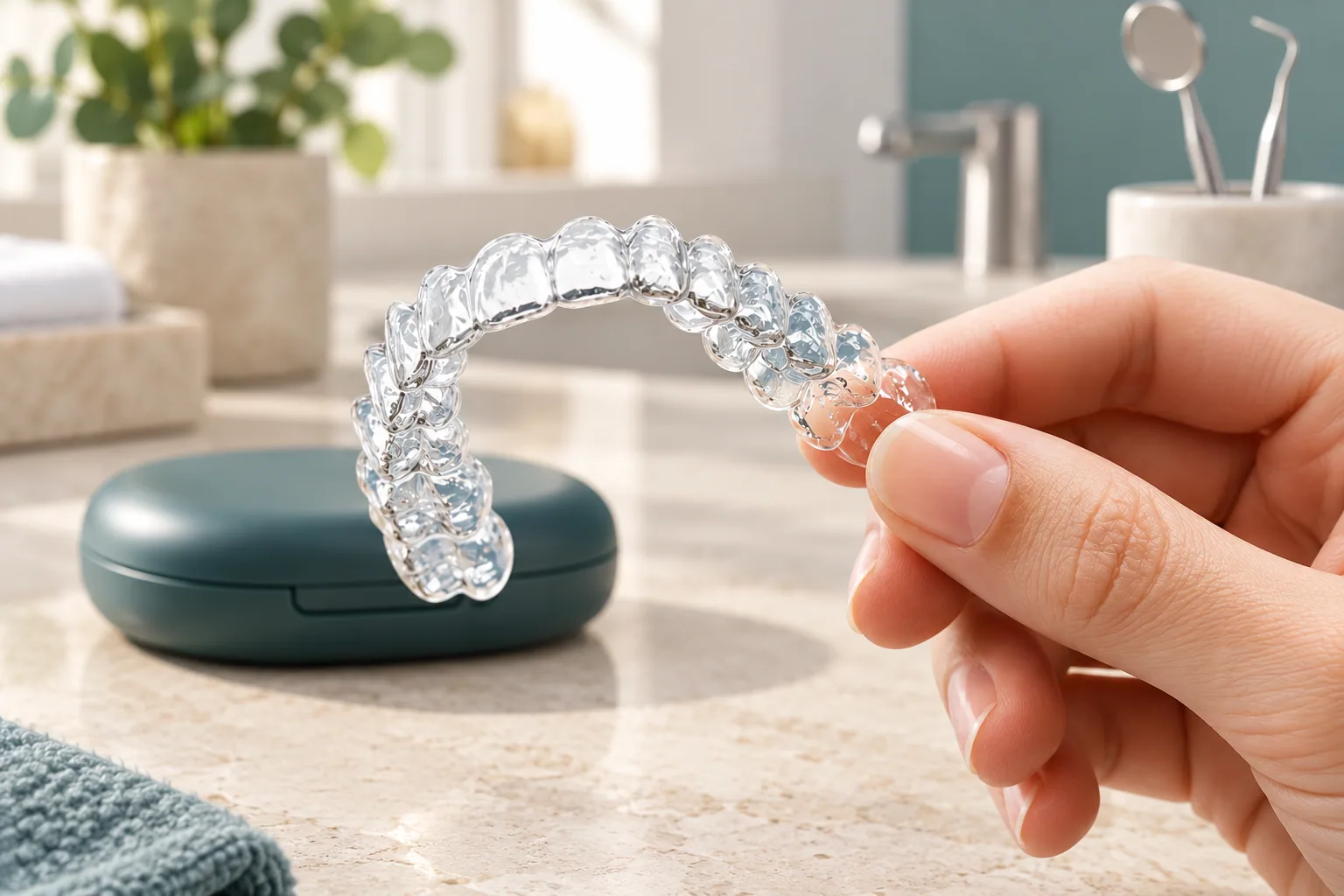
“Not tracking” describes concern that the teeth are not following the positions planned through an aligner sequence. A gap between a tray and a tooth is something to report, but it does not tell you the cause or the correct fix by itself. Contact your treating provider with the tray number, when you started wearing it, and where the fit looks different. Confirm the next step before changing your prescribed sequence.
Tightness and seating are different observations
An aligner can feel snug without every visible space meaning the same thing. Describe what you can actually observe: a section that will not seat, a tray that rocks, a change around an attachment, or a gap that remains. Your provider compares the appliance, current tooth positions, and treatment plan rather than relying on a single photo or a universal gap measurement.
ClearCorrect’s first fit appointment guidance places fit assessment and insertion instruction in the clinical appointment. That is a useful principle throughout treatment: the team that prescribed the sequence should decide how to address a new fit concern.
Prepare the details that change the conversation
| Detail | What to send or record |
|---|---|
| Tray identification | Upper or lower arch and the number printed on the tray or packaging. |
| Timing | When you started this tray and when you first noticed the fit difference. |
| Wear history | Your actual recent wear, including interruptions; an honest record is more useful than a perfect-looking one. |
| Location | Which side or tooth area appears different and whether the tray rocks or lifts. |
| Attachments and appliance | A missing attachment, visible crack, heat exposure, or other change you noticed. |
| Symptoms | Discomfort or irritation and whether it is changing. |
If the practice asks for photos, follow its instructions for angles, lighting, and whether the aligners should be in place. Use the communication channel the practice provides. Keep your tray packaging available so the team can confirm the sequence without guessing.
What if an attachment has fallen off?
Attachments are features placed on teeth as part of some aligner plans. Invisalign’s attachment guidance advises contacting the orthodontist if one comes off. Tell the practice when you noticed it and whether the tray fits differently. Do not attempt to glue it back on.
Questions to settle before your next tray
- Which tray should I wear while you assess this concern?
- Should I keep my scheduled change date, or will you give me a revised plan?
- Do you need photos, an in-person appointment, or new records?
- Is there anything specific you want me to monitor before the next check?
- How should I contact you if the fit or symptoms change?
Does this automatically mean refinements?
A fit concern does not by itself tell you whether additional aligners will be needed. The provider first needs enough information to assess the present stage. If a revision or refinement is proposed, ask what records are needed, what it changes in the plan, and whether the cost is included in your treatment agreement.
Dental teams can use our refinement handoff questions. Patients should take those cost and timing questions to their treating practice, which is responsible for the clinical plan.
Make the next contact useful
Open the printable aligner fit checklist before contacting the practice. It gives you space to record the tray details and the instructions you receive. If you have finished active treatment and are asking about a final tray, see retainers versus the last aligner instead; that is a different decision.
For related questions, see what to report when an attachment falls off, how to record missed wear time, and what a proposed refinement phase means for patients.
Sources & further reading
- ClearCorrect: the first aligner fit appointment
- Invisalign: attachments and what to do if one falls off
- Invisalign: provider monitoring and treatment questions
Prepared by SuperbDent Editorial. General education; your treating clinician determines your appliance and care plan.