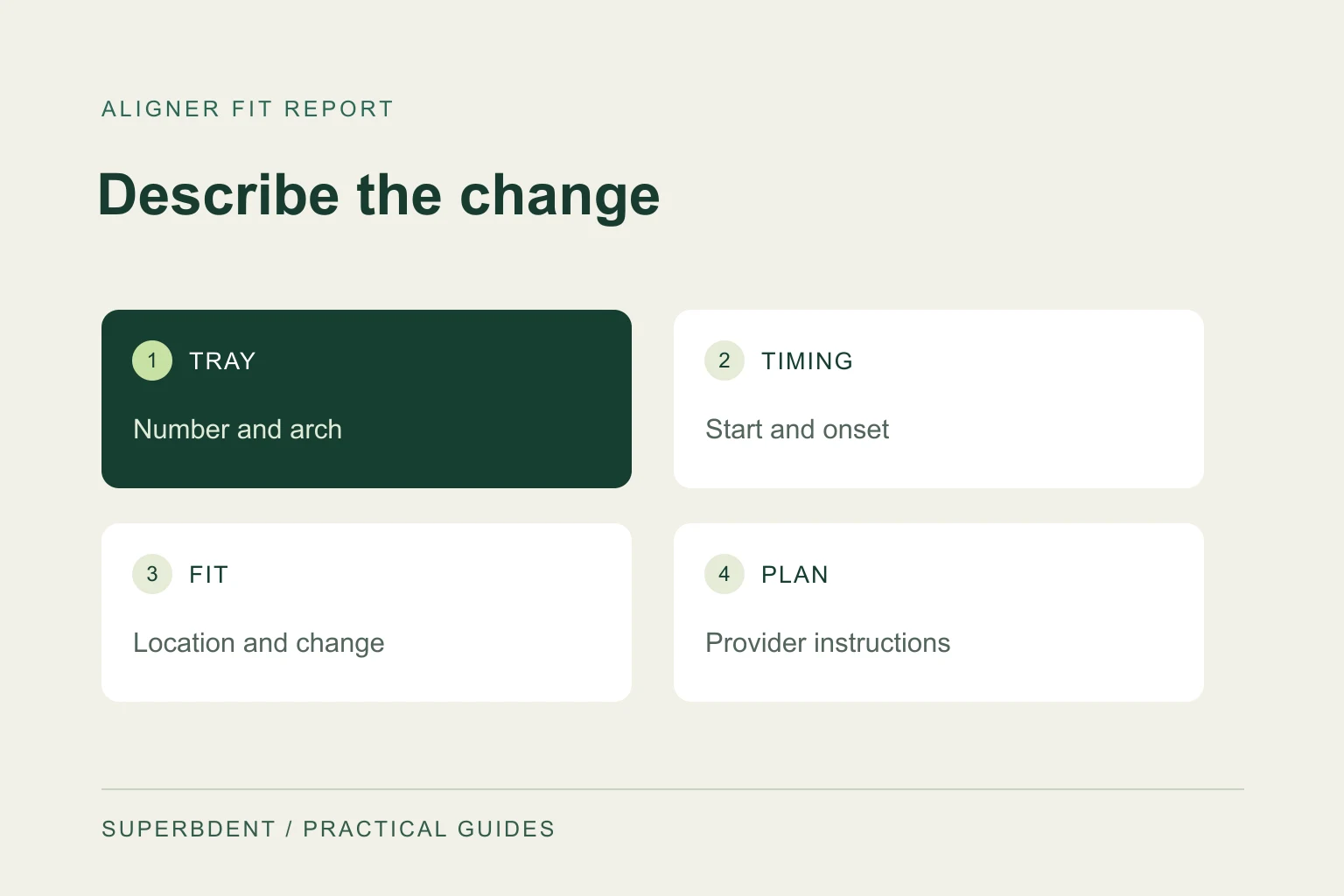
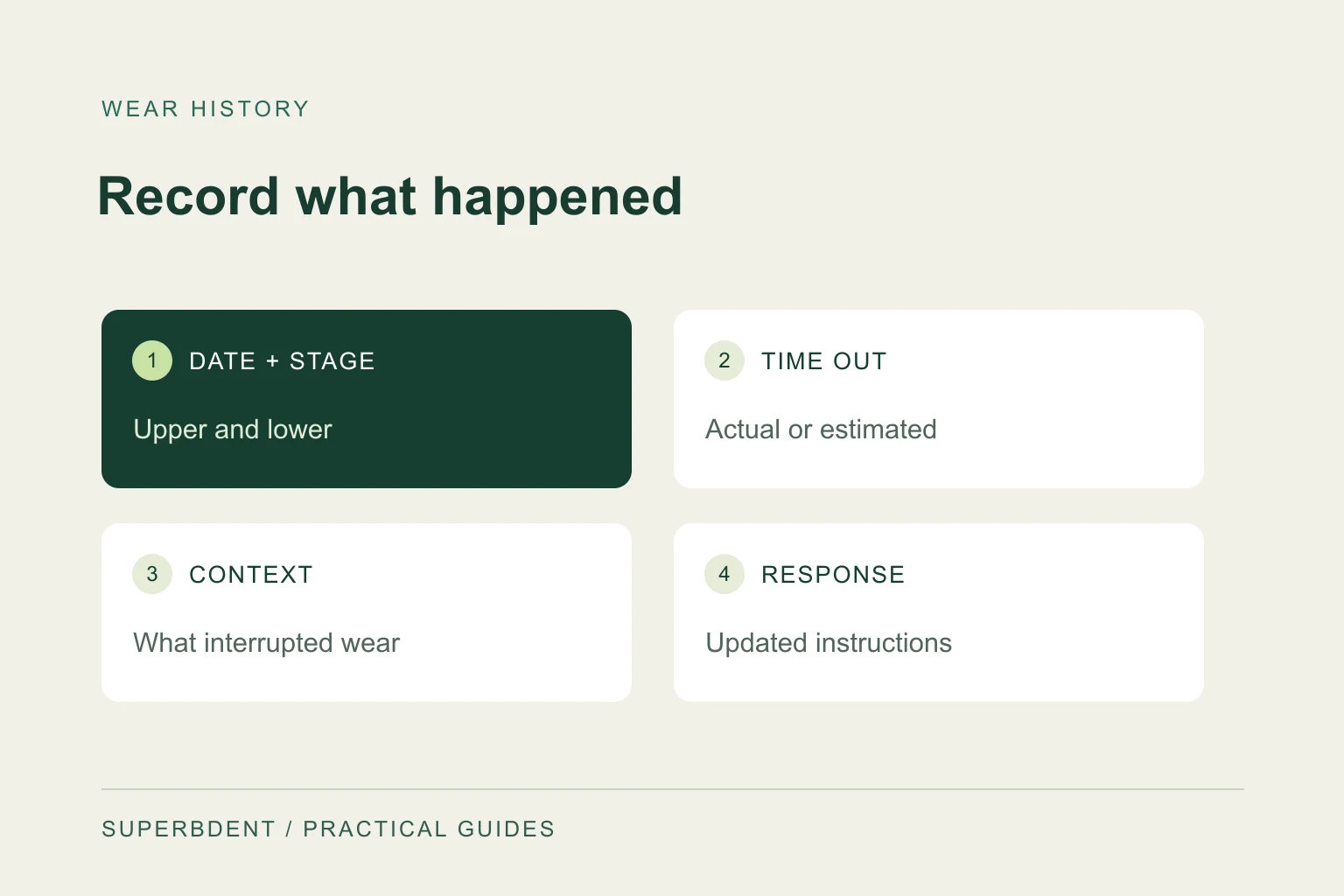
If you have missed prescribed aligner wear, record what happened and contact your treating practice when you need advice about the next change. Give the current tray number, the dates and length of the interruption, and any fit change. Do not create a catch-up rule by adding hours or advancing, extending, or switching trays on your own.
The AAO explains that aligners are worn according to a prescribed schedule and commonly describes 20–22 hours per day. Your own instructions are the relevant target. That daily target is not a formula for deciding what one missed evening means for your treatment.
Write a useful history, even when it is incomplete
| Record | Why it helps the conversation |
|---|---|
| Date and tray number | Identifies the stage affected, including the upper and lower arch. |
| Time removed and reinserted | Separates one long interruption from several short breaks. |
| Known or estimated timing | Makes uncertainty visible instead of giving false precision. |
| Reason for the interruption | Shows whether the issue was routine, loss, difficulty, or another concern. |
| Current fit or symptoms | Gives the practice additional information to assess. |
| Upcoming change date | Flags whether you need instructions before the scheduled switch. |
An example of a clear entry
If you cannot remember every break, say so. A note such as “I am certain about lunch and the evening gap but did not time breakfast” is more useful than a fabricated total. Record each removal once and avoid counting overlapping intervals twice. The printable wear log leaves room for estimates and the practice’s response.
Questions to settle before your next tray
- Does my existing change date still apply, or do you need to assess me first?
- Which upper and lower trays should I use while waiting for your response?
- Do you want photographs, a visit, or a more detailed wear record?
- What should I report if the fit or comfort changes?
- When and through which channel should I expect updated instructions?
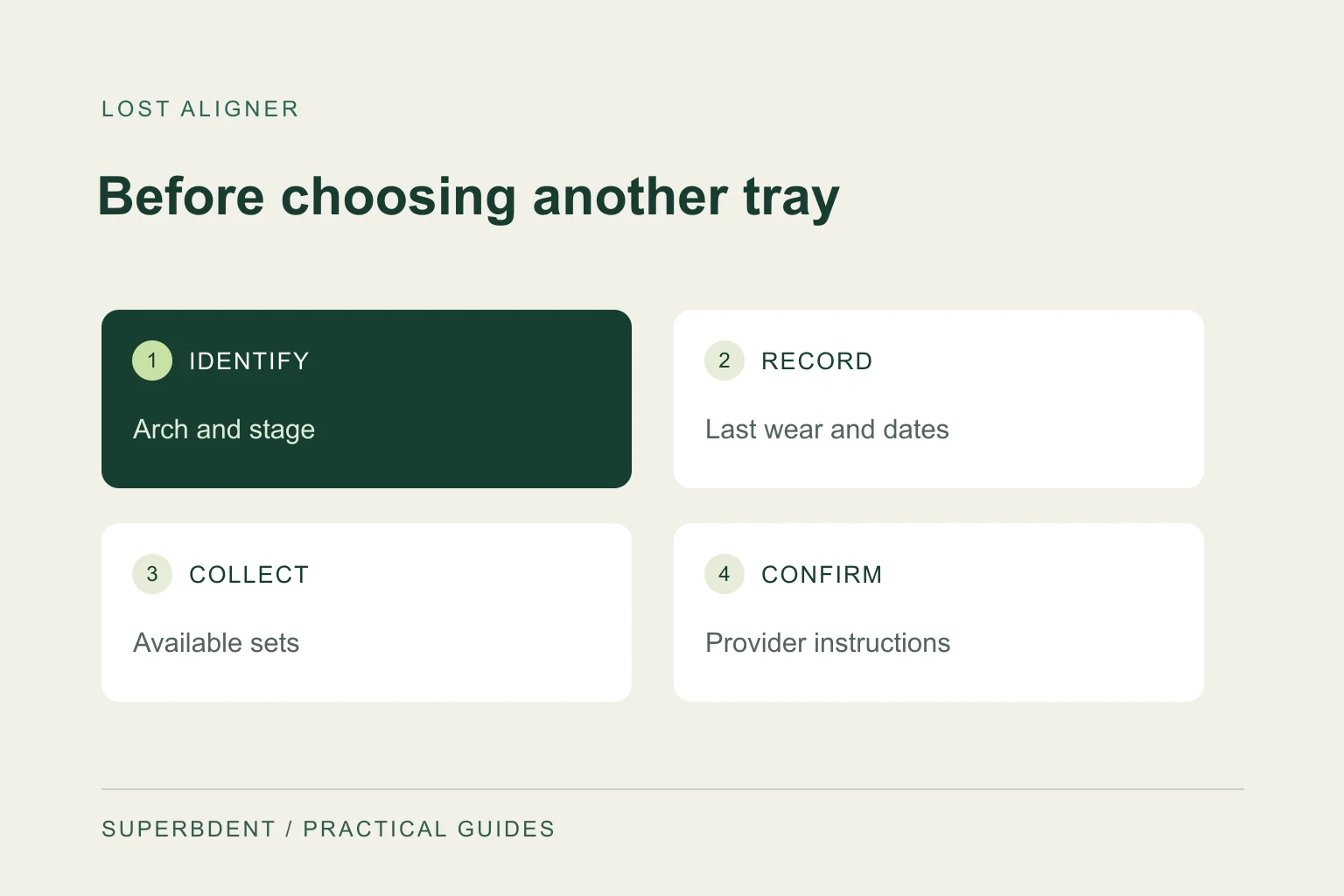
If the tray no longer seats as expected, report that separately using the fit checklist. Do not force it into place or use a new seating routine as a substitute for an assessment. If the interruption happened because the tray is missing, the lost aligner guide identifies the additional information to collect.
Use the record to improve the routine
Look for the practical reason time is being lost. A case left at home, repeated drinks over a long afternoon, a missing cleaning container, or an unclear removal technique calls for a different conversation. Write down the obstacle so the team can help you build a realistic routine around the prescribed plan.
Useful reminders can be tied to an event you already notice: finishing a meal, putting the cleaned case away, or checking your bag before leaving. A phone reminder records your intention; it does not prove that you wore the trays. Keep necessary oral hygiene in the routine, and use the aligner cleaning guide to check the product steps.
Keep the updated plan with the log
When the practice responds, record the date, the instructions, and the next follow-up. If a later instruction replaces an earlier one, make that clear rather than keeping two conflicting dates in different messages. Continue using the communication method the practice provides for treatment questions.
If repeated meal or drink breaks are part of the pattern, use the practical eating and drinking routine to identify a change you can discuss with your provider.
Sources & further reading
- AAO: clear aligner wear and prescribed treatment
- Invisalign: everyday routine and wear-time tracking
Prepared by SuperbDent Editorial. General education; your treating clinician determines your appliance and care plan.