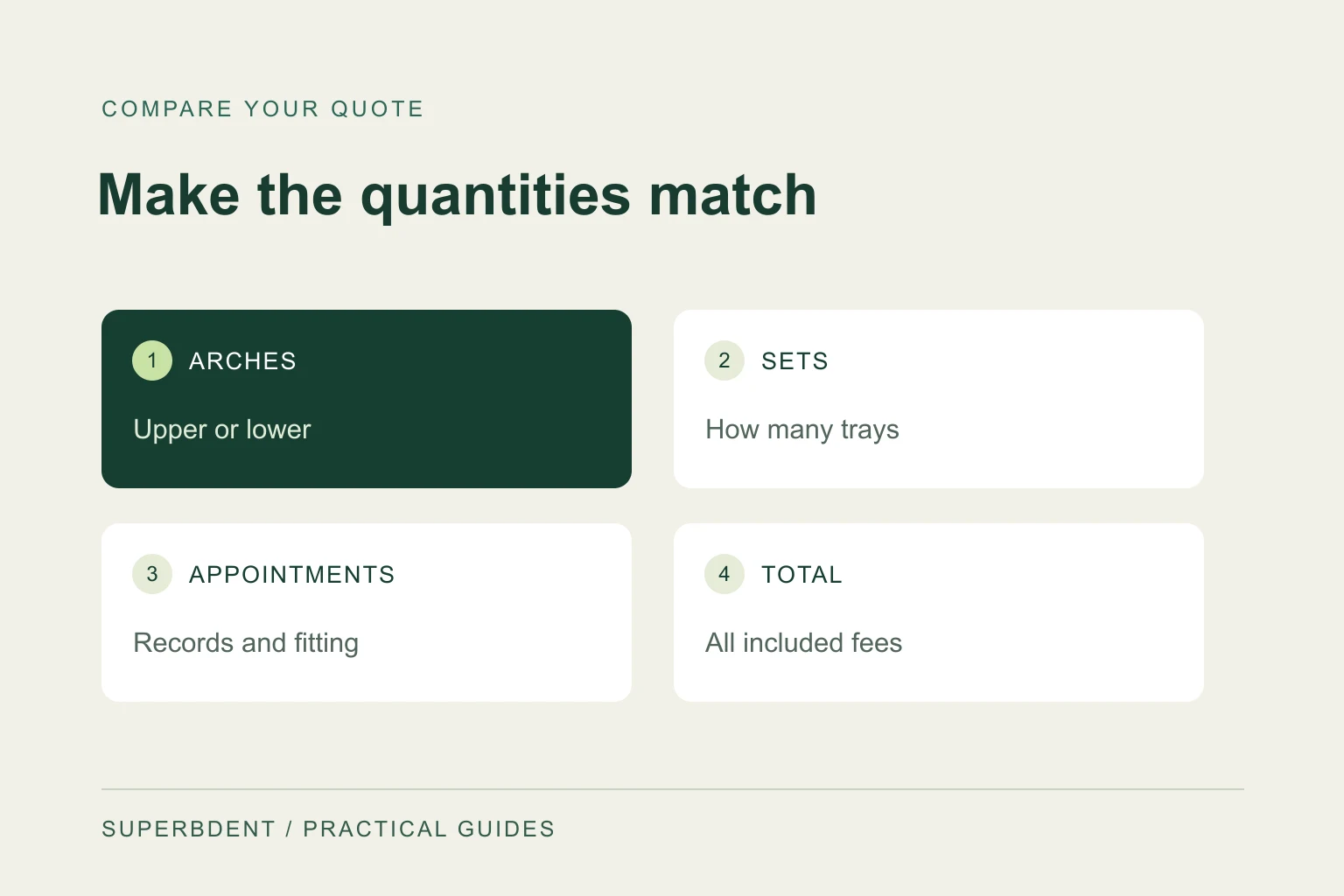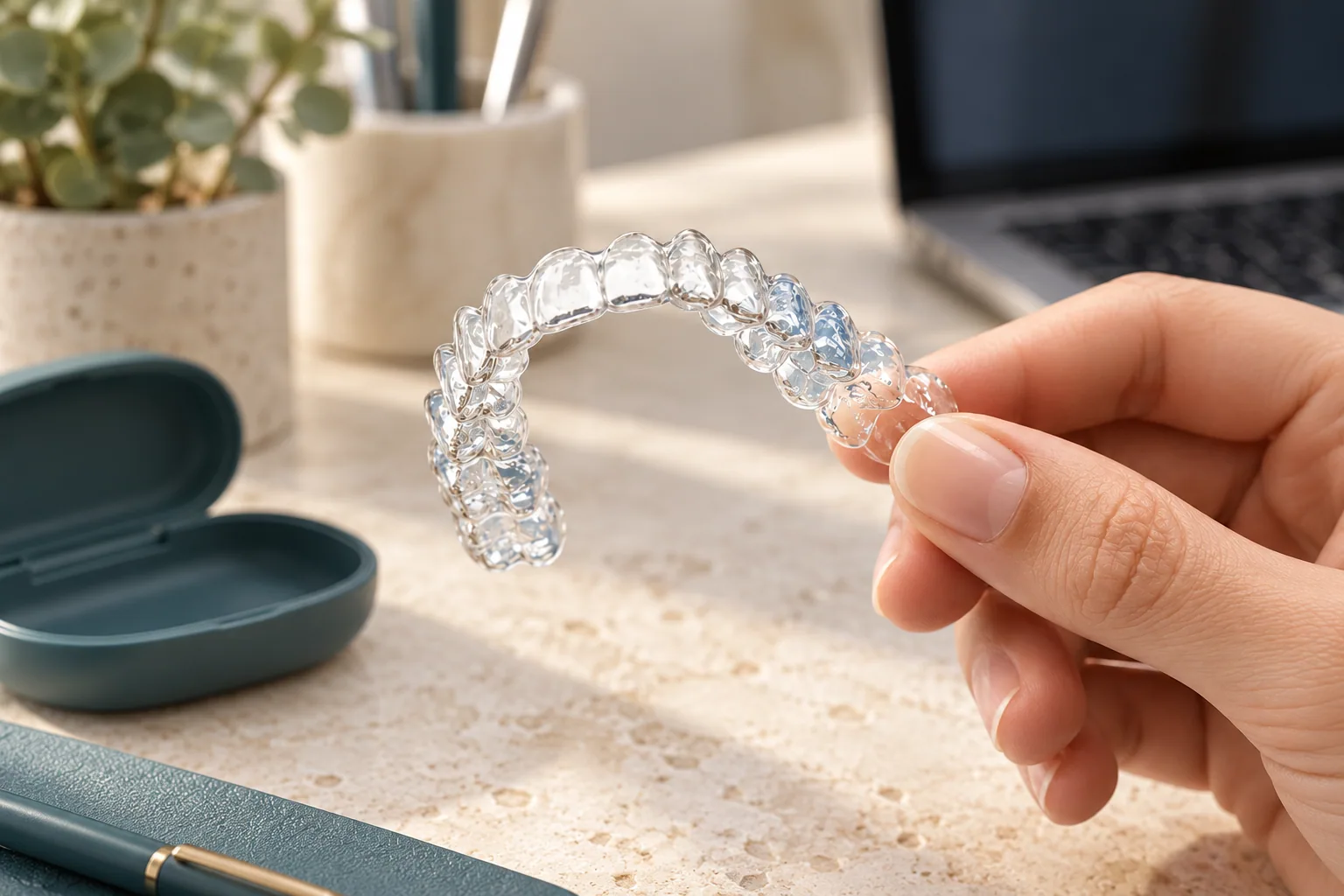
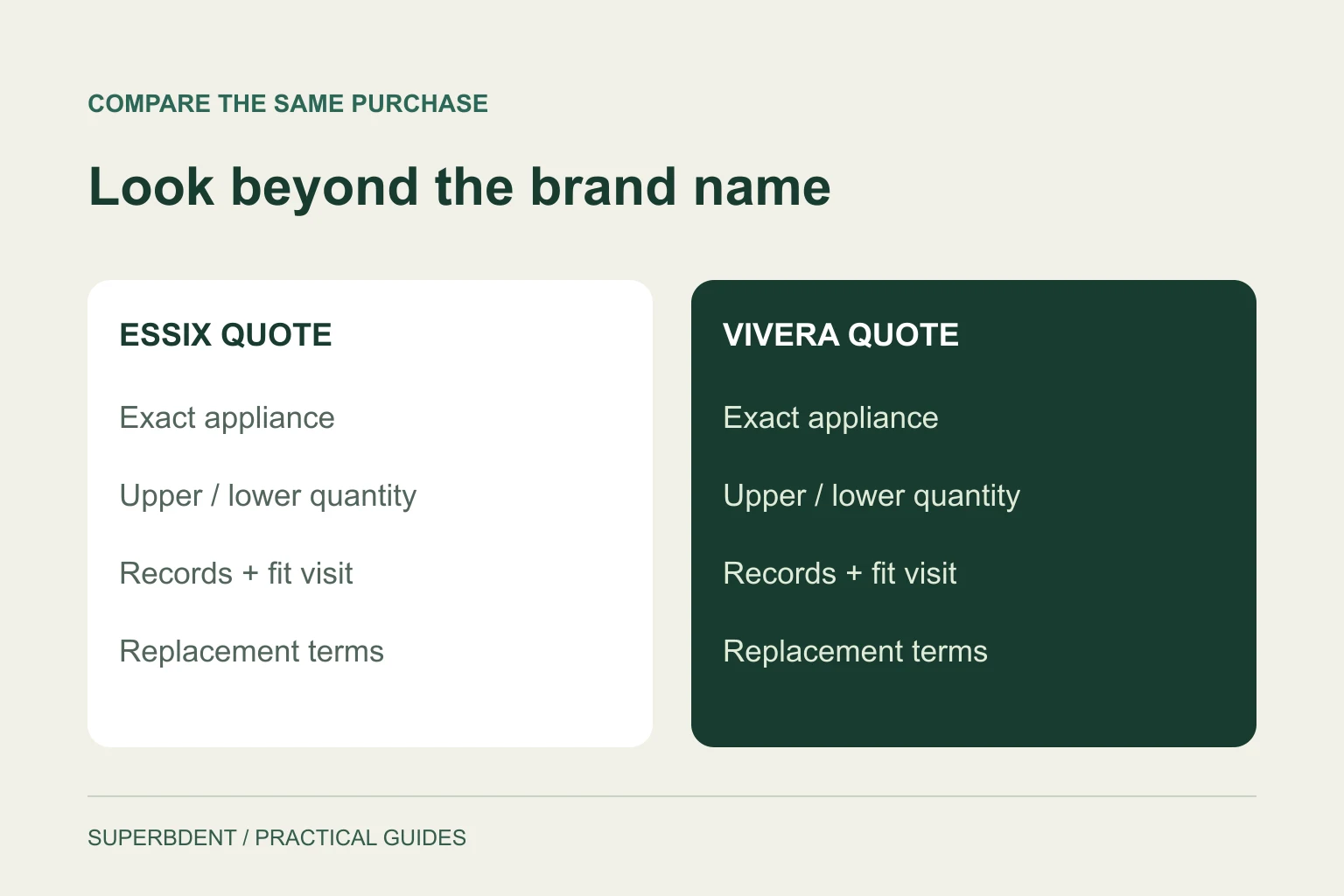
Essix and Vivera can both refer to clear removable retainers, but the names do not describe two identical packages with a simple better-or-worse ranking. Start by identifying the actual appliance, then compare how many retainers, records, appointments, and replacement services each quote includes. Your treating clinician should decide which option suits your retention plan.
What do the names tell you?
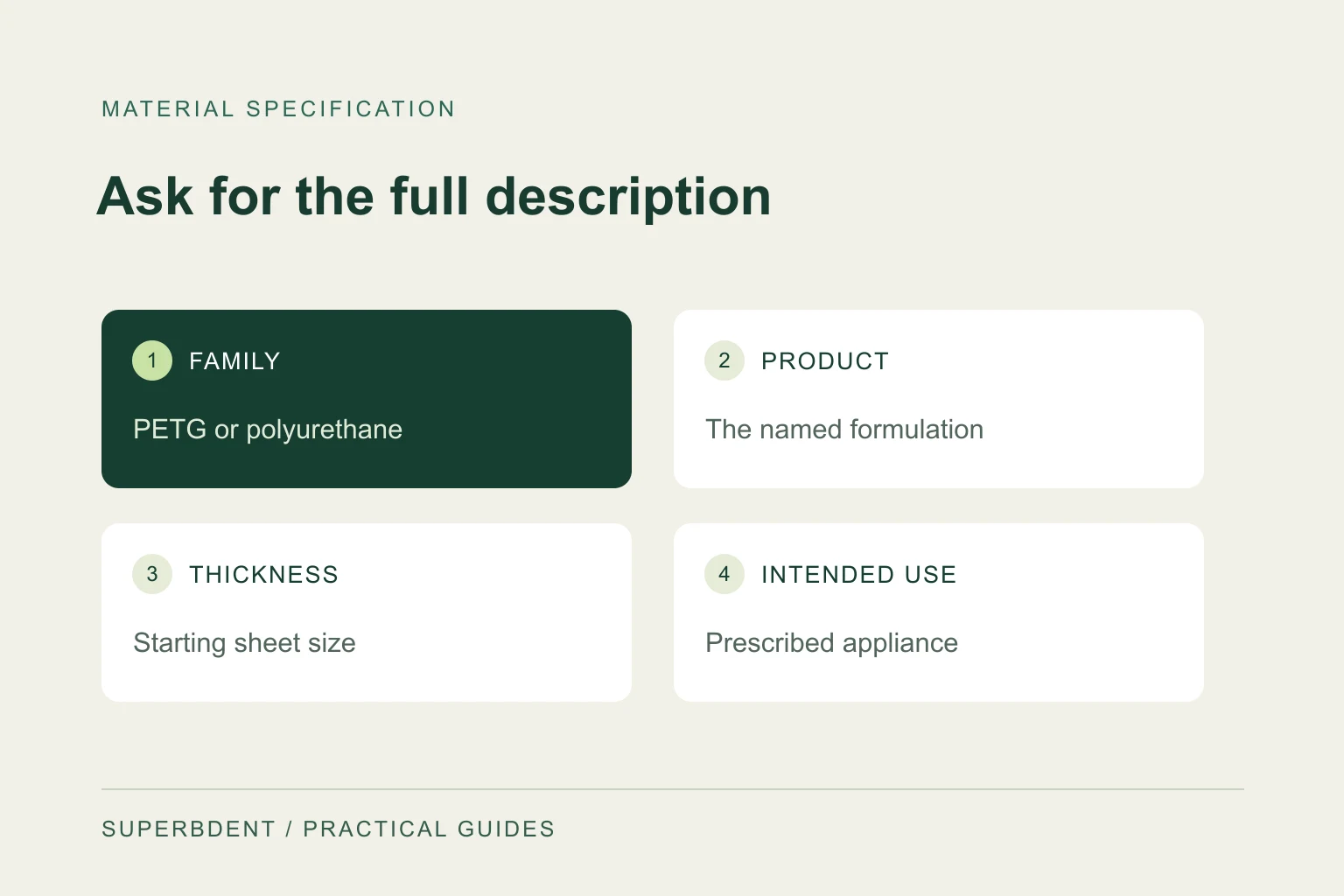
Essix is a dental plastics brand with several products. The Dentsply Sirona plastics guide lists different formulations, thicknesses, and intended uses. An “Essix retainer” quote should therefore identify the product being used; the name alone is not a complete material specification. Ask whether the practice is using Essix as a brand name or describing the general clear-retainer style.
Vivera is Align Technology’s branded retainer offering. Its US provider page describes ordering from a scan, PVS impression, or final ClinCheck planning stage, and lists four sets in an initial order. Confirm the arches, quantity, and services in your own quote rather than assuming every offer has the same contents.
Compare these details side by side
| Question | Why the answer matters |
|---|---|
| What exact appliance and material will I receive? | A named product is more useful than “premium plastic” or “clear retainer.” |
| Upper, lower, or both—and how many of each? | One upper appliance is not the same purchase as several upper-and-lower sets. |
| Which records will be used? | Ask whether existing records are suitable or a new scan or impression is included. |
| Who checks the fit? | Confirm the delivery appointment and what happens if the appliance needs clinical review. |
| What does a later replacement include? | Record retention, new records, appointments, and shipping can affect the next order. |
| What care and wear instructions are supplied? | An appliance needs a routine matched to its material and your clinician’s plan. |
A cheaper quote may cover a different purchase
Imagine one written quote lists a single upper retainer and another lists multiple upper-and-lower sets. Dividing each total by the word “set” still leaves a misleading comparison unless the definition of a set is clear. First write the number of upper and lower appliances separately. Then list included records, delivery visits, and follow-up. This is a comparison method, not a current price example.
If the contents still differ, ask the practice to explain which package meets your needs. Extra sets only have value if they are appropriate for your mouth and your provider explains how to use and store them. Our replacement retainer cost guide and printable worksheet help capture those details.
How to read durability claims
A strength or durability claim is not a personal replacement timetable. Before using it to justify a price difference, ask which material was compared, how the test was performed, and whether the claim describes laboratory testing or patient use. This article does not independently test either product or rank one as universally longer lasting.
Bring your own history to the discussion: previous cracks, changes in fit, lost appliances, and planned dental work. Those are more actionable than choosing from a marketing percentage alone. If a filling or crown has changed your teeth since the stored record, discuss whether a new record is needed.
Questions to settle before accepting a quote
- What does my clinician recommend for this mouth, and why?
- Can I have the exact appliance, arches, quantities, and included visits in writing?
- Who handles a fit concern, and how do I contact them?
- What is the policy for loss, damage, remakes, and future records?
Sources & further reading
Prepared by SuperbDent Editorial. General education; your treating clinician determines your appliance and care plan.