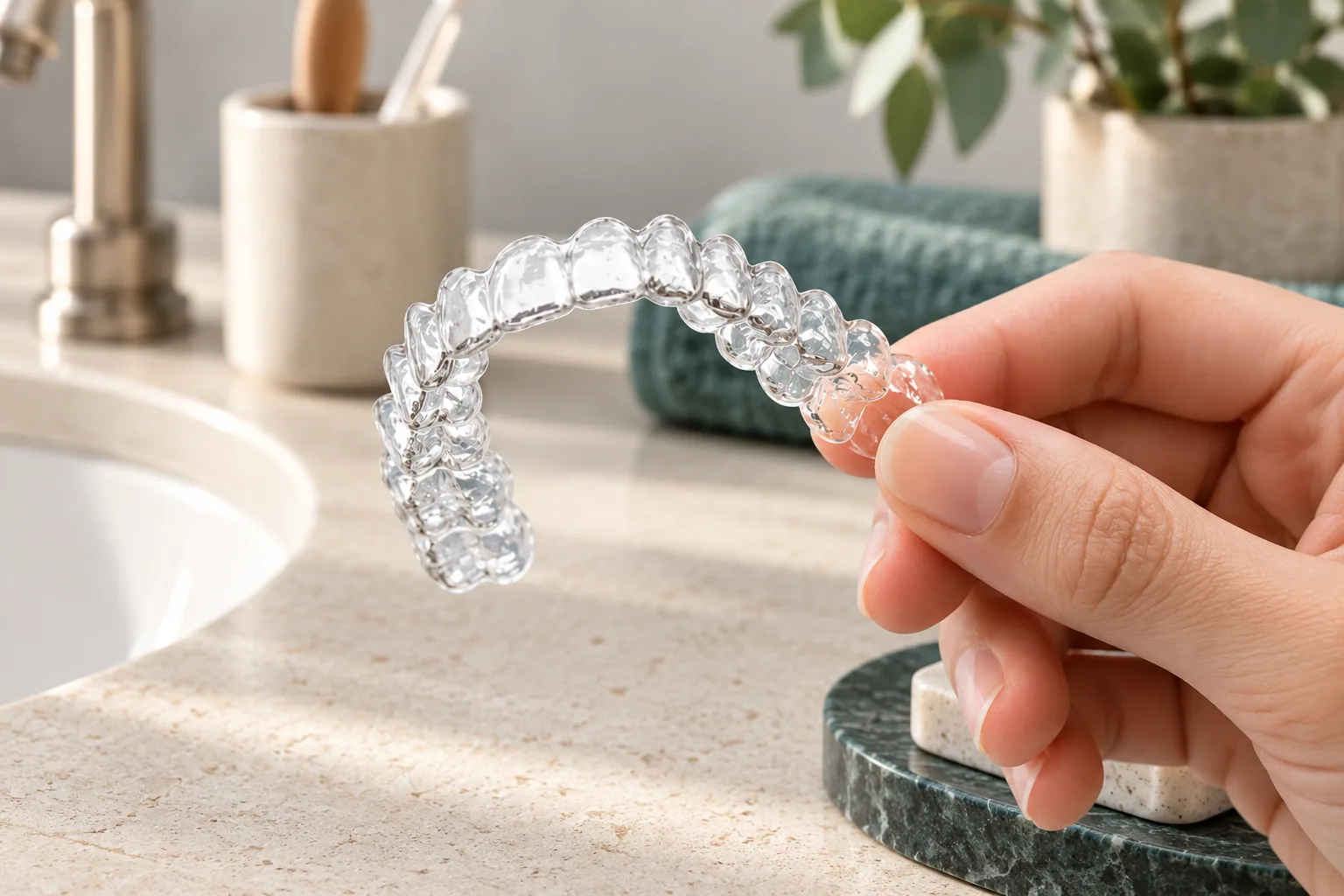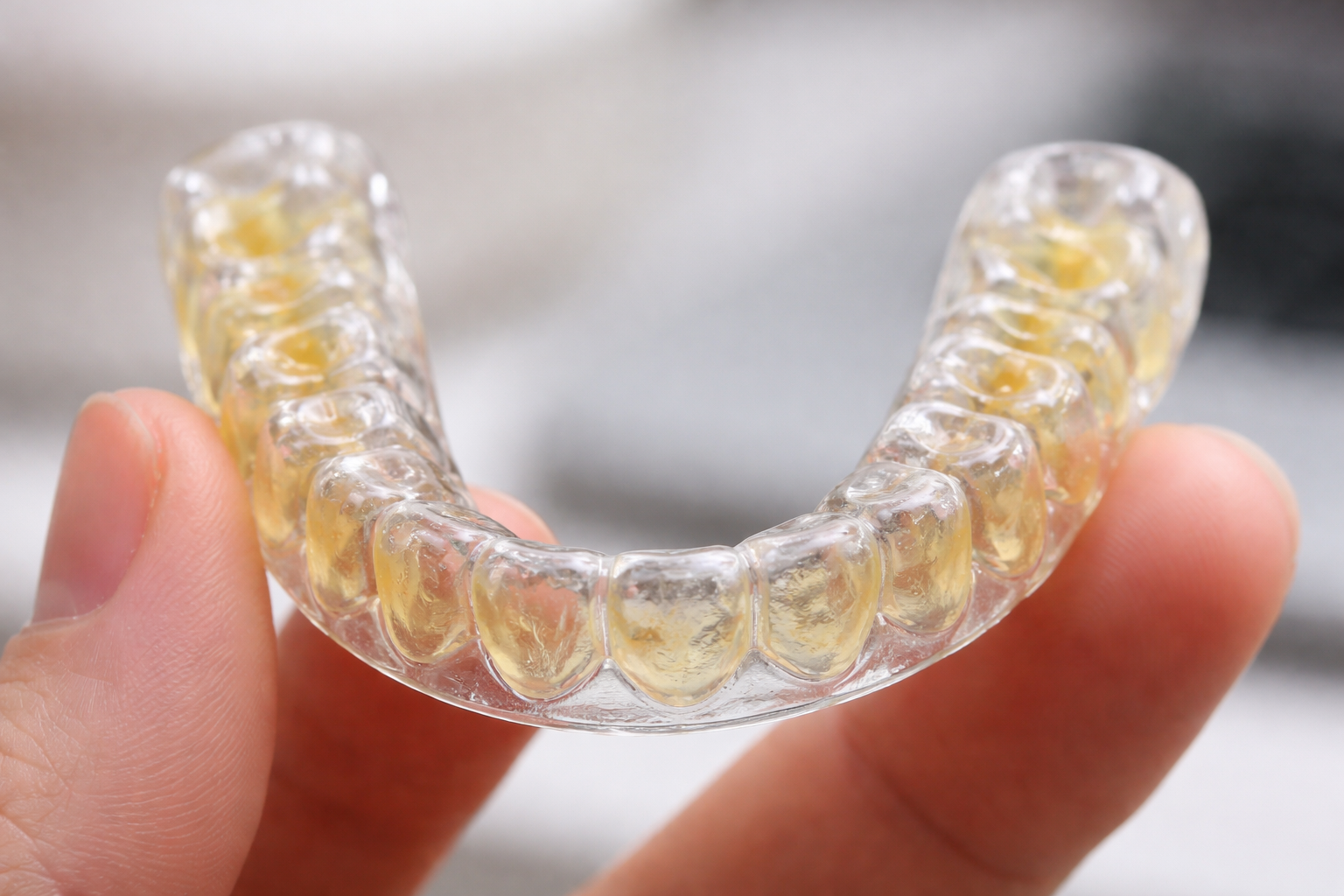
You invested time, money, and patience to get your perfect smile — and your clear retainer is the final guardian keeping everything in place. But without proper cleaning, that very retainer can become a breeding ground for bacteria, plaque, and unpleasant odors.
Whether you just got your first set or you've been wearing a retainer for years, this guide covers everything you need to know about maintaining superb retainer hygiene. We've reviewed the latest orthodontic research and expert recommendations to bring you the most accurate, up-to-date care instructions.
Superb Retainer Pro Tip: Never use regular toothpaste on your clear retainer. Most toothpastes contain micro-abrasives designed to polish enamel, but these same particles will scratch clear plastic, making it cloudy and creating micro-grooves where bacteria accumulate.
Weekly Deep Cleaning Methods
Daily cleaning handles surface-level maintenance, but deeper deposits of tartar, stubborn stains, and entrenched bacteria need a more intensive approach. Choose one of these proven methods once or twice per week for truly superb retainer freshness:
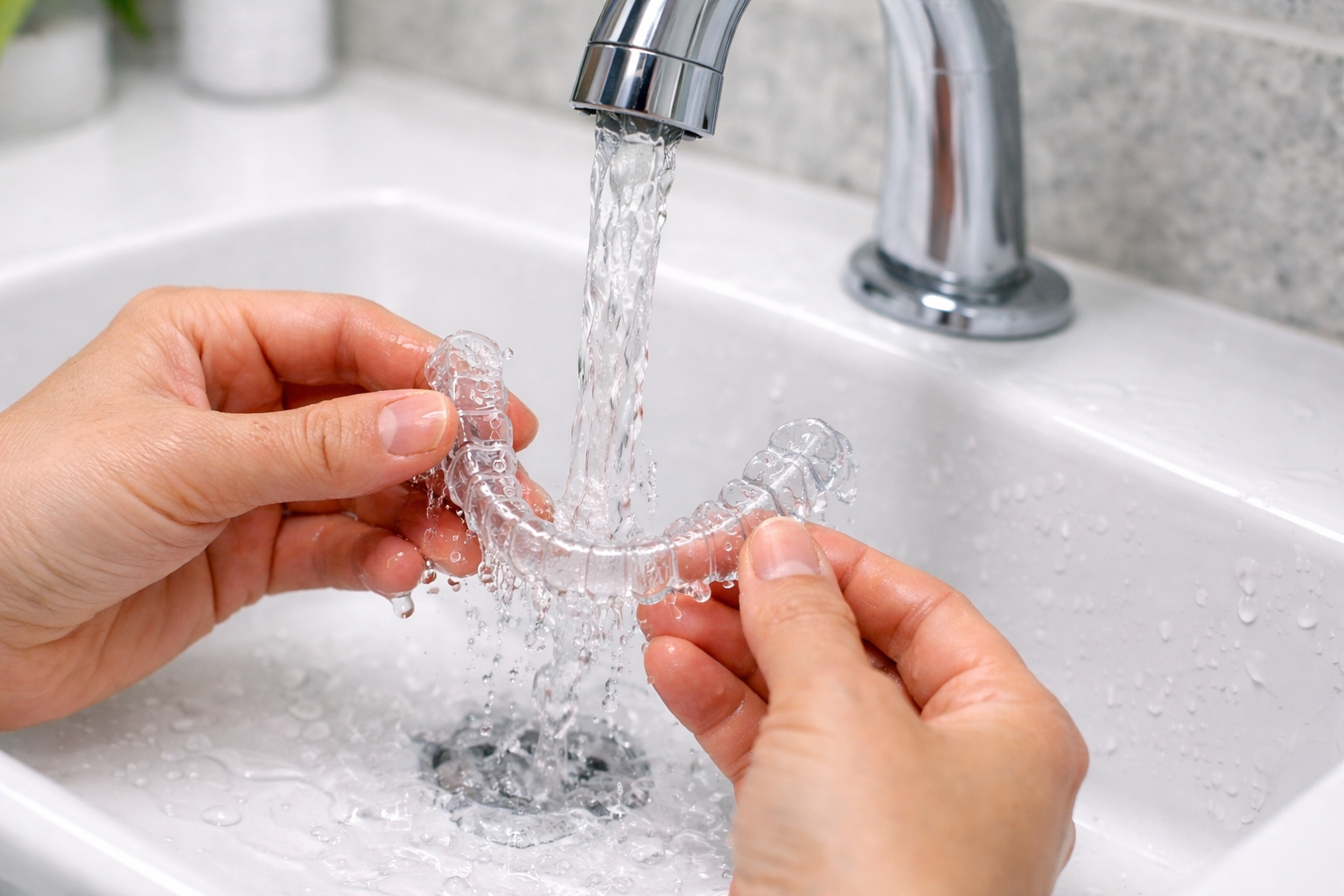
Mix equal parts baking soda and water to form a thick paste. Apply it to the retainer and gently scrub with a soft brush, covering all surfaces. Rinse thoroughly with cool water. Baking soda is a gentle, non-abrasive cleaner that neutralizes odors and kills bacteria without chemicals.
Combine equal parts water and 3% hydrogen peroxide in a clean glass. Submerge your retainer for 15–30 minutes. This method kills bacteria and gently whitens yellowed plastic, restoring clarity. Use once a week — overuse can wear plastic over time.
Mix equal parts white vinegar and water. Soak your retainer for 15–30 minutes, then gently brush and rinse. Vinegar excels at dissolving calcium deposits (tartar) and hard mineral buildup that brushing alone won't remove.
Drop a retainer or denture cleaning tablet into a cup of water and submerge your retainer for 15–20 minutes per the product instructions. These effervescent tablets are specifically formulated to disinfect oral appliances. Rinse well before wearing.
Hydrogen peroxide works best for removing yellow stains, while vinegar is best for removing crusty mineral buildup. Research shows the most effective cleaning combines both chemical and mechanical methods — so always brush gently after soaking for truly superb retainer results.
Ultrasonic Cleaning — The Modern Approach
For those who want the highest standard of cleanliness, ultrasonic cleaners represent the gold standard in superb retainer care. These compact devices use high-frequency sound waves (20–45 kHz) to create microscopic bubbles in a cleaning solution — a process called cavitation. When these bubbles collapse, they produce tiny but powerful shock waves that dislodge debris, bacteria, and stains from every crevice of your retainer.
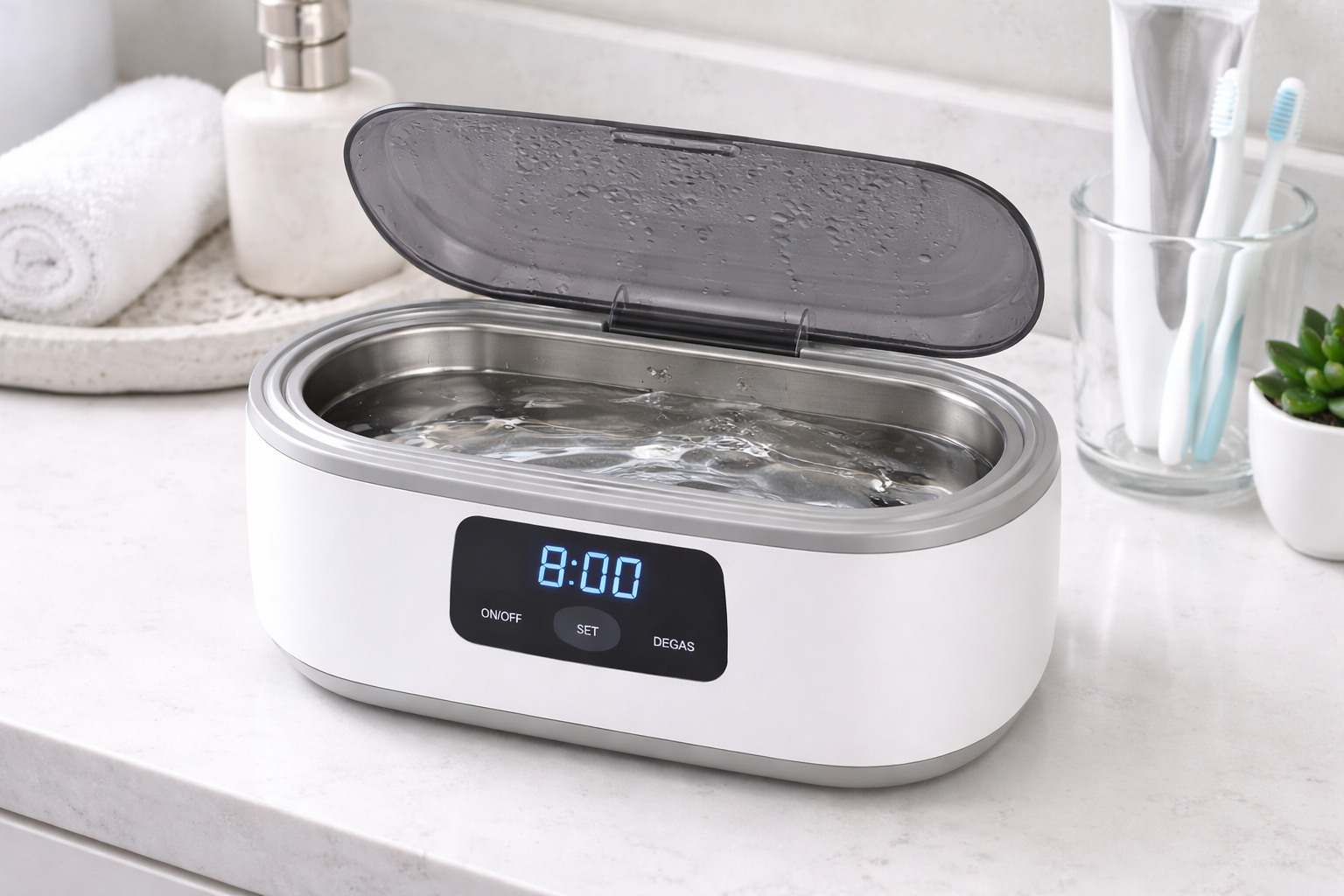
A study from the University College London Eastman Dental Institute found that 66.7% of retainers harbored Candida and traces of Staphylococcus. Ultrasonic cleaners have been shown to clean dental plastics significantly better than traditional brushing or soaking alone, eliminating up to 99.9% of bacteria.
How to Use an Ultrasonic Cleaner
- Fill with cool or distilled water. Avoid tap water when possible, as minerals can leave deposits. Less water means more concentrated cleaning power.
- Add cleaning solution (optional). A few drops of retainer-safe cleaning solution boosts effectiveness, but plain water works well too.
- Submerge & start the cycle. Place the retainer fully in the water and run the cycle for 3–5 minutes per manufacturer instructions.
- Rinse & dry. Rinse under cool running water and air-dry on a clean surface, or pat dry with a soft cloth.
Shopping Tip: Look for an ultrasonic cleaner in the 35–45 kHz frequency range for optimal cavitation performance. Compact models with UV sterilization or auto-shutoff are great for travel. Pair it with your Superb Retainer for a complete care system.
What to Avoid (Common Mistakes)
Even with the best intentions, many people unknowingly damage their retainers through improper cleaning. Here are the most common mistakes to steer clear of if you want to maintain superb retainer quality:
If your retainer has cracks, holes, or feels loose, stop wearing it immediately and contact your orthodontist. A damaged retainer can shift teeth improperly or irritate your gums. It's better to replace it than risk undoing your orthodontic results.
The Science Behind Retainer Bacteria
Multiple peer-reviewed studies have examined how bacteria interact with clear retainer materials. Here's what the science says:
- Bacterial biofilm colonizes clear retainers within the first few days of use, with significant growth between days 1 and 3 (BMC Oral Health, 2024).
- Candida albicans — an opportunistic fungus — forms more intense biofilm than tested bacteria on retainer materials and can cause oral infections if the mouth's microbial balance is disrupted.
- Surface roughness directly correlates with bacterial adhesion. Scratched retainers collect significantly more bacteria than smooth ones — making gentle cleaning methods essential.
- A combination of chemical and mechanical cleaning (soaking + brushing) is the most effective method for eliminating retainer biofilms, according to research on acrylic retainers.
- The good news: bacterial dysbiosis caused by retainer wear is reversible once the appliance is removed and proper hygiene is maintained.
This research underscores why maintaining superb retainer hygiene isn't cosmetic — it's a genuine oral health concern. The cleaner your retainer, the healthier your mouth.
When to Replace Your Retainer
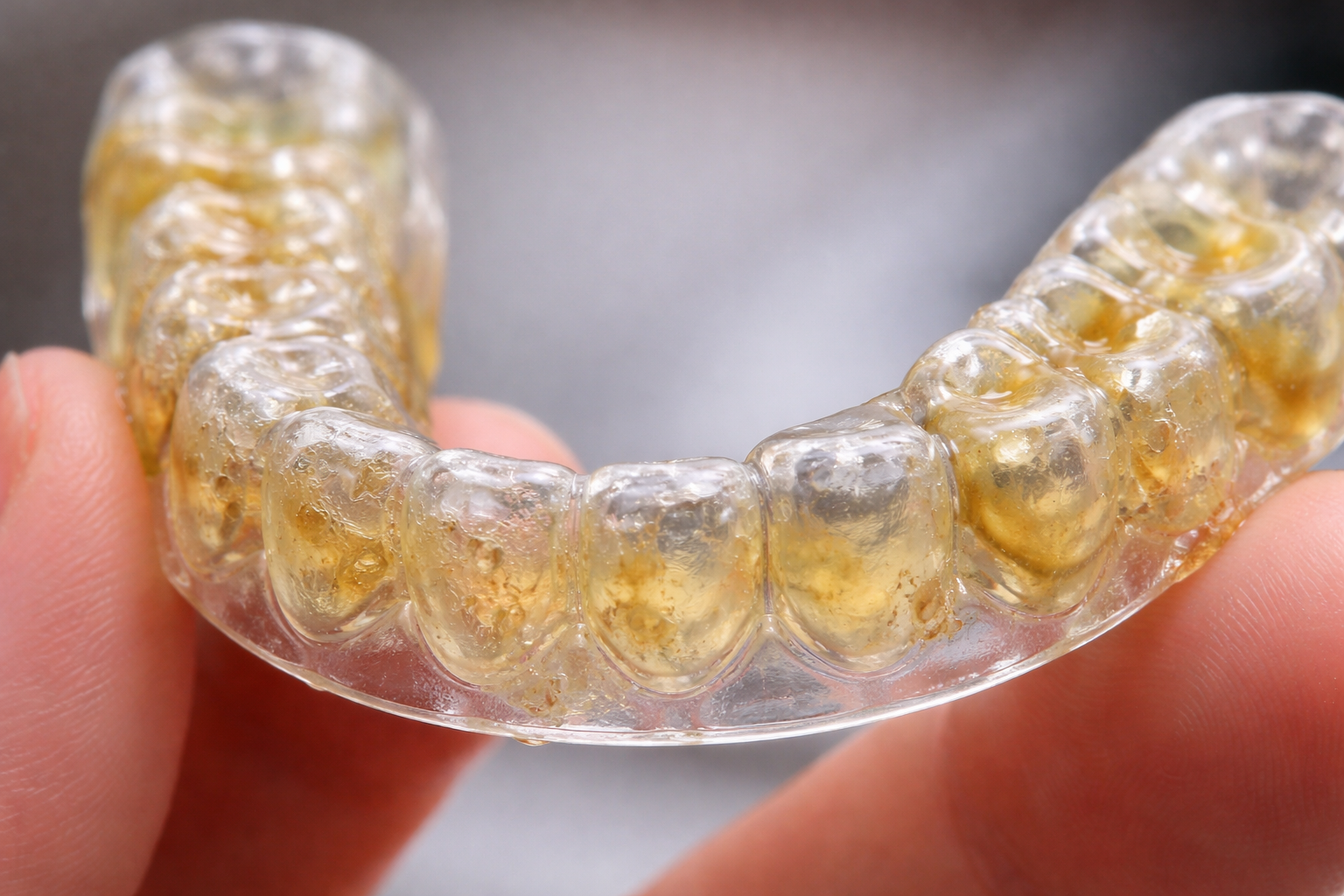
Clear plastic retainers typically last 18–24 months with proper care, though this varies based on wear patterns, grinding habits, and cleaning consistency. Here are the telltale signs it's time for a new one:
- Persistent yellowing or cloudiness that doesn't improve after deep cleaning — this indicates irreversible material degradation.
- Lingering odor that returns even after thorough cleaning — likely caused by bacteria trapped in microscopic cracks.
- Visible cracks, holes, or chips in the plastic — compromised structural integrity means compromised retention.
- Loose or poor fit — if it no longer snaps firmly over your teeth, it may have warped or your teeth may have shifted.
- White calcium deposits that won't dissolve with vinegar soaks — a sign of heavy mineral buildup in the material itself.
If you grind or clench your teeth (bruxism), your retainer will wear out faster. Discuss a replacement schedule with your orthodontist to ensure uninterrupted retention. Investing in a superb retainer replacement is far less costly than re-treatment.
Frequently Asked Questions
Clean your retainer every day with a gentle brush and mild soap. In addition, perform a deep clean (soak) once or twice per week using baking soda, hydrogen peroxide, vinegar, or cleaning tablets. Consistent daily cleaning is the single most important factor in maintaining superb retainer hygiene.
Avoid alcohol-based mouthwash, as alcohol dries out and cracks the plastic over time. Colored mouthwashes can also permanently stain clear retainers. If you want a mouthwash option, choose an alcohol-free, clear formula — but mild soap or dedicated retainer cleaners remain the safer choice.
Yellowing is caused by a buildup of plaque, tartar, and staining from food and drink residue. It's accelerated by infrequent cleaning or using abrasive products that scratch the surface. Regular hydrogen peroxide soaks can help restore clarity. If yellowing persists despite deep cleaning, it may be time for a replacement.
For plain water, overnight soaking is fine and can help prevent the retainer from drying out. However, do not soak overnight in hydrogen peroxide, vinegar, or cleaning tablet solutions — prolonged exposure to these can degrade the plastic. Follow the recommended soak times (15–30 minutes for most solutions).
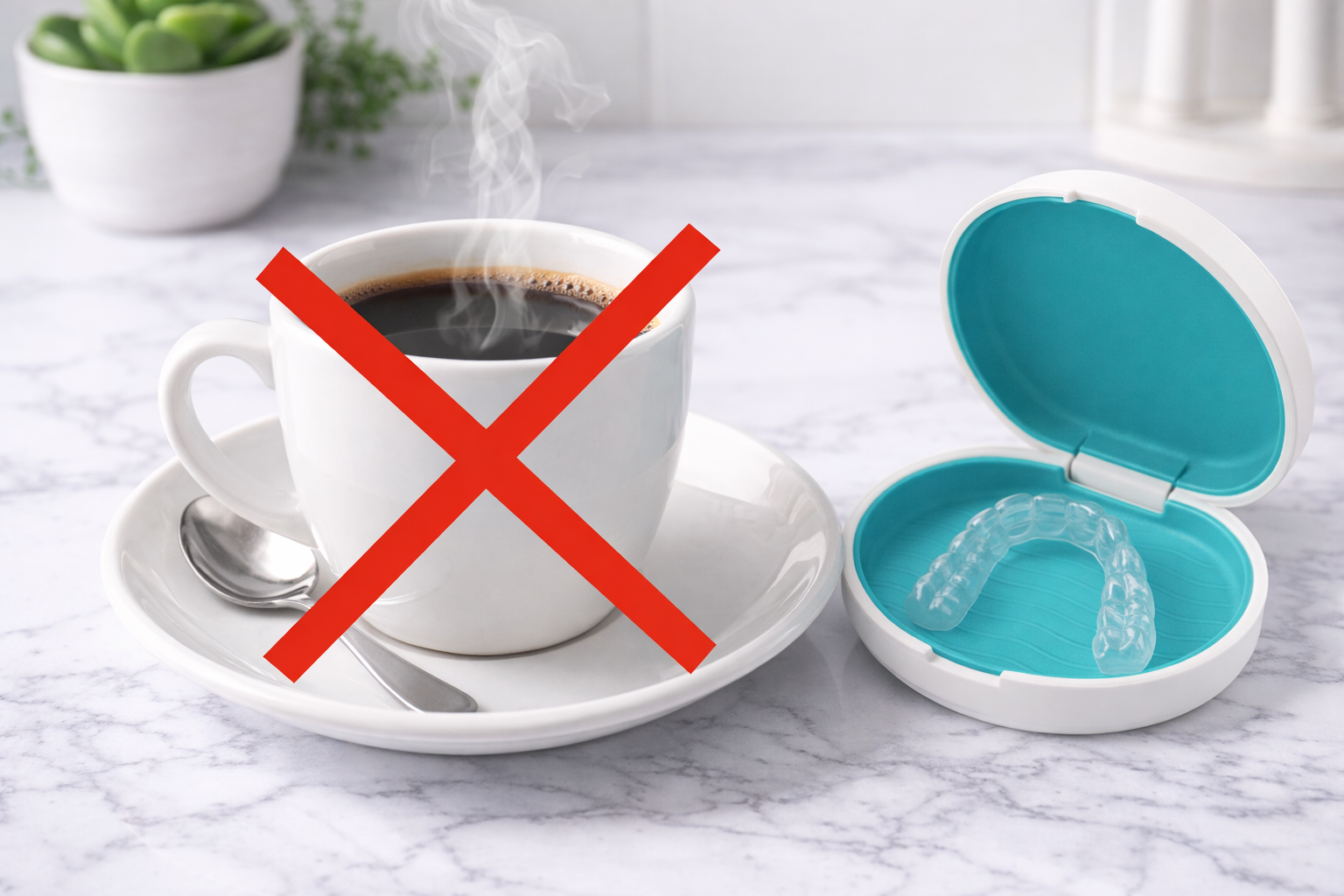
Remove your retainer before eating. Food can damage, stain, or warp the plastic. For drinks, plain water is fine, but remove your retainer for anything else — coffee, tea, juice, and soda can stain and the sugars promote bacterial growth against your teeth.
Yes. Research shows ultrasonic cleaners are significantly more effective than manual brushing alone, reaching crevices that brushes miss and eliminating up to 99.9% of bacteria in just 3–5 minutes. They're completely non-abrasive, so they won't scratch or damage your retainer. If you want the best possible clean for your Superb Retainer, an ultrasonic cleaner is a worthwhile investment.
With proper care, clear plastic retainers typically last 18–24 months. Factors that shorten lifespan include teeth grinding (bruxism), improper cleaning methods, heat exposure, and inconsistent care. Following the cleaning guidelines in this article will help maximize your retainer's lifespan.