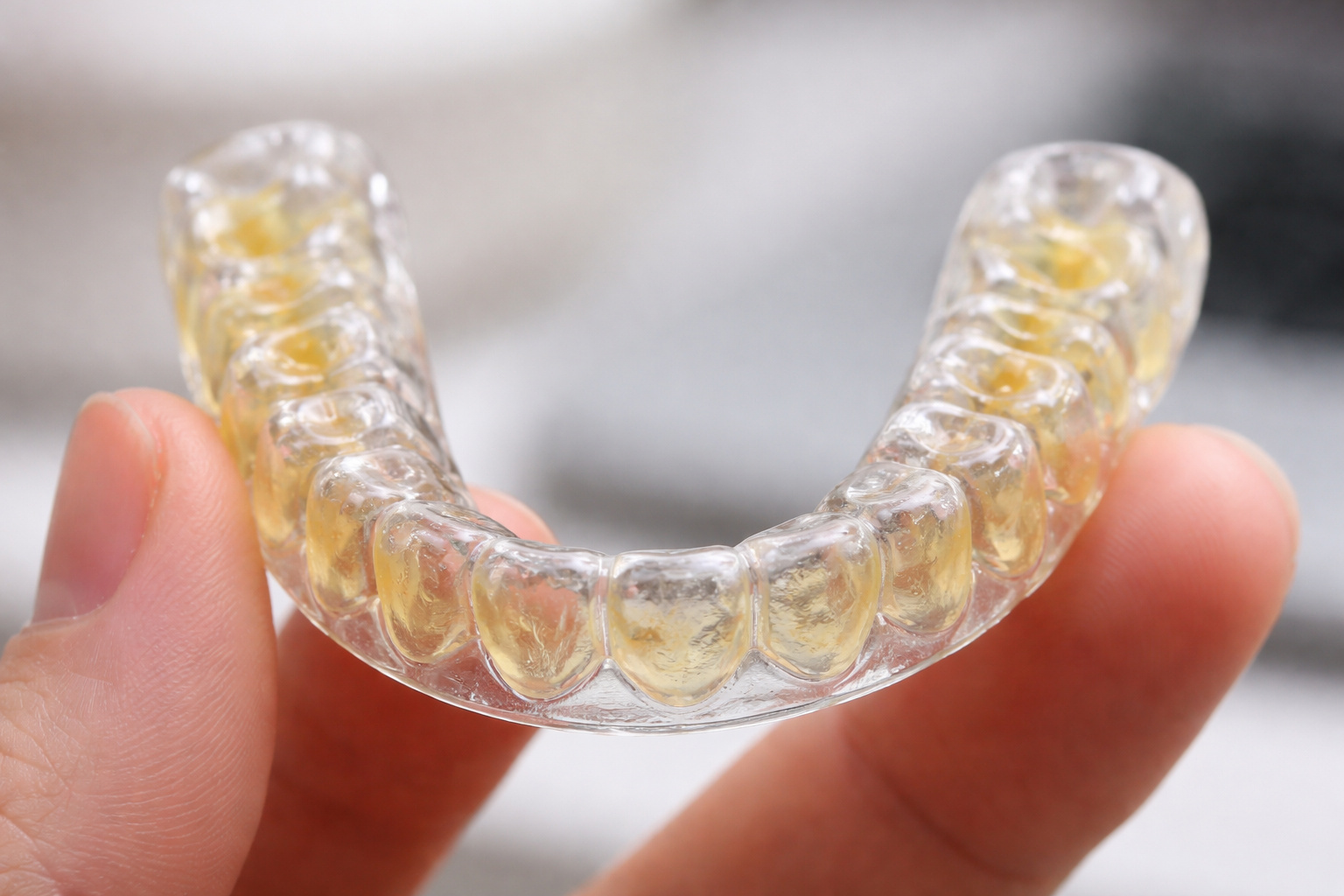


A white patch on a clear retainer is not a diagnosis. Something sitting on the surface may look similar to a scratch or a change in the plastic itself. Before choosing a stronger cleaning method, check the instructions for your appliance and consider when the mark appeared. If it persists, a dentist or orthodontist can inspect the retainer directly and advise whether cleaning, adjustment, or replacement is appropriate.
Start by describing what you see
Note whether the mark is localized or spread across the appliance, whether you noticed it after a particular cleaning product, and whether the surface feels different. You do not need to scrape it to gather useful information. A clear description and the appliance itself are more helpful to the provider than a guess about the material.
| Observation | Useful next step |
|---|---|
| A film after cleaning | Check that you used the approved product and completed the instructed rinse. |
| A persistent rough or white area | Ask the provider to inspect it rather than scraping it away. |
| Cloudiness after heat or a new product | Stop experimenting and explain the exposure to the provider. |
| A crack, sharp edge, or changed seating | Contact the practice for appliance advice. |
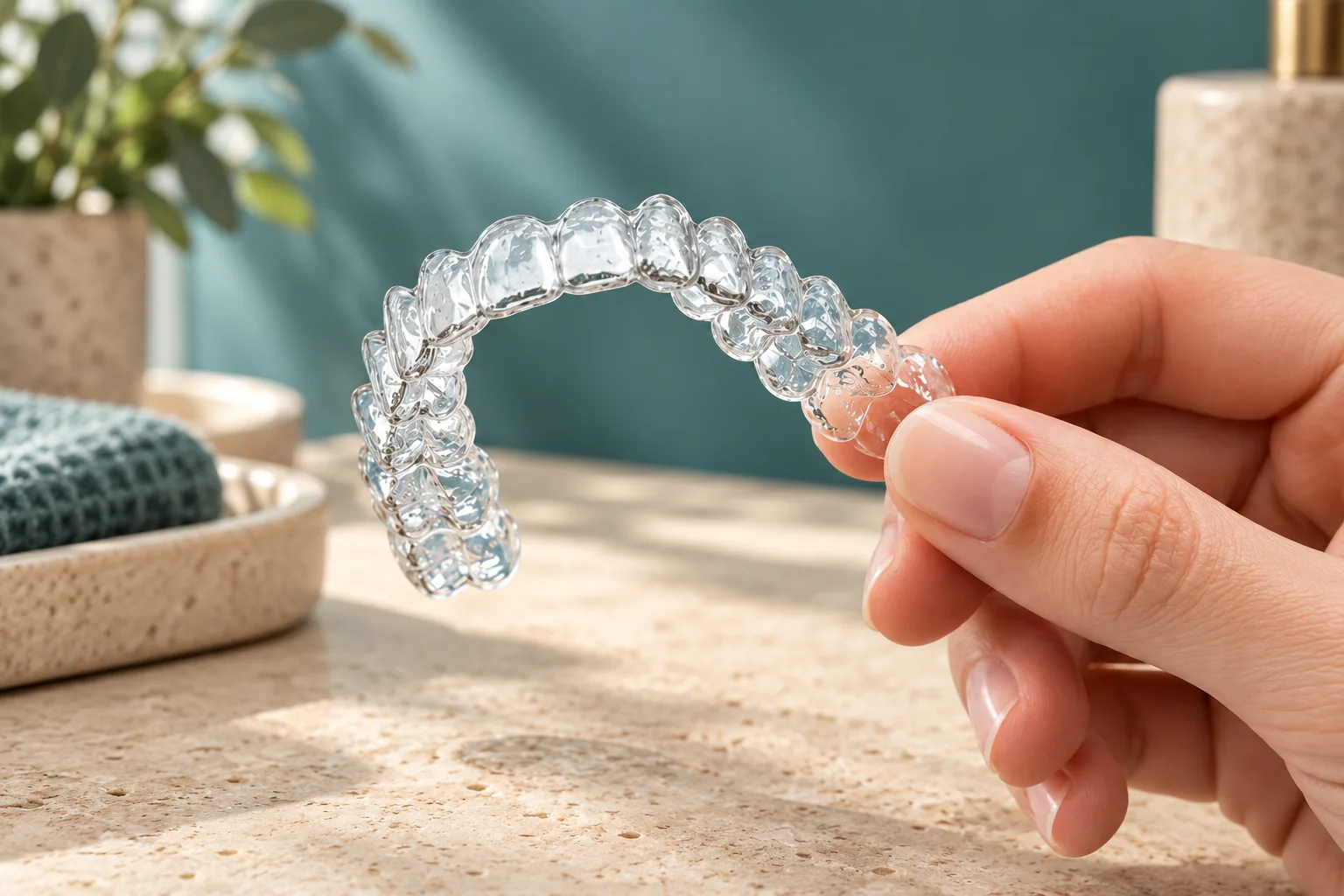
Use the care method for your retainer
Follow the instructions supplied with the appliance or ask the practice to send them again. Those instructions should identify an appropriate cleaning method and any compatible cleaning product. Use the specified water temperature and rinse as directed. General orthodontic care guidance emphasizes avoiding heat; a household method that seems harmless can still be unsuitable for a particular plastic.
If you use a retainer-cleaning product, follow its directions and confirm that it is compatible with your appliance. More concentrated solution or a longer soak is not automatically more effective or safer. Do not combine products to try to remove a stubborn mark.
Avoid turning a cosmetic concern into damage
- Do not use boiling water, a dishwasher, or another heat treatment.
- Do not scrape the appliance with sharp tools or sand the surface.
- Do not use household bleach or improvised chemical mixtures.
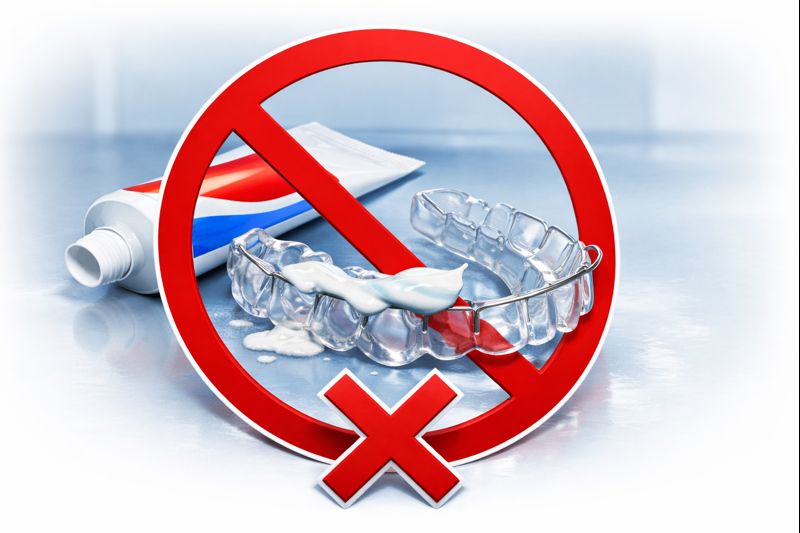
- Do not assume every toothpaste or cleaning tablet is suitable for every retainer.
When should you contact the practice?
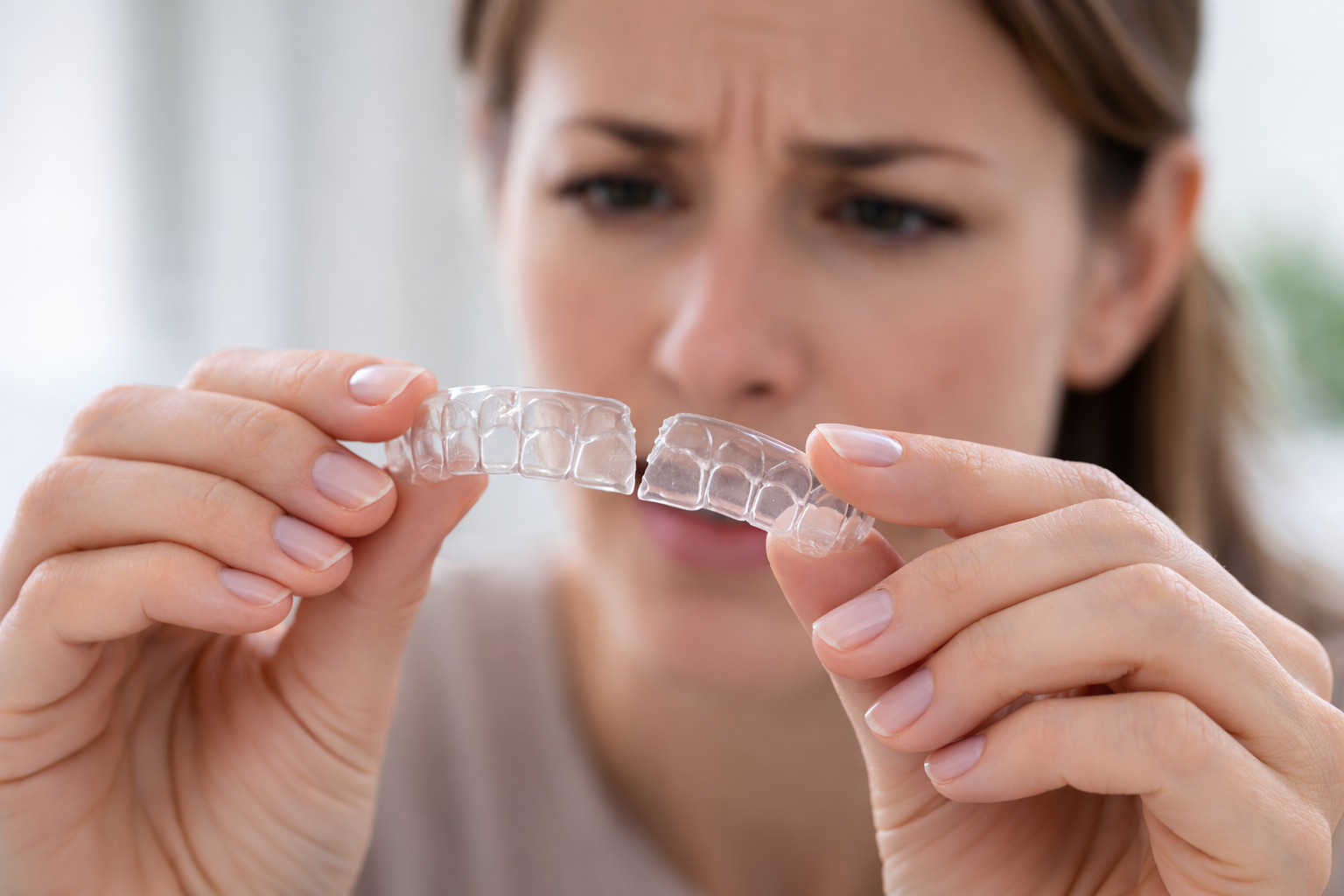
Ask for advice if the white area remains after the approved cleaning routine, if you are unsure what product is safe, or if the appliance feels rough or different. Mention any odor, discomfort, damage, or change in seating. These details may change the advice. Do not force an appliance that no longer seats normally or try to reshape it yourself.

Build a routine you can repeat
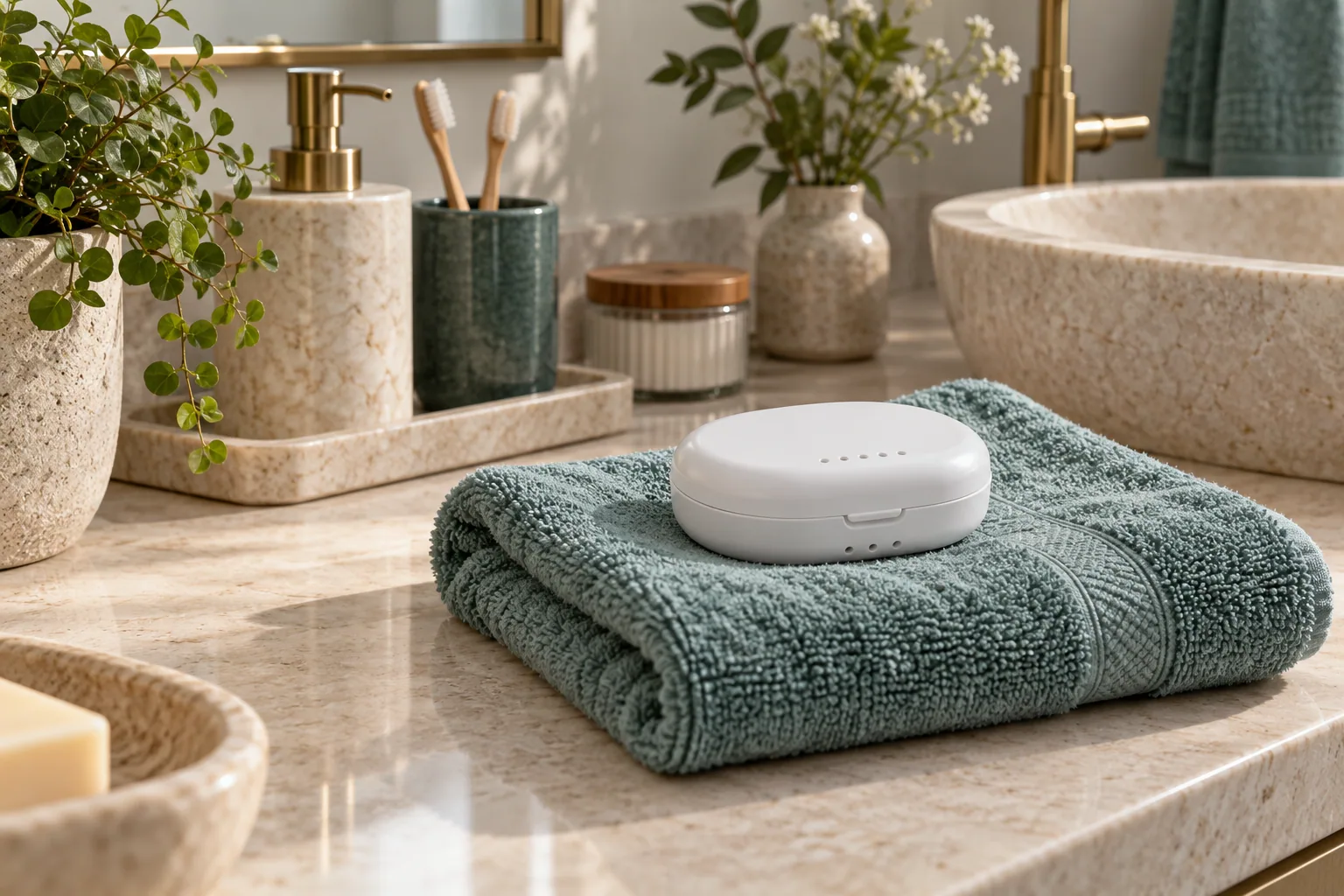
Keep the approved cleaning supplies and protective case in a consistent place. Follow the prescribed wear schedule, clean as instructed, and store the retainer safely when it is out. The aim is a cared-for appliance that fits the clinician’s plan, not a promise that every mark can be removed at home.
For related questions, read about yellowing retainers and toothpaste compatibility, or visit the Superb Retainer care guide.
Sources & further reading
Prepared by SuperbDent Editorial. General education; your treating clinician determines your appliance and care plan.