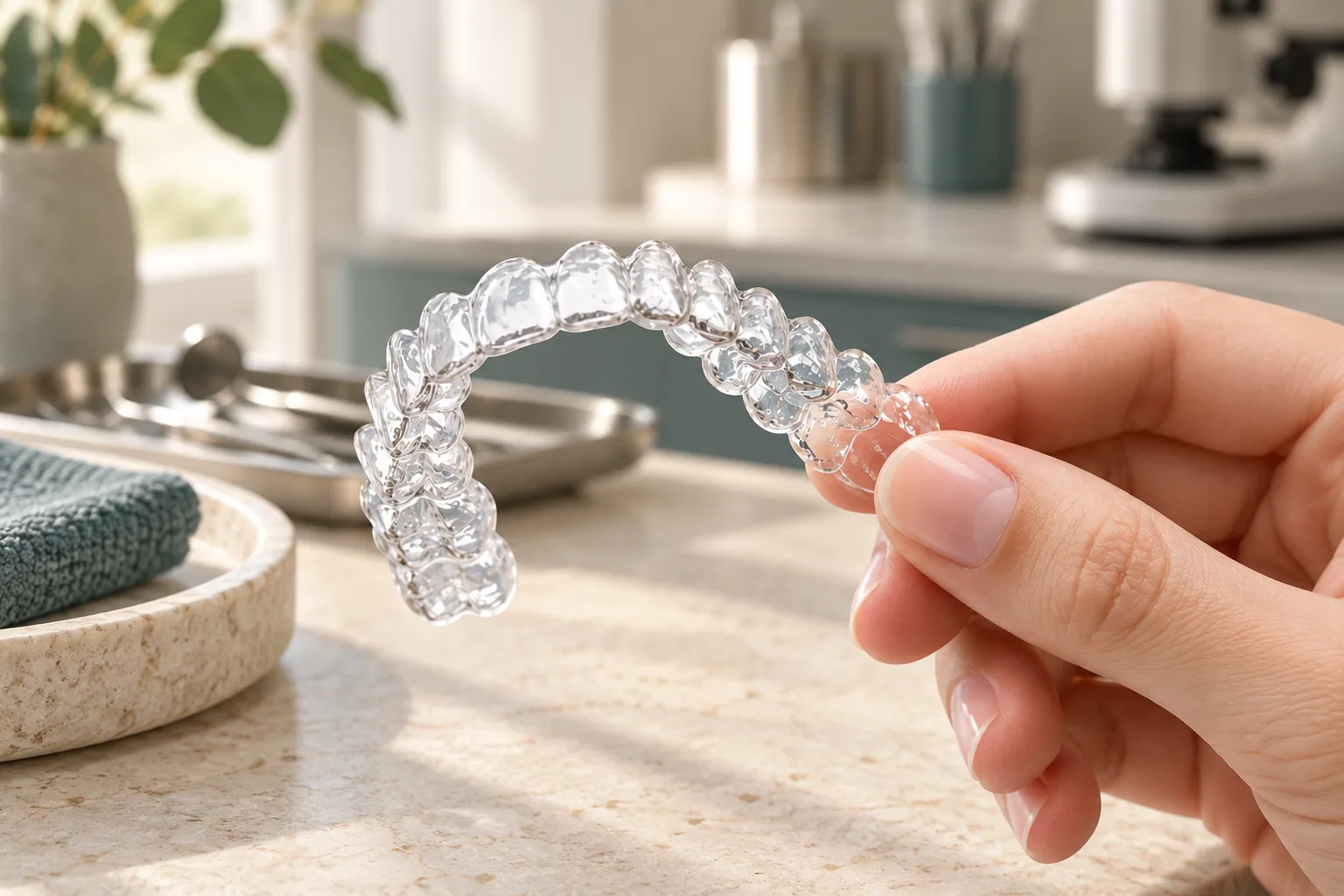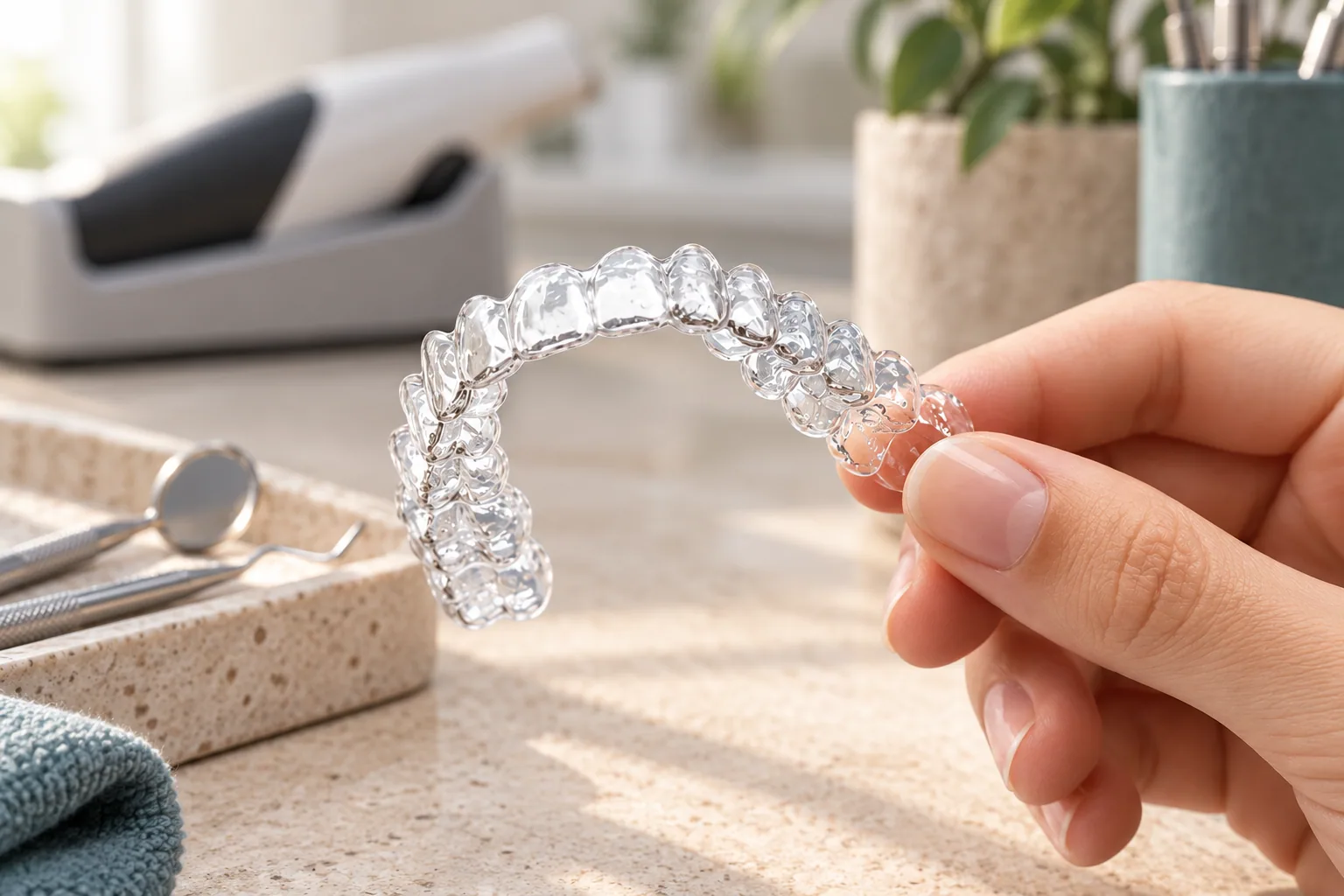


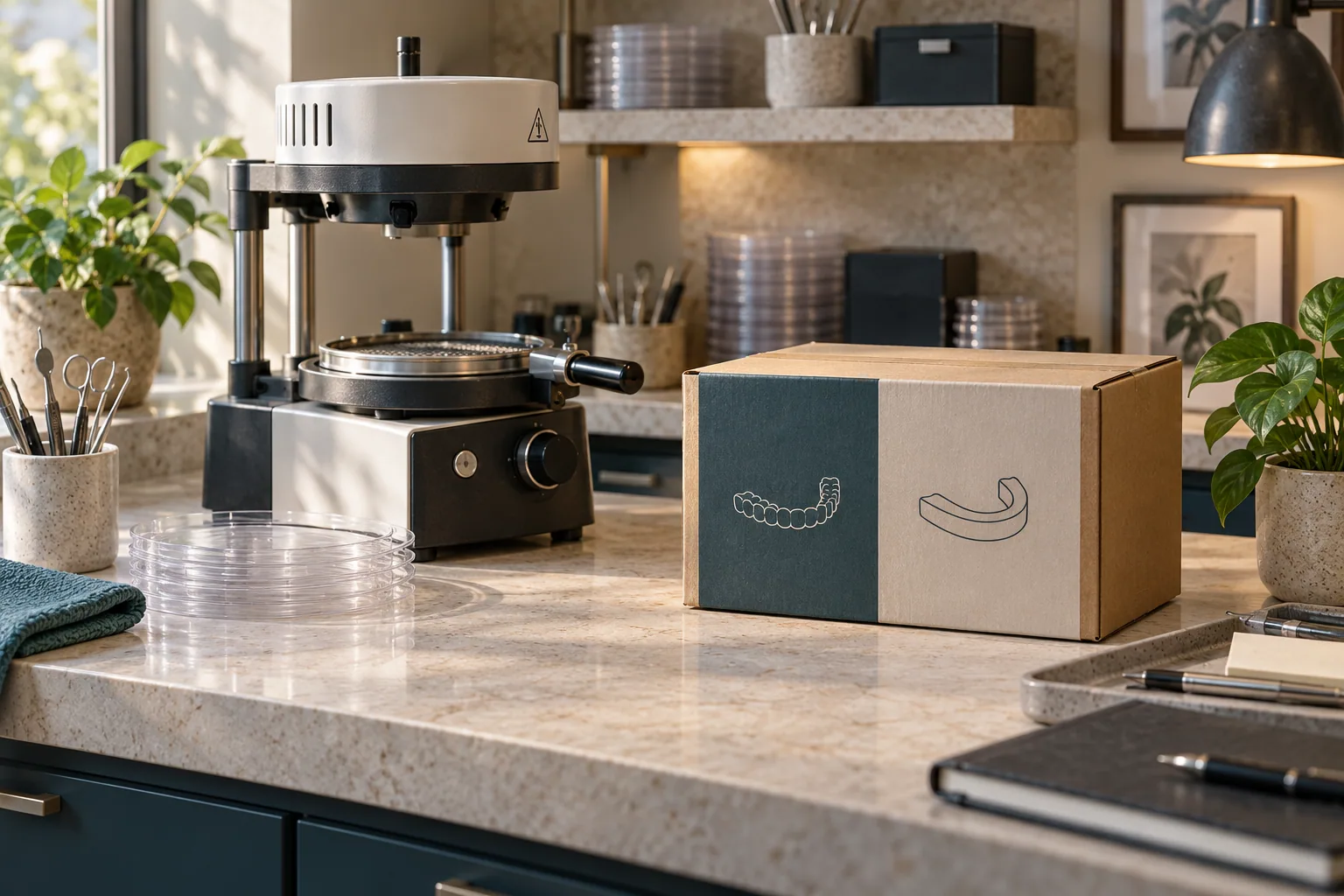
Producing retainers in-house can give a practice direct control over parts of the workflow. Outsourcing can move fabrication work to a laboratory with its own equipment and team. The better choice depends on your case mix, available staff, production capacity, and the process you can maintain consistently. There is no universal case volume at which one option becomes the right answer.
Define the appliance you are comparing
Start with an equivalent prescription. Specify the material, arch, design requirements, quantity, packaging, and any included follow-up service. Comparing an in-house material sheet with the price of a finished, packaged laboratory appliance leaves most of the work out of the calculation. Comparing two different appliances also makes the result difficult to use.
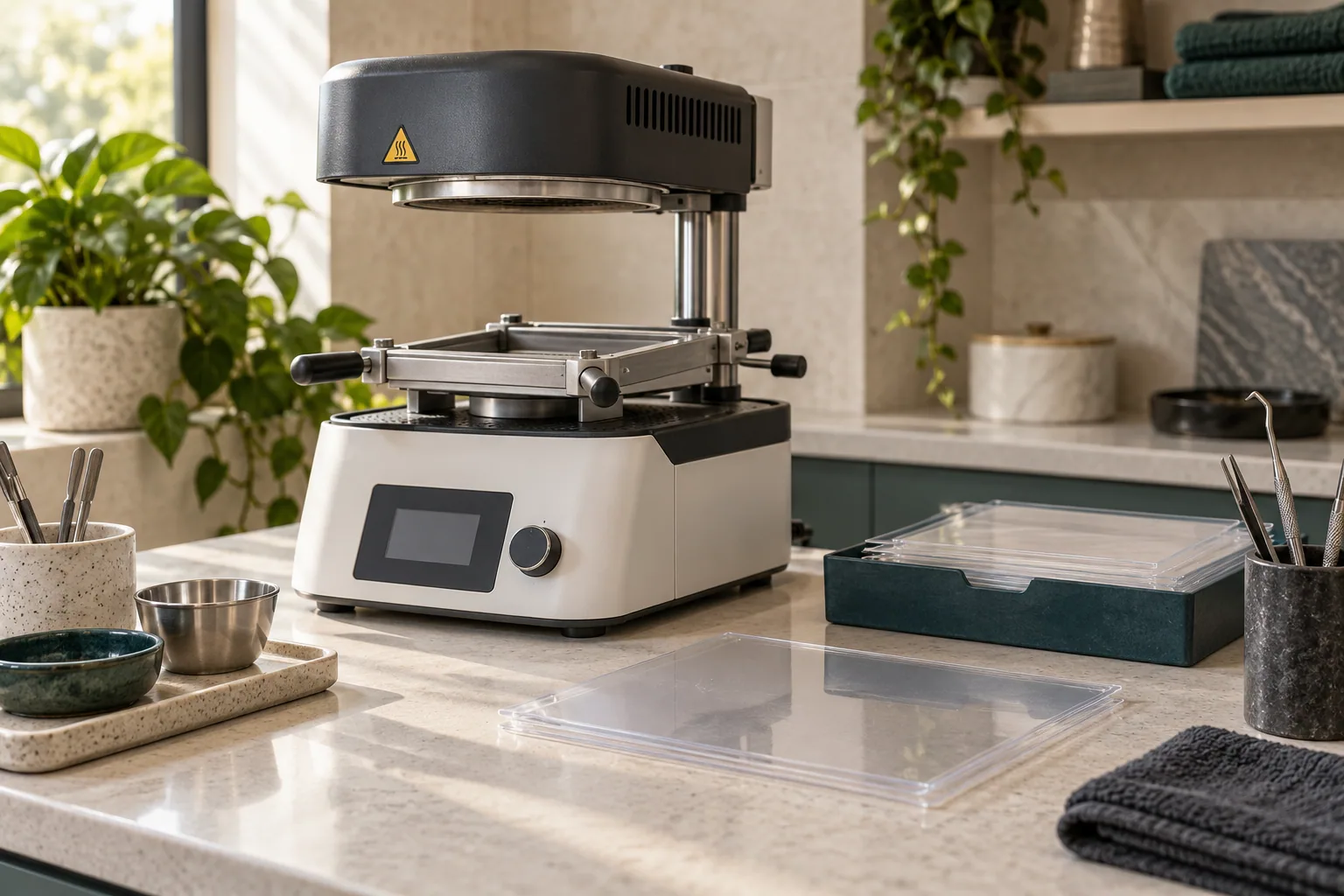
Build a complete in-house cost picture
List the steps your team would perform from record preparation to final inspection. Depending on the selected workflow, that may include model production, material preparation, forming, finishing, cleaning, labeling, and packaging. Confirm the required process with the material and equipment manufacturers. Add training, maintenance, space, and the time spent handling unsuccessful attempts.
| Cost or constraint | Question for the practice |
|---|---|
| Equipment and maintenance | Which purchases, service needs, and useful-life assumptions belong in the comparison? |
| Consumables | What is used for each accepted appliance, including failed attempts? |
| Staff time | Who performs each step, and what other work do they stop doing? |
| Quality checks | Who verifies identity, fabrication quality, and clinical fit? |
| Capacity | What happens during leave, equipment downtime, or a busy week? |
| Remakes | How often are they needed and how much work do they add? |

Ask what outsourcing includes
For a laboratory quote, establish what is included in the appliance fee, what triggers an additional charge, and how remakes are handled. Ask when the production window starts, how questions are resolved, and whether shipping is separate. A lower invoice price does not automatically mean a lower total burden on the practice; repeated clarification or rescheduling also uses staff time.
- Compare the accepted material and prescription options.
- Confirm the record requirements and secure transfer process.
- Clarify production, shipping, and holiday schedules.
- Ask for the written remake and support policies.
Run a pilot before changing the whole practice
Choose a limited group of appropriate cases and keep the prescription comparable. Track hands-on time, completion dates, clarification requests, fit issues identified by the clinician, and remakes. Include the work around production, such as packing and patient coordination. Set the review date and success criteria before the pilot starts.

A hybrid arrangement may also be worth evaluating: the practice keeps one capability while using a laboratory for other prescribed cases or additional capacity. The important question is who owns each step and whether the patient receives a consistent, clinician-approved appliance and care plan.
Use our retainer laboratory selection guide to structure supplier questions, then explore Superb Retainer for the service details to confirm with our team.
Sources & further reading
Prepared by SuperbDent Editorial. General education; your treating clinician determines your appliance and care plan.