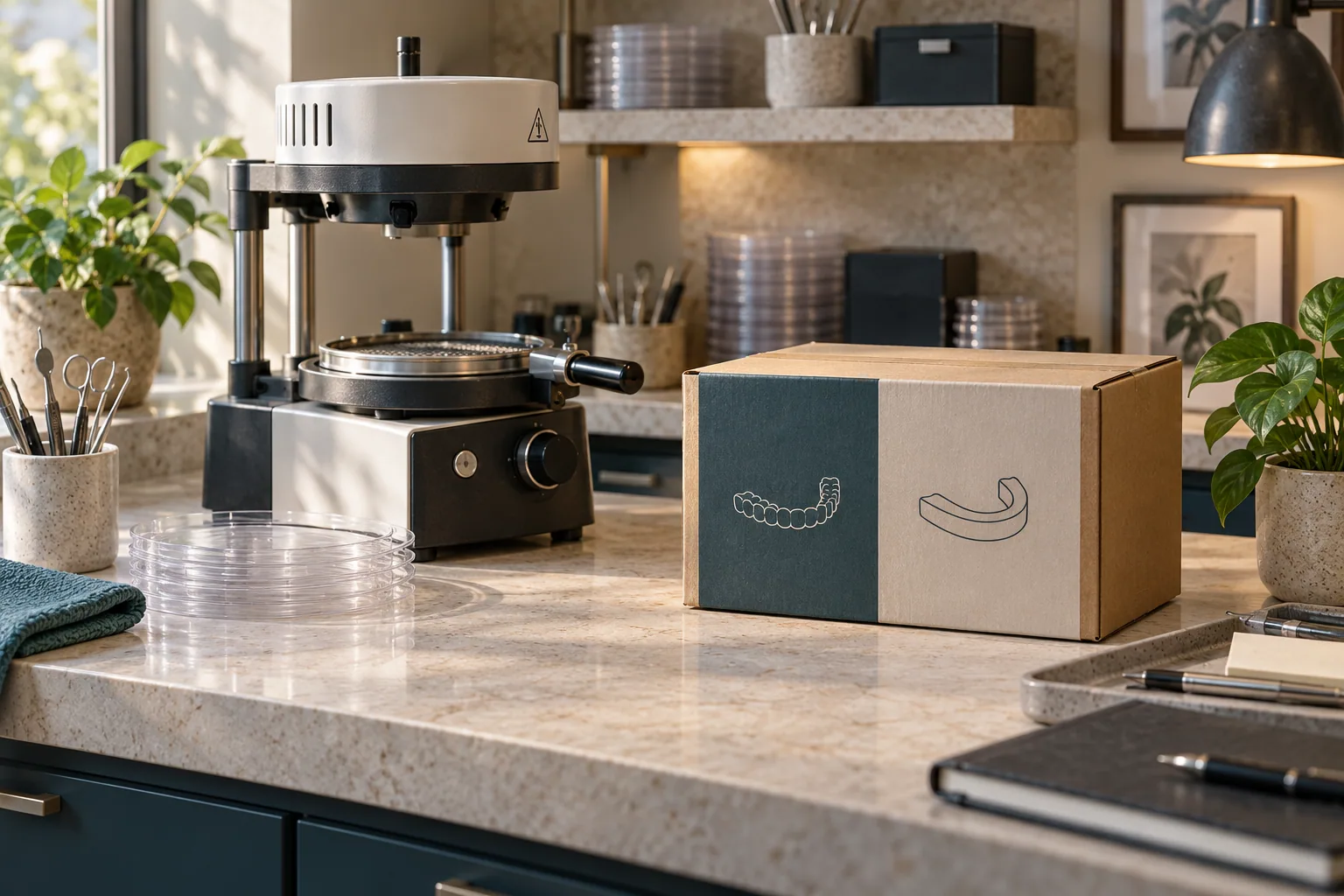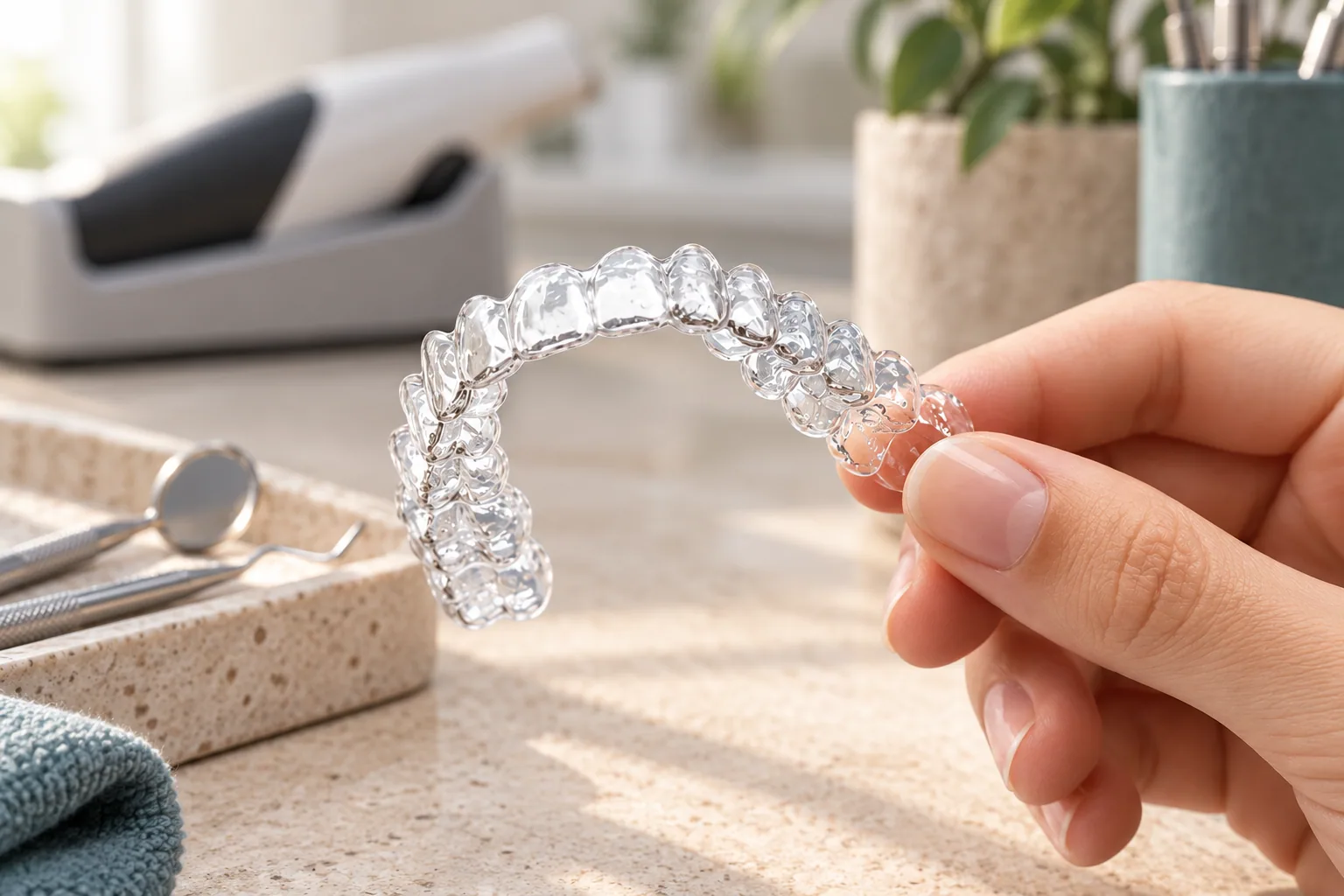


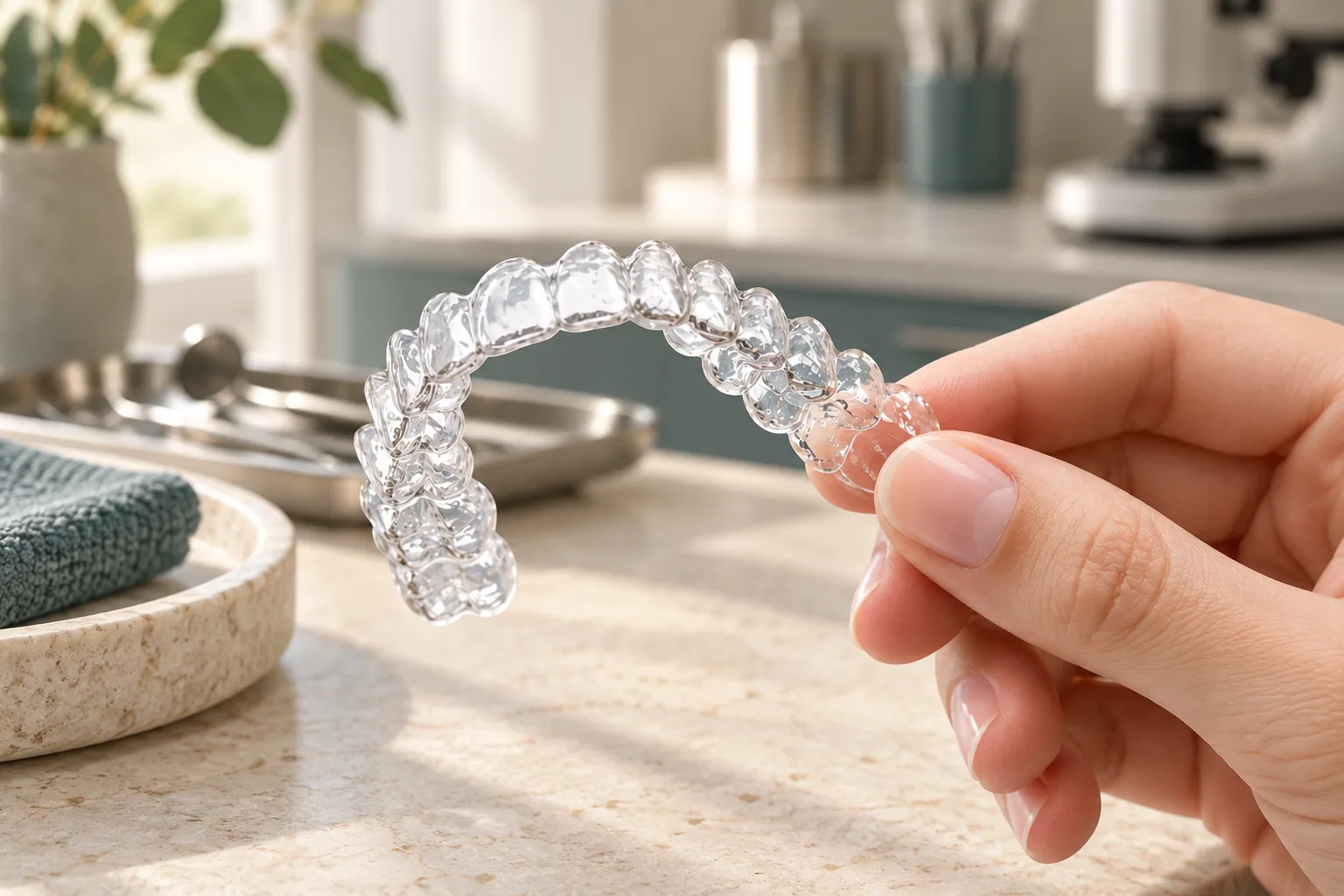
The right clear retainer lab is one your team can use consistently: orders are understandable, expectations are explicit, and questions reach someone who can resolve them. Price matters, but a quote only becomes useful when you know exactly which appliance and services it includes. Start with a written comparison, then test the workflow with a small, appropriate pilot.
Define the appliance before comparing the fee
Write down the material requested, arches included, trim preferences, packaging, and delivery destination. Confirm which options are available rather than assuming that every lab uses the same specification. Ask for the current manufacturer information when material performance is part of the sales conversation.
A statement such as “premium material” is less actionable than an identified product and the applicable instructions. Likewise, “digital” should describe the submission and fabrication workflow, not substitute for an explanation of it. Our retainer materials guide can help the team organize those questions.
Ask six questions every lab should be able to answer
| Area | Question to put in writing |
|---|---|
| Records | Which scan formats and records are required for this appliance? |
| Specification | Which material and options will this order use? |
| Turnaround | When does the clock start, and does the estimate include shipping? |
| Exceptions | Who contacts us if a scan or prescription needs clarification? |
| Remakes | What is covered, what evidence is needed, and what are the time limits? |
| Reorders | How are stored records identified, retained, and approved for reuse? |
Also distinguish a remake, a changed prescription, a lost appliance, and a clinically indicated replacement. They may follow different policies. Save the terms that applied when the case was ordered instead of relying on a verbal summary months later.
Evaluate the handoff your team will use
Have a dental assistant or coordinator walk through a sample submission with the lab. Can they identify the correct patient record and arch? Is there a clear place for prescription notes? Can they tell whether the case has been received, accepted, put on hold, or dispatched? A portal demonstration is most useful when it follows a real task from start to finish.
Ask how the practice should send patient information and who has access to it. Use approved systems and your organization’s privacy procedures. A logo or security claim on a website is not a replacement for reviewing the arrangements that apply to your practice.

Run a pilot with a simple scorecard
- Select cases the treating clinician considers suitable for the pilot.
- Record submission, acceptance, dispatch, and receipt dates separately.
- Log clarification requests and time spent resolving them.
- Record the clinician’s delivery assessment and any adjustments or remakes.
- Ask the submitting assistant and receiving coordinator what was difficult.
- Review the actual invoice against the agreed scope.
Choose the evaluation window and criteria before starting. A pilot is an operational check, not proof of long-term clinical superiority. A small sample can reveal an unclear ordering field or an unexpected shipping charge; it cannot establish how every future case will behave.
Calculate the cost of using the service
Add the lab fee, shipping, staff administration, delivery time, and any additional costs that actually apply. Keep assumptions visible. If one service reduces an extra handoff but costs more per appliance, your practice can decide whether that tradeoff is worthwhile. The in-house versus outsourced fabrication guide provides a structure for that calculation.
When evaluating Superb Retainer, use the same checklist you use for any other lab. Confirm current specifications, offer eligibility, shipping details, and remake terms for your order. A good supplier relationship begins with shared expectations and improves when both teams know how to handle the exceptions.
Sources & further reading
- Zendura: product-specific processing instructions
- SuperbDent: retainer ordering information
- SuperbDent: compatible scanners
Prepared by SuperbDent Editorial. General education; your treating clinician determines your appliance and care plan.