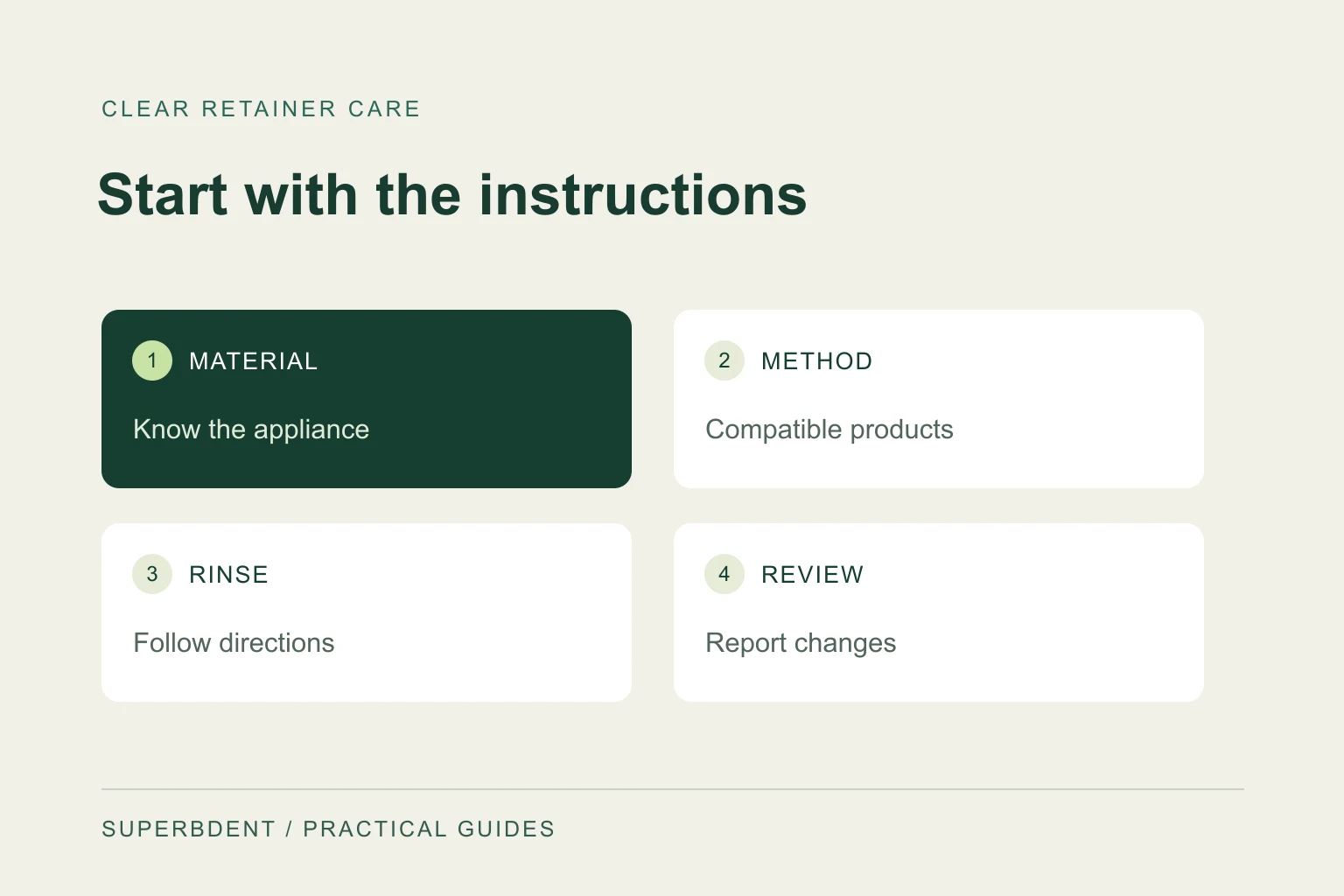
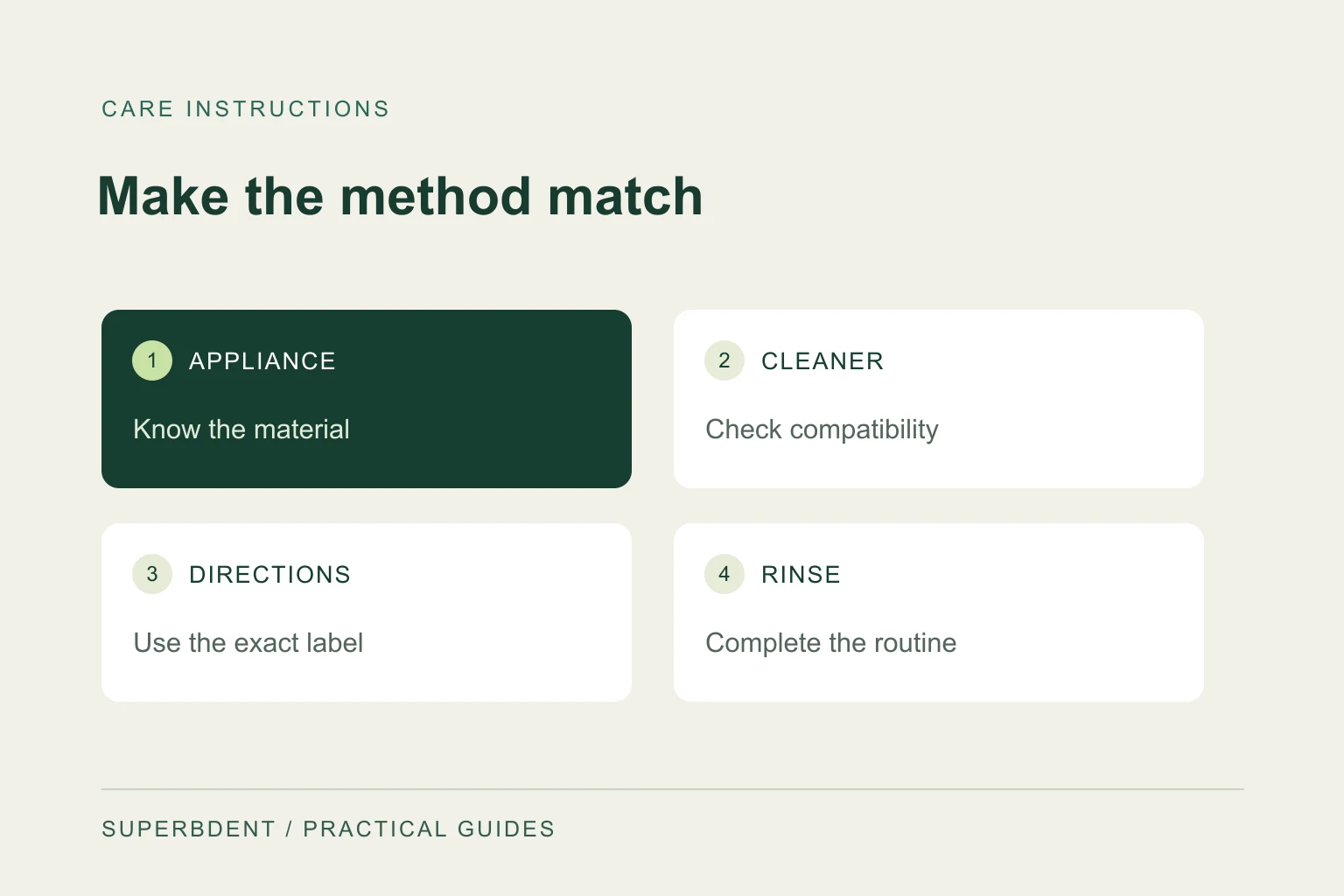
Clean clear aligners using the instructions for the particular appliance and a compatible cleaning product. Remove them as directed, use the specified method, and complete the required rinse before putting them back in. Do not assume a cleaner, toothpaste, or soaking time that worked for a previous retainer is appropriate for your current treatment trays.
Start with three labels
Identify the aligner system or material, the exact cleaner, and the instructions supplied by your treating practice. Keep a photo of the cleaner’s directions so you can check them when traveling. If the practice’s sheet and the product label seem to conflict, show both to the team and ask which routine applies to your trays.
Two manufacturer examples show why the distinction matters
| Appliance or product | What its published guidance says | How to use the information |
|---|---|---|
| Appliances made from Zendura materials | Mild, non-abrasive soap, cool or lukewarm water, and a dedicated soft brush; avoid regular toothpaste. | Use this only after confirming the material and the practice’s directions. |
| Invisalign aligners | Its care guidance describes gentle soft-brush cleaning and a lukewarm rinse. Its original Cleaning Crystals have separate measured soaking instructions. | Read the instructions for the exact product; Crystals, Crystals+, foam, and other formats are not interchangeable directions. |
The examples come from Zendura’s appliance-care guidance, Invisalign’s everyday care guidance, and the original Invisalign Cleaning Crystals directions. Check the current label when using a product; a similar name or package color is not enough to identify the method.
Turn the instructions into a repeatable routine
- Set up a clean area and a container intended for the product, if a soak is part of the routine.
- Read the required water temperature, amount of cleaner, and contact time before starting.
- Keep upper and lower trays identifiable, and handle them gently while cleaning.
- Use a timer when the product specifies a contact time. Longer soaking is not automatically more effective.
- Complete the rinse the product requires and inspect the trays for visible damage before reuse.
- Clean and store the case according to its own instructions; do not assume it can go in a dishwasher.
Can I use toothpaste or mouthwash?
A product designed for teeth is not automatically suitable for an aligner. For example, Zendura specifically advises against regular toothpaste and alcohol-based mouthwash. Other systems may give different instructions for a named product. If your written guidance only says “toothpaste,” ask which type is intended rather than selecting a whitening or abrasive formula yourself.
Keep tooth brushing and interdental cleaning as a separate part of your routine. A soaking tablet cleans the appliance; it does not remove food or plaque from between your teeth. If you also wear a retainer, our retainer toothpaste guide explains why those instructions need their own check.
What about an ultrasonic cleaner?
Check that the device and cleaning solution are both suitable for the appliance. Follow the specified cycle and fill instructions instead of combining the longest cycle with a stronger mixture. This article does not test or rank devices. A tray looking clearer afterward is not, by itself, evidence that every microorganism was removed.
If a mark or smell remains
Record whether the concern is a removable film, a persistent stain, a rough patch, or a change in fit. Tell the practice which cleaner you used and how. Avoid escalating through household chemicals or scraping the surface. For Zendura appliances, the manufacturer warns against hot water, bleach, and harsh chemicals; repeating a damaging method will not repair an altered tray.
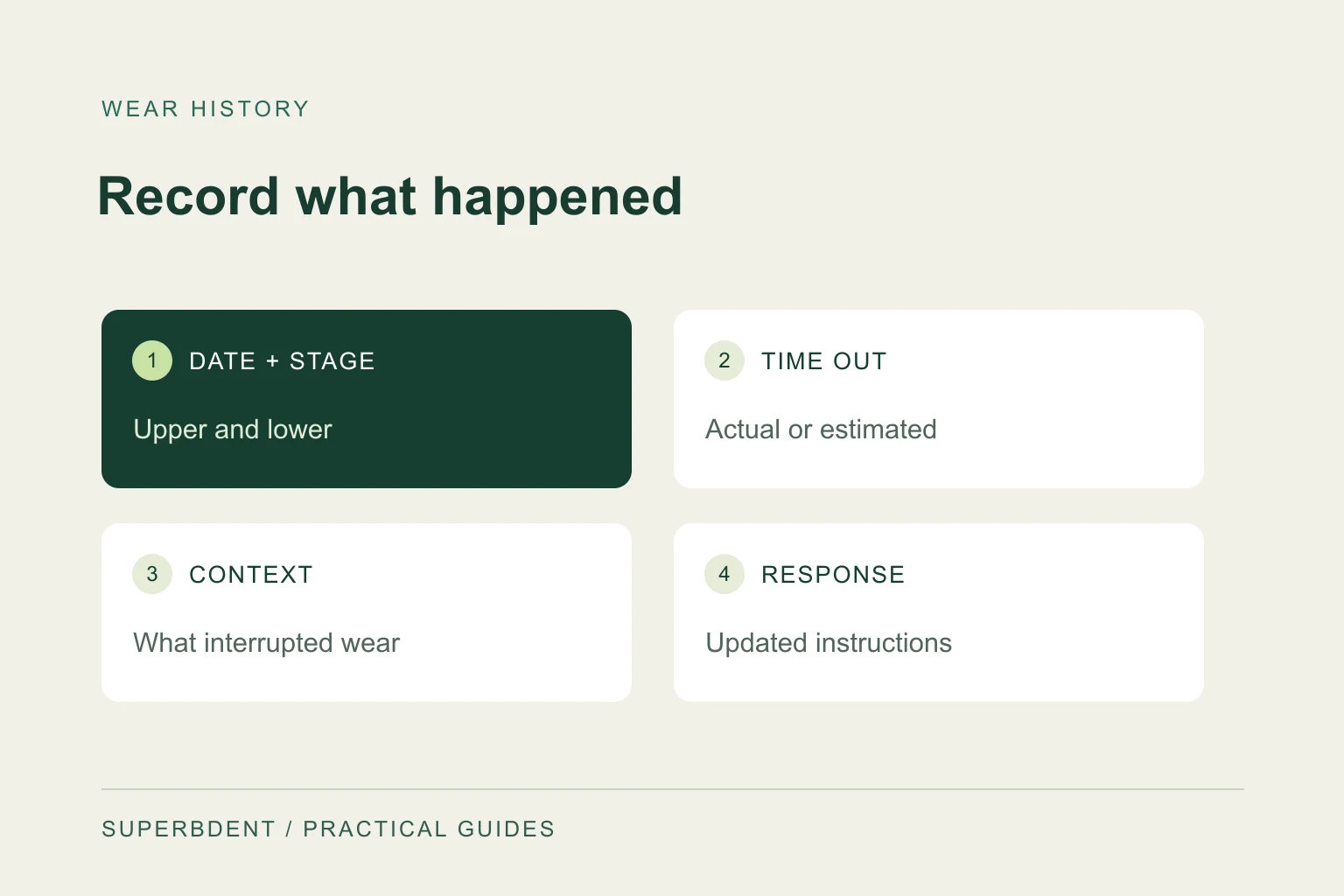
If cleaning breaks are regularly longer than planned, use the wear log to find where time is going and discuss a workable routine. Do not skip oral hygiene or change your tray sequence to compensate for a difficult schedule.
For a daily routine around meals, work, and coffee breaks, see eating and drinking with clear aligners. Keep oral hygiene, tray care, and your prescribed wear schedule in the plan.
Sources & further reading
- Zendura: material-specific daily cleaning and products to avoid
- Invisalign: everyday aligner care and case use
- Invisalign: original Cleaning Crystals product directions
Prepared by SuperbDent Editorial. General education; your treating clinician determines your appliance and care plan.