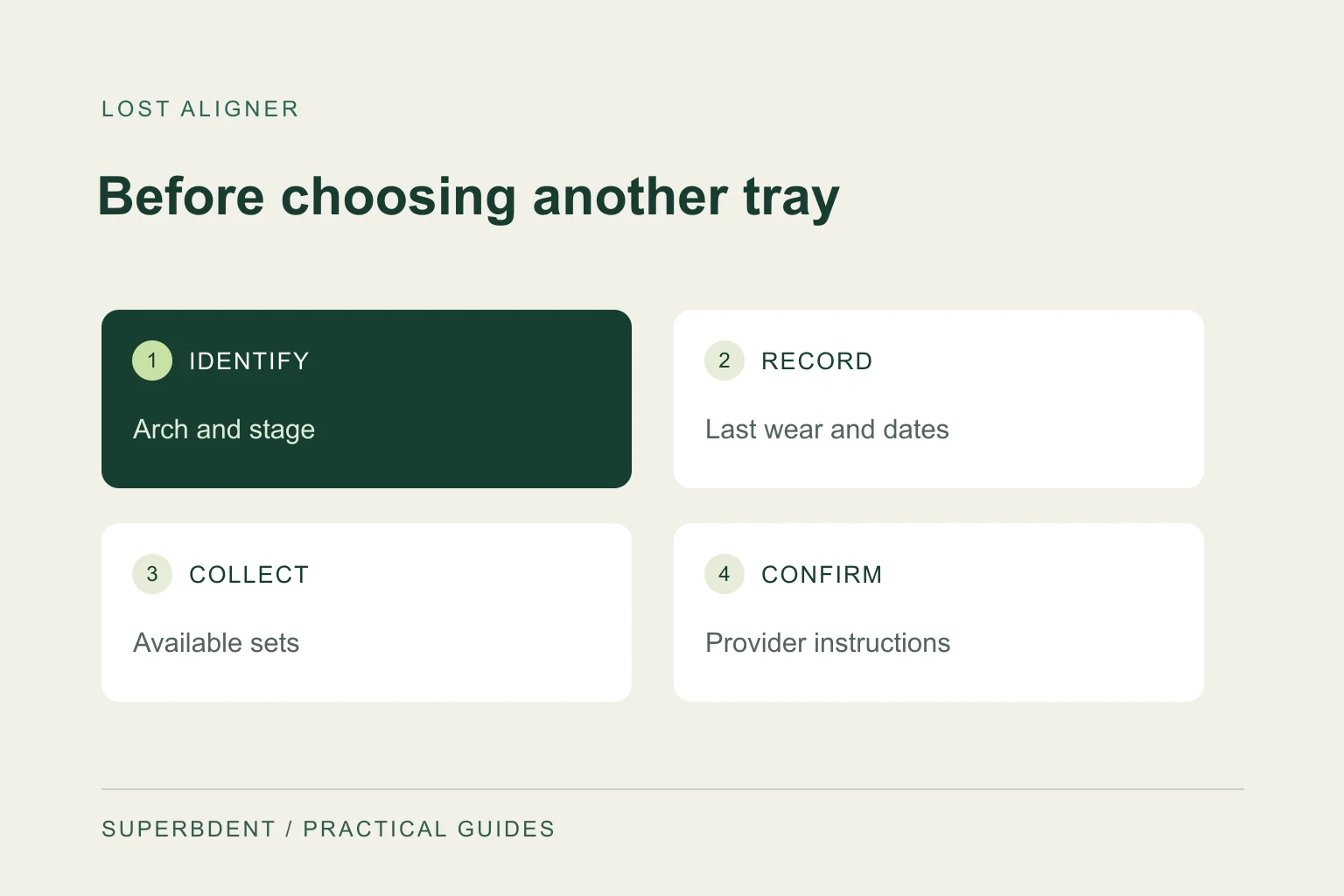
If you lose a clear aligner, contact the practice managing your treatment promptly. Tell them the tray number, whether the upper or lower appliance is missing, and when you last wore it. Ask which tray to wear while the issue is resolved and whether your next change date needs to move. Do not choose the previous or next set just because it is available.
Invisalign’s lost-aligner advice also directs patients to their provider to decide whether a previous or later tray is appropriate. That decision depends on the treatment stage. This guide helps you prepare the information for that decision; it does not select a replacement stage.
First identify the missing appliance
Check the packaging or the practice’s record of your current set rather than guessing from the last bag you opened. Note whether one tray or both are missing. Keep the remaining appliance, its packaging, and any previous or unopened sets together so the team can identify what you actually have.
A lost active-treatment aligner is a different problem from losing a retainer after treatment. If you have finished treatment and the missing appliance is for retention, use our lost retainer guide. Be clear about the appliance type when contacting the office.
Have these details ready
| Detail | What to tell the practice |
|---|---|
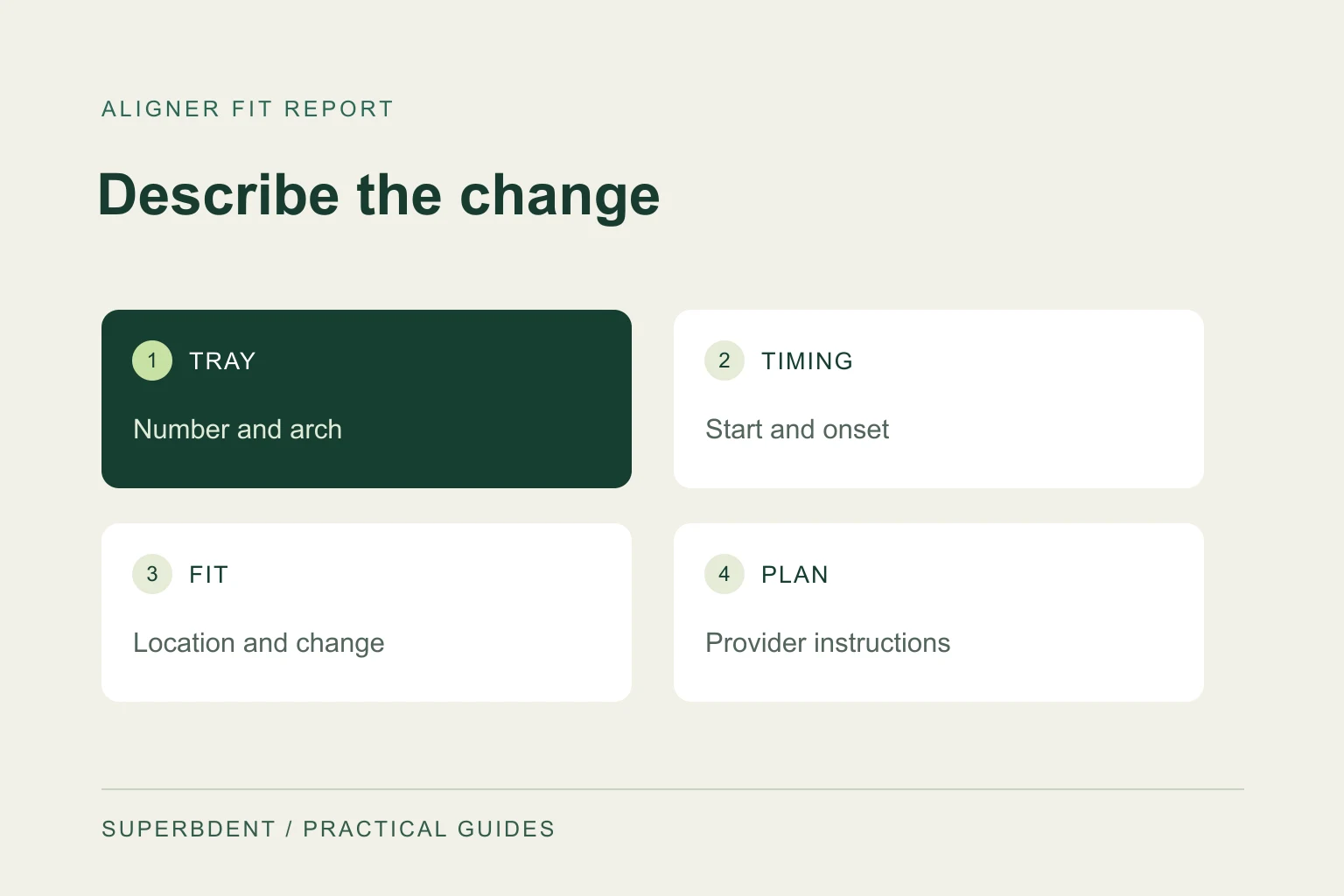
| Tray and arch | The printed number and whether upper, lower, or both are missing. |
| Timing | When you started this set, when it was last worn, and the scheduled next change. |
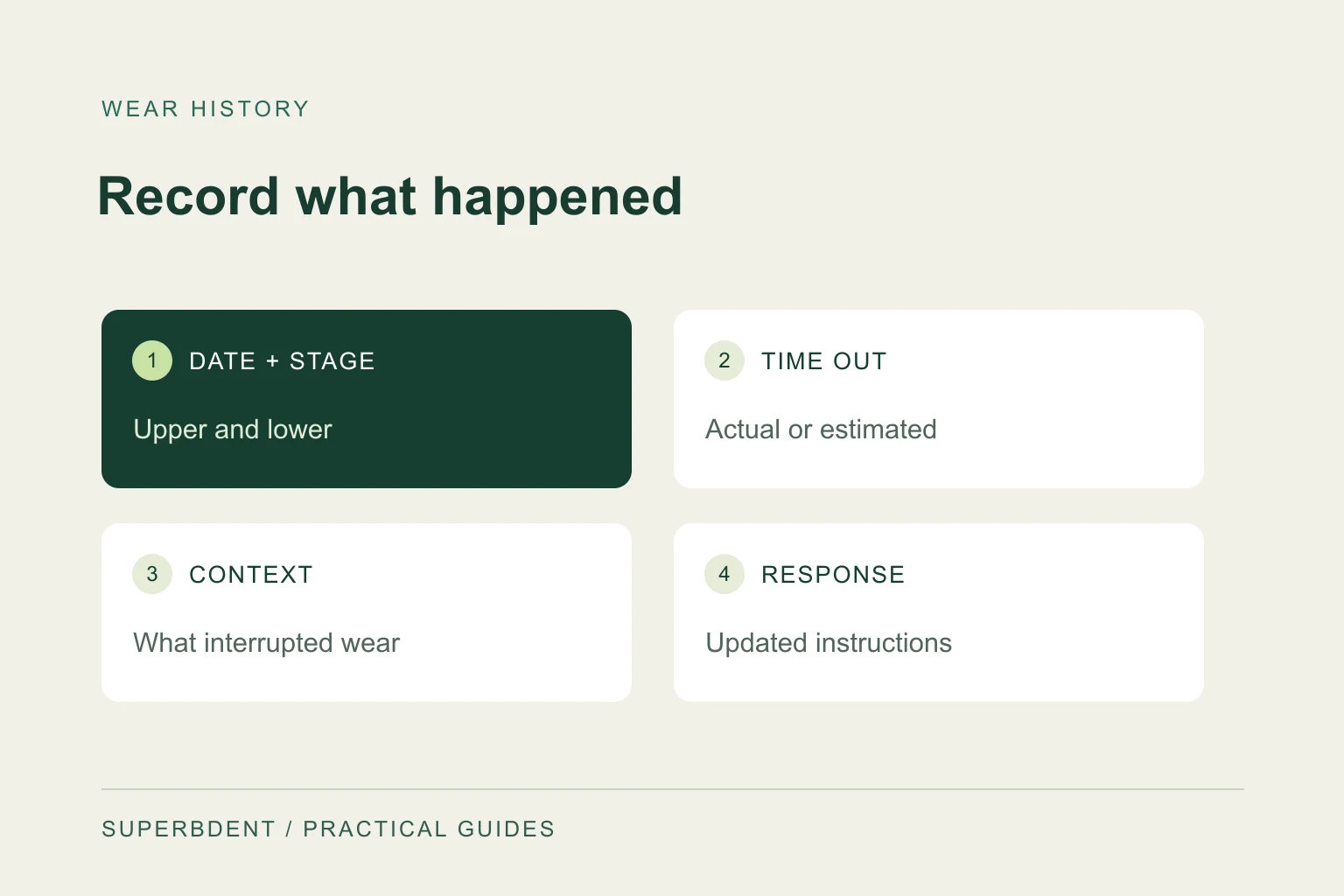
| Recent wear | Any interruptions before the loss, including approximate dates and times. |
| Available appliances | Which previous, current, and unopened trays are physically available. |
| Other changes | A fit concern, missing attachment, damaged tray, or recent dental work. |
| Location | Whether you are away from home and can access your normal practice or stored trays. |
A short message you can adapt
Keep the treatment answer separate from the shipping answer
The office may need time to review the case or arrange an order. A parcel estimate is not an instruction about what to wear until it arrives. Ask for the interim instructions to be recorded clearly, including what to do with the other arch if only one tray is missing. If the office is closed, use its published advice or contact route for treatment problems.
- Confirm the exact upper and lower tray numbers in the interim plan.
- Ask whether photographs or a visit are needed before the next change.
- If an order is proposed, ask what is included, what it costs, and how collection or shipping works.
- Write down who will update you if the expected arrival date changes.
If you find the tray later
Tell the practice, especially if it has already given you a revised sequence or ordered a replacement. Explain where you found it and whether it looks damaged or may have been exposed to heat. Follow the appliance’s cleaning instructions; finding the original tray does not automatically cancel the newer treatment instructions.
Make another loss less likely
Invisalign recommends a protective case whenever the aligners are removed. Put the case in the same accessible place in your work or travel bag, and check that the trays are inside before clearing a meal. Keep your practice’s contact details with your treatment information rather than relying on memory.
If wear interruptions are also part of the problem, the missed wear-time guide and printable wear log help you record them. The log is a history for the practice, not a calculator for choosing the next tray.
Sources & further reading
- Invisalign: lost or broken aligner advice within its teen treatment guide
- Invisalign: protective cases and everyday aligner care
Prepared by SuperbDent Editorial. General education; your treating clinician determines your appliance and care plan.