A retainer can still smell after cleaning if deposits remain on the appliance, the storage case needs attention, or the cleaning routine is not suited to the material. Smell alone cannot tell you which explanation applies. Check the retainer and case separately, follow the supplied care instructions, and contact your dental practice if the odor persists or the appliance feels different.
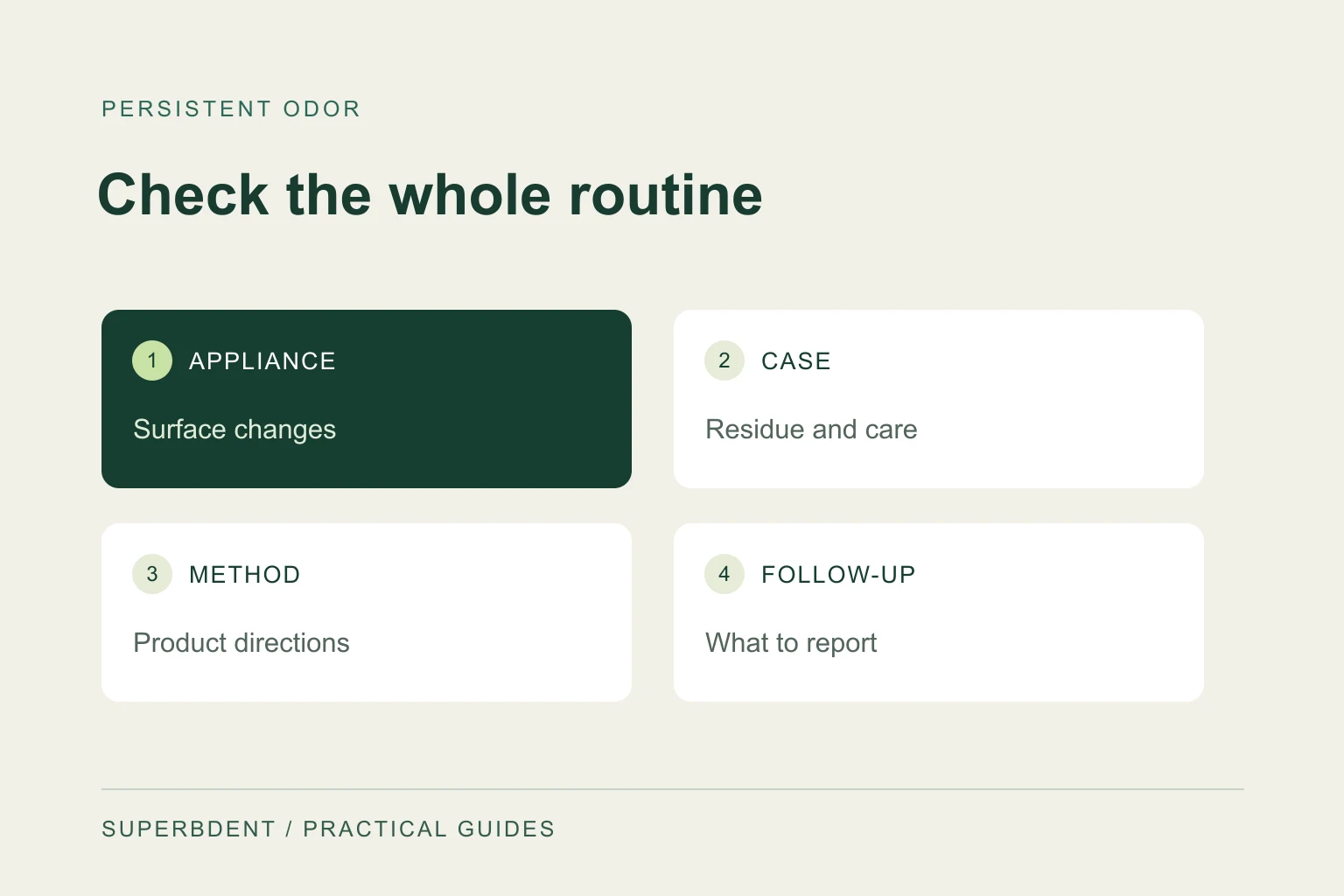
Start with three separate checks
| Check | What to look for | What to record |
|---|---|---|
| The retainer | Visible film, a rough area, a crack, or a new change in fit. | Where the change is and when you first noticed it. |
| The case | Residue inside the case or an odor that remains when the retainer is removed. | How you clean the case and whether it has its own care instructions. |
| The routine | A new cleaning product, incomplete rinsing, or uncertainty about the directions. | The product name, concentration, and soak time you actually used. |
This small separation makes the next step more useful. For example, “the odor returns as soon as I open the case” tells the practice something different from “one rough patch remains after cleaning.” You do not need to scrape a patch or keep trying products to make a helpful report.
Use a consistent cleaning method
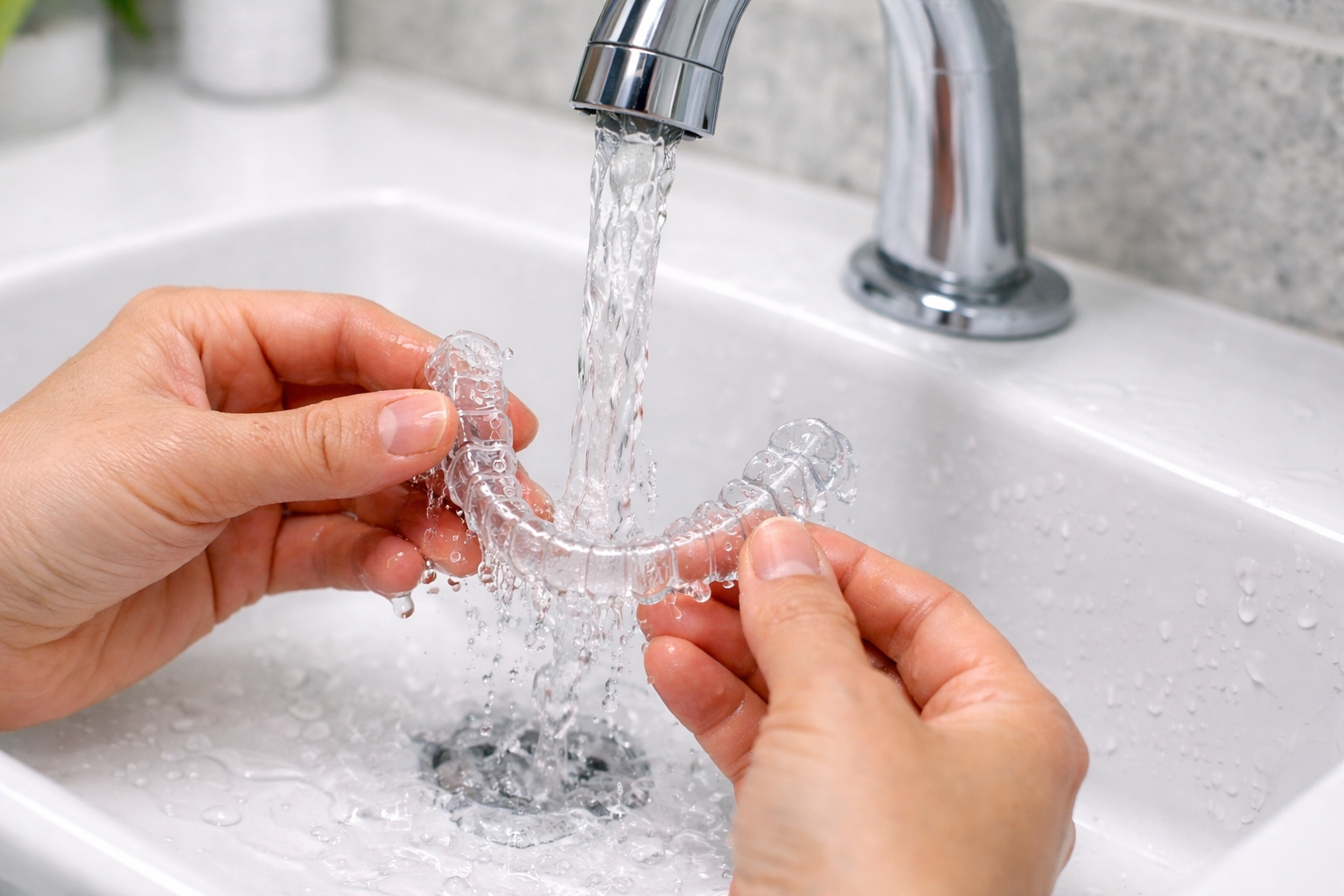
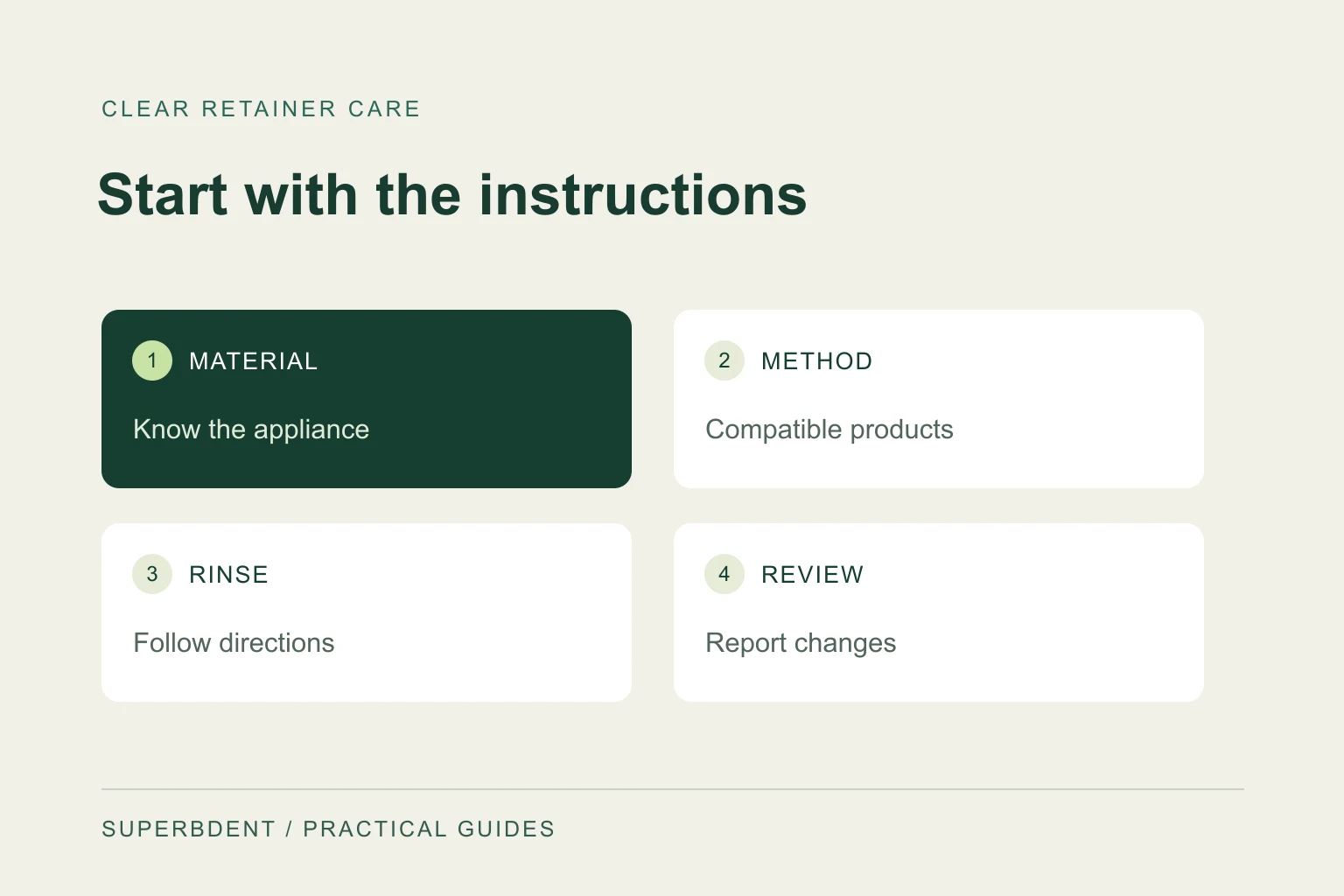
Check the instructions that came with your retainer. For Zendura appliances, the manufacturer’s care guidance describes gentle cleaning with mild, non-abrasive soap, a soft brush, and cool or lukewarm water. If you are unsure what material you have, ask the supplying practice before changing products.
Keep the product packaging or take a photo of its label. If a cleanser is appropriate for your appliance, use its stated directions rather than guessing at a stronger concentration or longer soak. Rinse as directed. A product marketed for one appliance is not automatically suitable for every clear plastic tray.
For the broader routine, see how to clean clear retainers. If your question is specifically about brushing with toothpaste, use our toothpaste guide.
Include the case in the routine
Inspect the inside, hinge, and corners of the case and follow its own cleaning instructions. Do not assume that the case can go into a dishwasher because it looks sturdy. For example, Invisalign’s case instructions specify handwashing rather than dishwasher cleaning. Your case may have different directions.
Use the protective case when the appliance is out, and keep the case where you can find it. If it is damaged or cannot be cleaned according to its instructions, ask about a replacement case. Keeping the appliance safe and keeping the container clean are both parts of the same routine.
When persistent odor needs a check
The AAO retainer care guide identifies ongoing odor, discoloration, and appliance damage as reasons to seek help. Tell the practice if the smell continues after the approved routine, especially if you also notice roughness, discomfort, or altered fit. Do not assume that a stronger scent or a whiter appearance proves the appliance is clean.
A message you can send to the practice
“My retainer has had an odor since [date]. I use [product and method] and clean the case by [method]. The odor [does/does not] remain after cleaning. I have also noticed [visible change, discomfort, or changed fit]. Should I bring the appliance and case in for a check?”
- Bring the retainer and its case if you are asked to attend.
- Have the cleaning product name available.
- Mention a new white or cloudy area; our white buildup guide explains what to describe.
- Ask for the current care instructions in writing so the next routine is easy to repeat.
Sources & further reading
- AAO: retainer care and persistent odors
- Zendura: cleaning and disinfecting appliances
- Invisalign: case cleaning instructions
Prepared by SuperbDent Editorial. General education; your treating clinician determines your appliance and care plan.