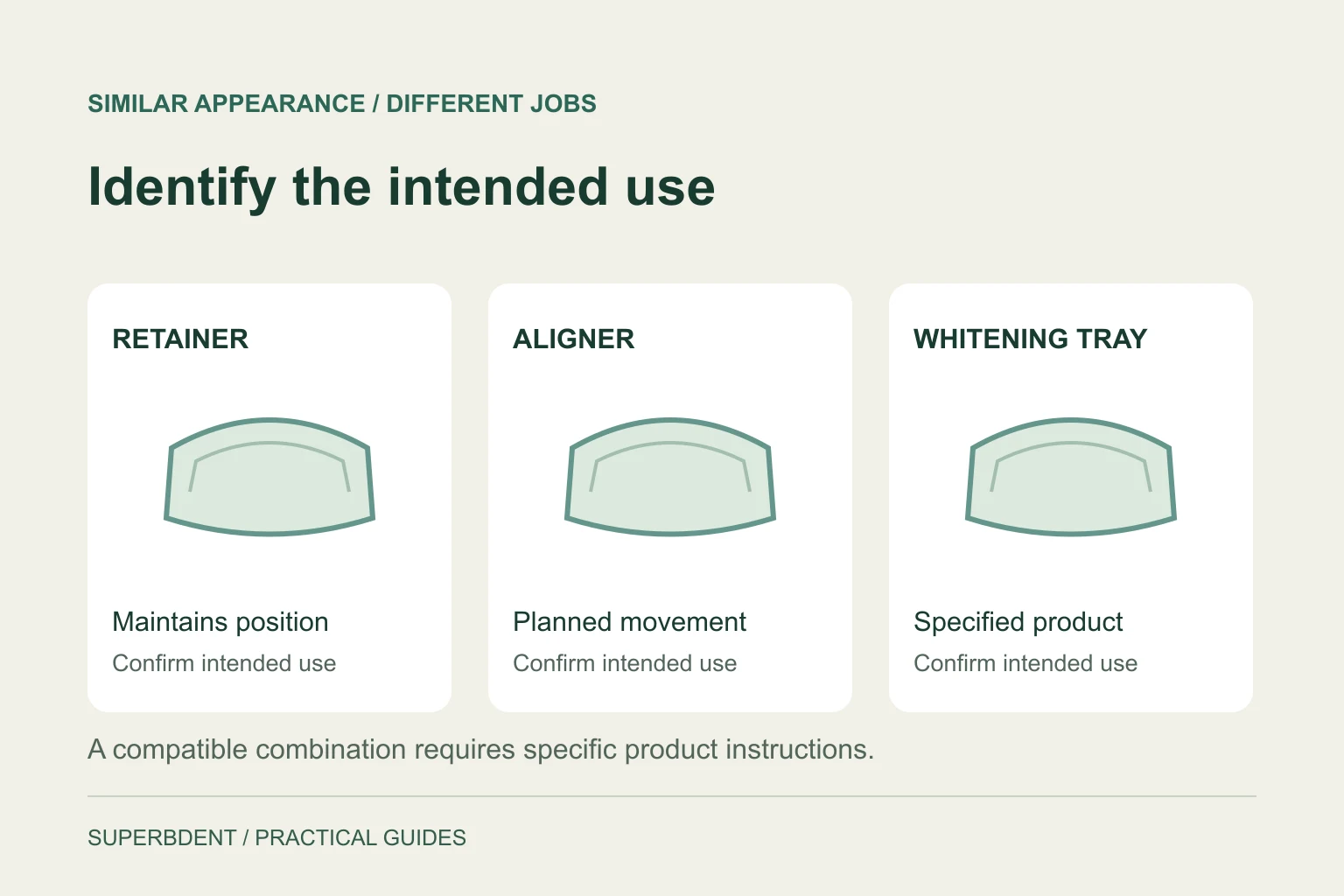
A retainer is not automatically a whitening tray, and a whitening tray is not automatically a retainer. Their intended uses differ even when both look like clear shells over the teeth. Some products are designed for combined use, but that permission applies to a specific appliance and whitening system—not every clear tray and gel.
Start with the job the appliance was prescribed to do
| Appliance | Primary job | What its appearance cannot establish |
|---|---|---|
| Retainer | Maintain the tooth position in a prescribed retention plan. | Whether it is compatible with a particular whitening product. |
| Active-treatment aligner | Apply the planned forces for a stage of orthodontic treatment. | Whether adding a gel is allowed by the treatment system. |
| Whitening tray | Hold the specified whitening product according to its instructions. | Whether it can maintain an orthodontic result. |
Can you ever put whitening gel in a retainer?
There are product-specific options. For example, Align’s Professional Whitening System describes use with Invisalign aligners or Vivera retainers, as well as purpose-made whitening trays for people outside those treatment pathways. This demonstrates why a blanket “never” is too broad. It also does not authorize an unrelated gel in an unidentified retainer.
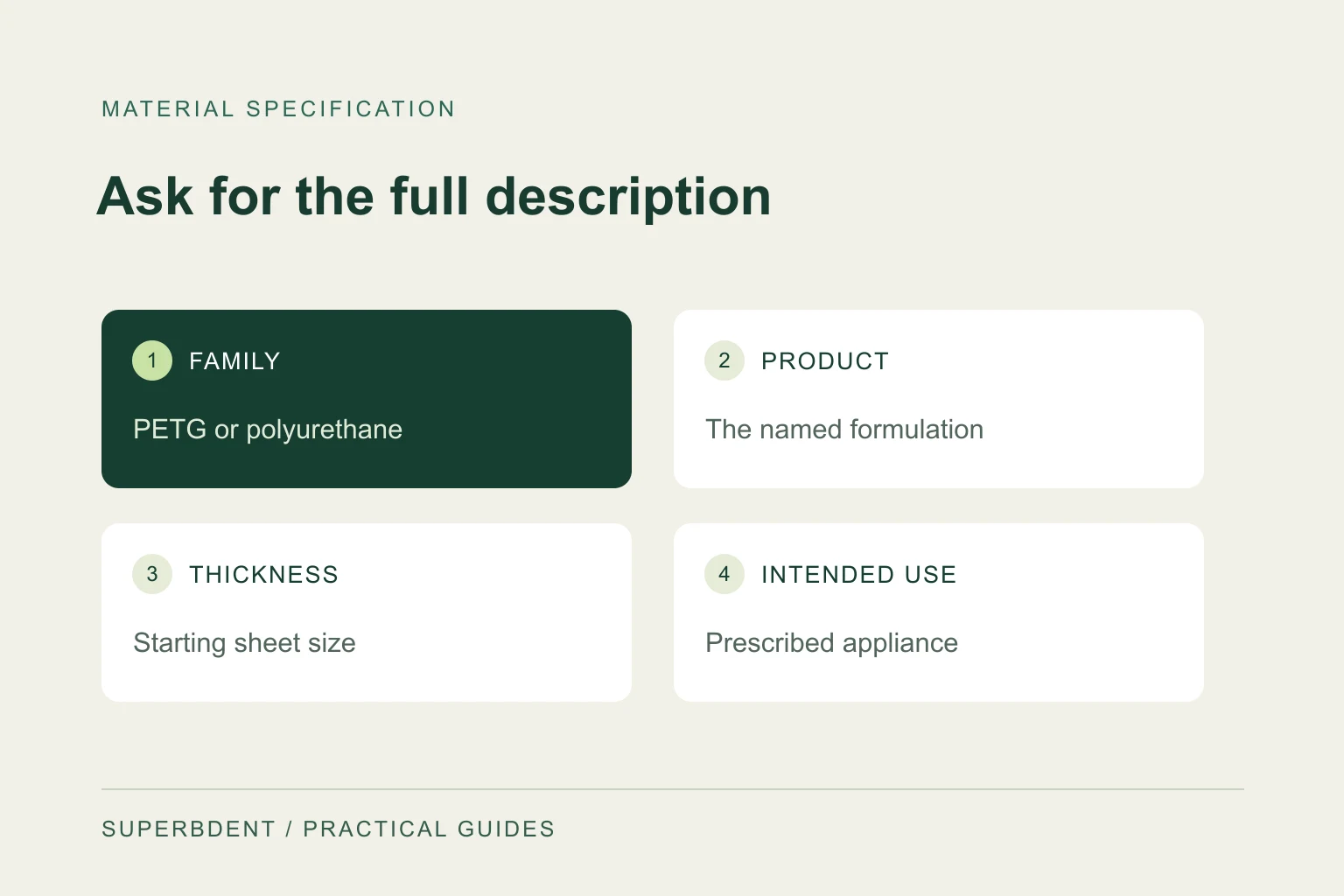
Ask your dentist to verify both names together: the exact tray or retainer and the exact whitening product. “A clear retainer” and “a whitening gel from the same shop” are incomplete descriptions. Bring the appliance and packaging, including the instructions, so the team can check what you actually have.
Six questions before combining products
- Is this appliance specifically permitted with this whitening product?
- Is whitening appropriate for my teeth and current dental treatment?
- Who will confirm that the tray fits as intended?
- Which written instructions apply to the product and appliance together?
- How does this fit around my existing orthodontic wear plan?
- What should I do if I develop sensitivity or irritation?
The American Dental Association’s patient guidance describes custom trays as one at-home whitening option and notes that sensitivity can occur. It also explains that whitening does not change the color of restorations such as fillings and crowns. Discuss those issues before buying products if a color match or existing dental work is part of your goal.
Do not copy a regimen from a different product
This comparison does not supply a gel amount, concentration, exposure time, or treatment schedule. Those details belong to the product instructions and your dental plan. If the packaging and the instructions you received seem to conflict, ask the prescriber to resolve the mismatch before using the combination. Do not extend a whitening session to match an overnight retainer schedule unless your specific instructions allow it.
Can a whitening tray replace a lost retainer?
Do not make that substitution based on a similar appearance or comfortable fit. Tell the treating practice that the retainer is missing and that you have a whitening tray available. It needs to confirm the retention plan and any replacement appliance. Our lost retainer guide explains which details help with that conversation.
Keep the appliance instructions identifiable
A useful home setup is to keep each appliance in its labeled case and its instructions with the corresponding product. Record who supplied it and how to contact the practice. When you replace a retainer or change whitening products, confirm compatibility again instead of assuming an earlier approval covers the new combination.
The same intended-use question applies to other look-alike appliances. A night guard and retainer serve different purposes, and the last aligner tray is not automatically your long-term retention plan.
Sources & further reading
- Align Technology: Professional Whitening System and compatible appliances
- American Dental Association: teeth whitening
Prepared by SuperbDent Editorial. General education; your treating clinician determines your appliance and care plan.