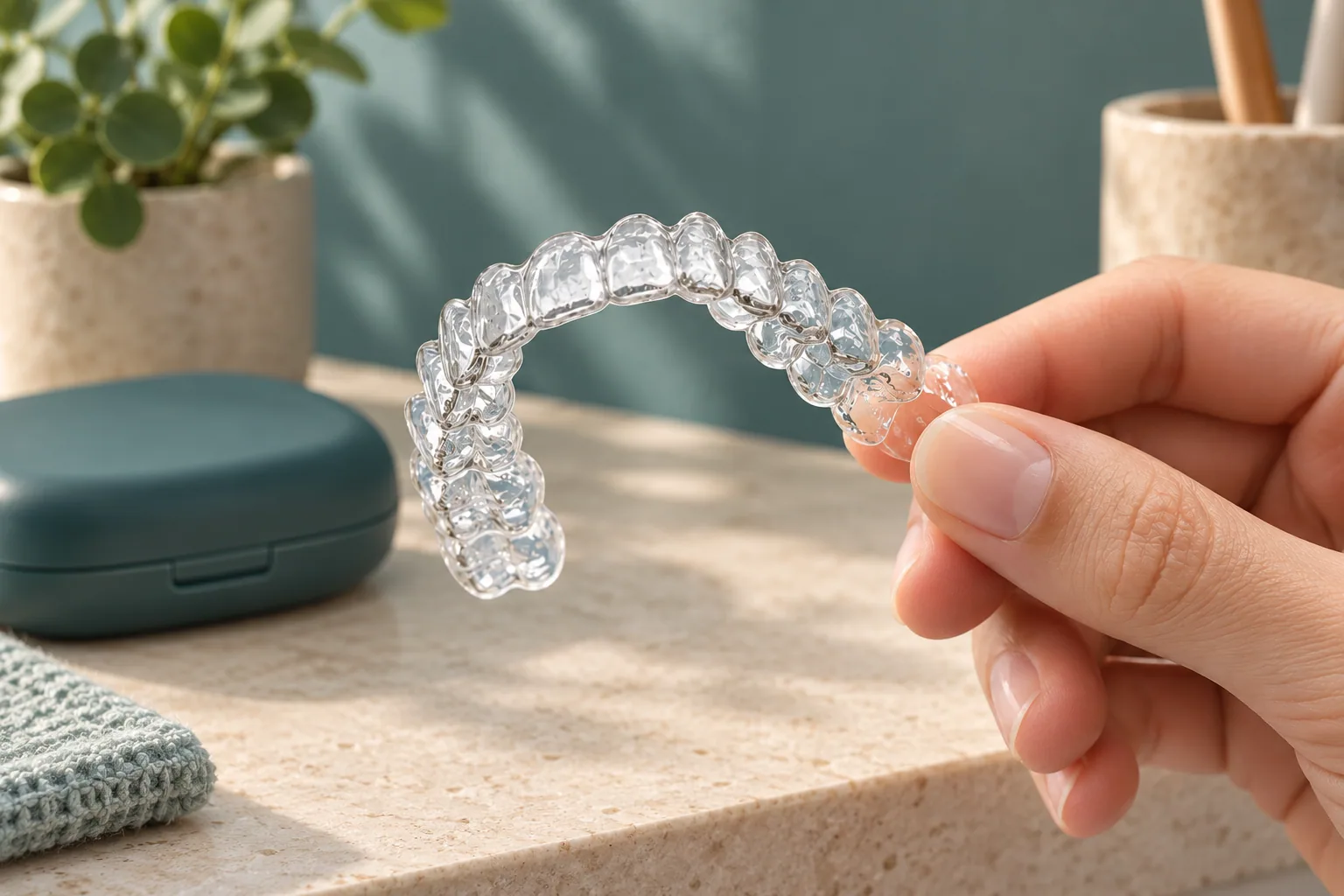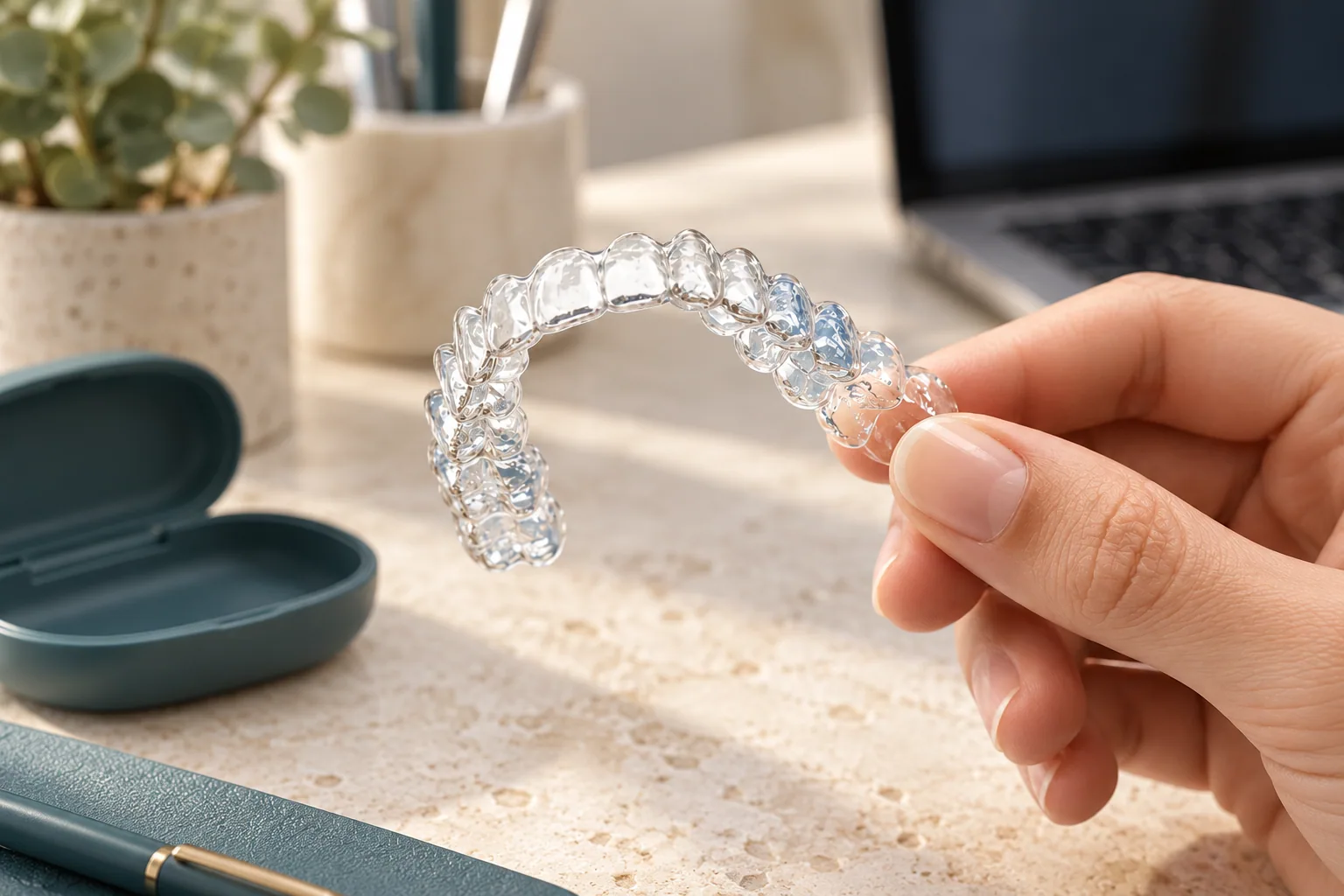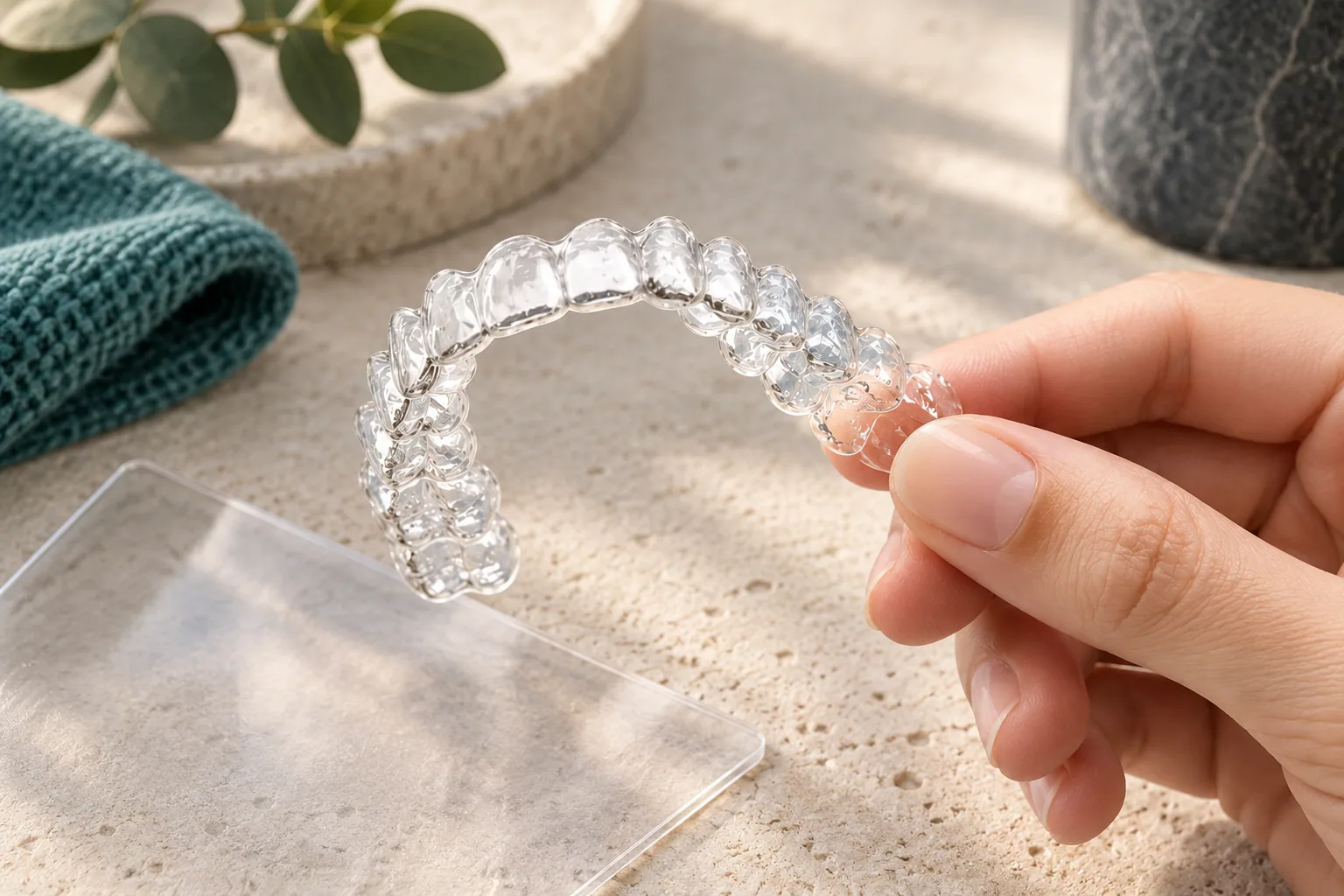


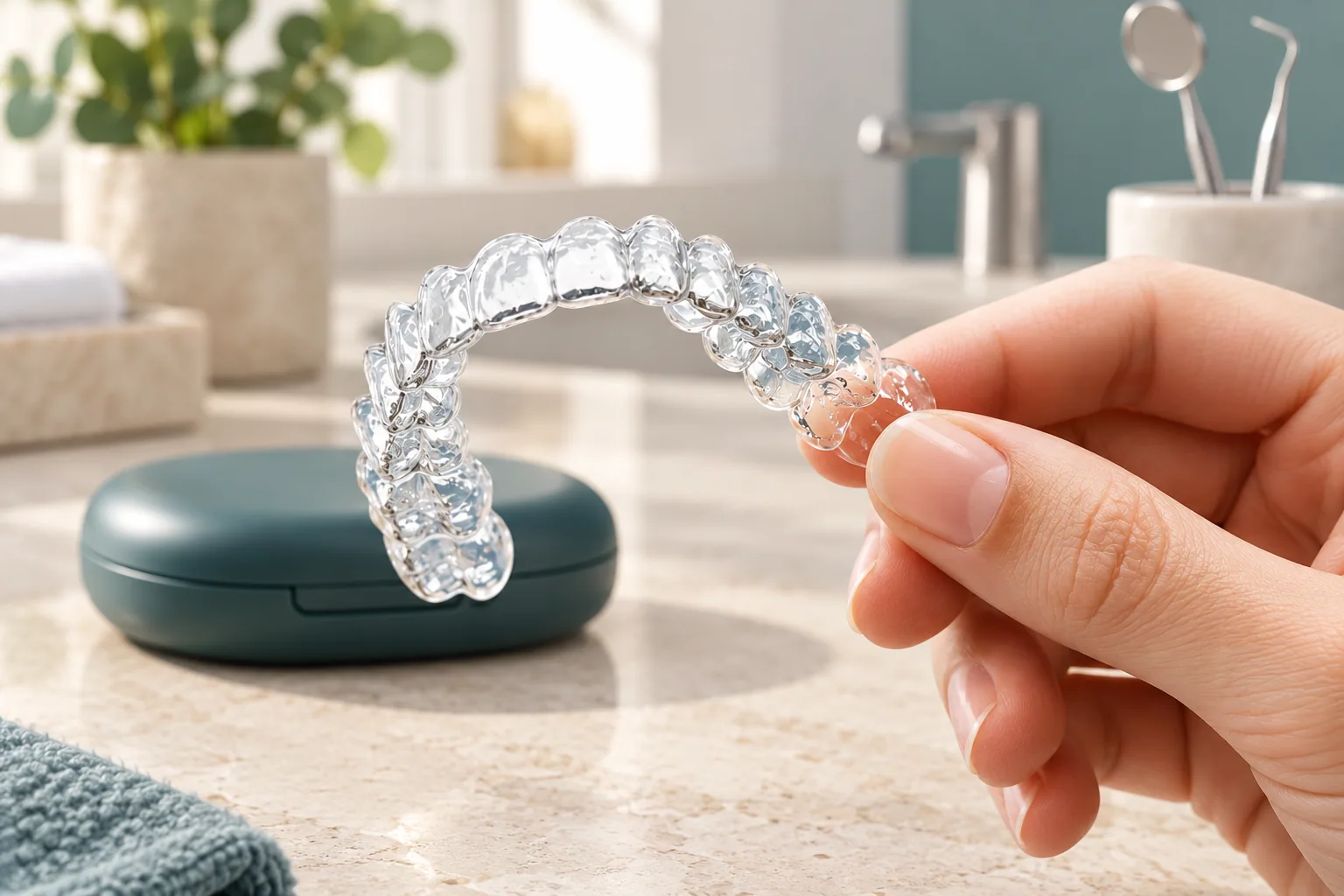
Finishing the last numbered aligner in a box can feel like the end of treatment. The next step still needs your clinician’s assessment. They will tell you whether active treatment is complete, whether another phase is appropriate, and which retention appliance and wear schedule to use. Do not assume the last Invisalign tray is a permanent substitute for a retainer because both are transparent.
What is the difference between an aligner and a retainer?
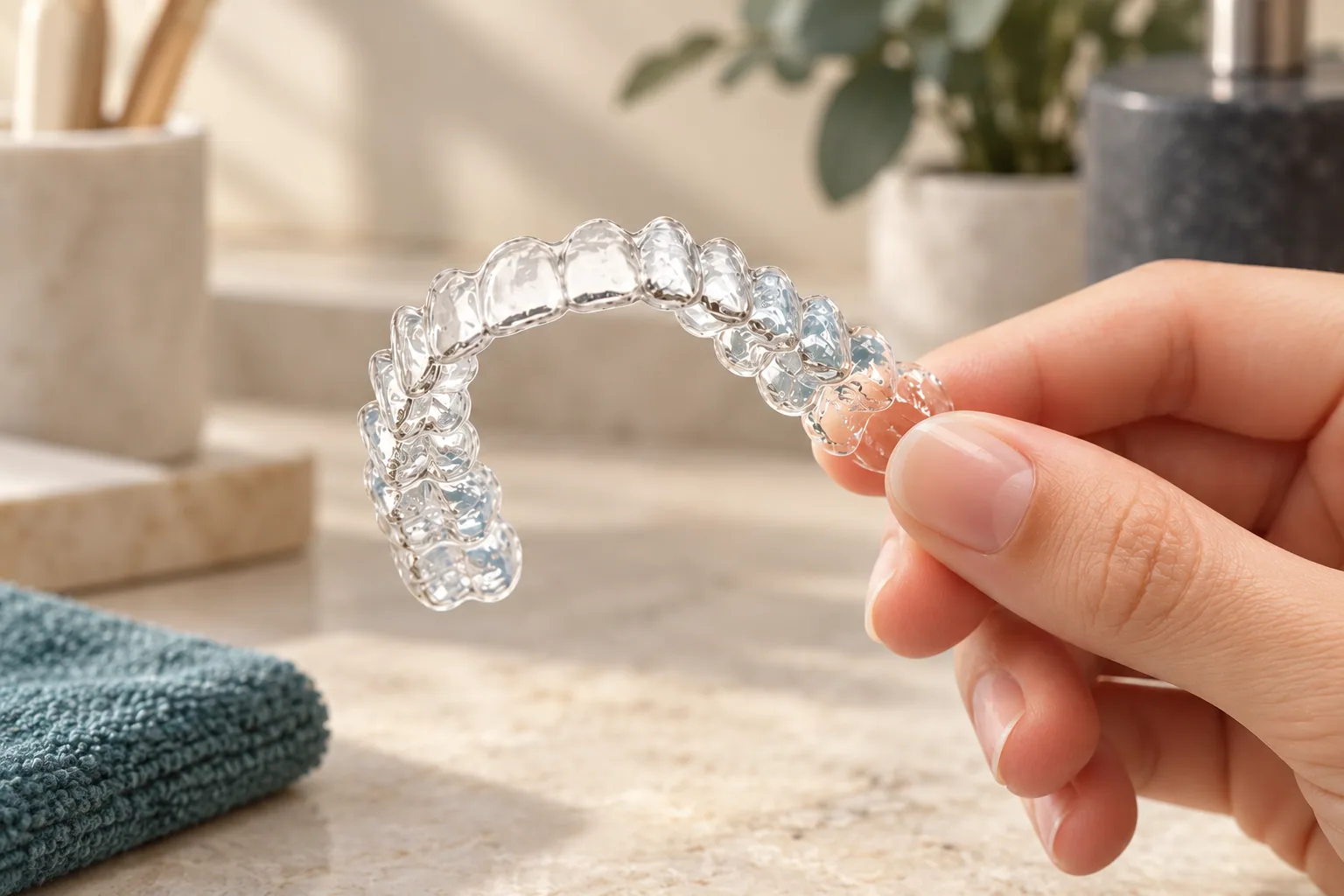
An active aligner is part of a prescribed sequence intended to move teeth toward planned positions. A retainer is intended to maintain the positions specified in a retention plan. Invisalign’s patient information distinguishes its treatment aligners from Vivera retainers. Other systems also have their own appliance specifications; the product and prescription matter more than the general appearance.
| Stage | Purpose | What to confirm |
|---|---|---|
| Active treatment | Follow a clinician-directed movement sequence. | Which appliance to wear and when to change it. |
| Transition | Follow the interim plan while the next step is arranged. | Exactly what to wear while waiting. |
| Retention | Maintain the positions under the prescribed retention plan. | Retainer type, fit check, wear schedule, and follow-up. |

Can the final tray be worn temporarily?
Follow the instructions your own provider gives you. There may be an interim plan while a retainer is made or a review appointment is arranged, but that does not establish a universal wear period for the final tray. Contact the practice if you were not given instructions, if delivery is delayed, or if the appliance becomes damaged or stops seating normally.

Ask these questions before leaving the practice
- Has the clinician confirmed that active treatment is complete?
- Which retainer is prescribed, and when will it be ready?
- What should I wear until it arrives?
- How will the new appliance’s fit be checked?
- What is my wear schedule, and when should I return for review?
- Who should I contact if the retainer is lost, damaged, or does not fit?
Write the answers somewhere you can find them. If the plan changes, ask for the updated instructions rather than relying on advice from someone whose treatment and appliance may be different. Bring up any recent dental work or change in fit so the provider can decide whether the available record remains appropriate.
Make retention part of the routine
Once the clinician has provided a retention plan, build the prescribed wear and care steps into your day. Store the appliance in its case when it is out of your mouth and follow its cleaning instructions. If you lose it, contact the practice promptly instead of waiting to see whether you notice movement. The next order may require a current assessment or updated record.

What about a replacement from an existing scan?
A stored scan can make records easier to retrieve, but the clinician still needs to decide whether it is suitable for the current replacement. It should not be assumed to describe teeth after changes or further treatment. Our replacement scan guide explains the questions involved, and the patient care guide provides a practical place to start with everyday care.
Sources & further reading
- Invisalign: retainers after Invisalign treatment
- American Association of Orthodontists: maintaining tooth positions after treatment
Prepared by SuperbDent Editorial. General education; your treating clinician determines your appliance and care plan.