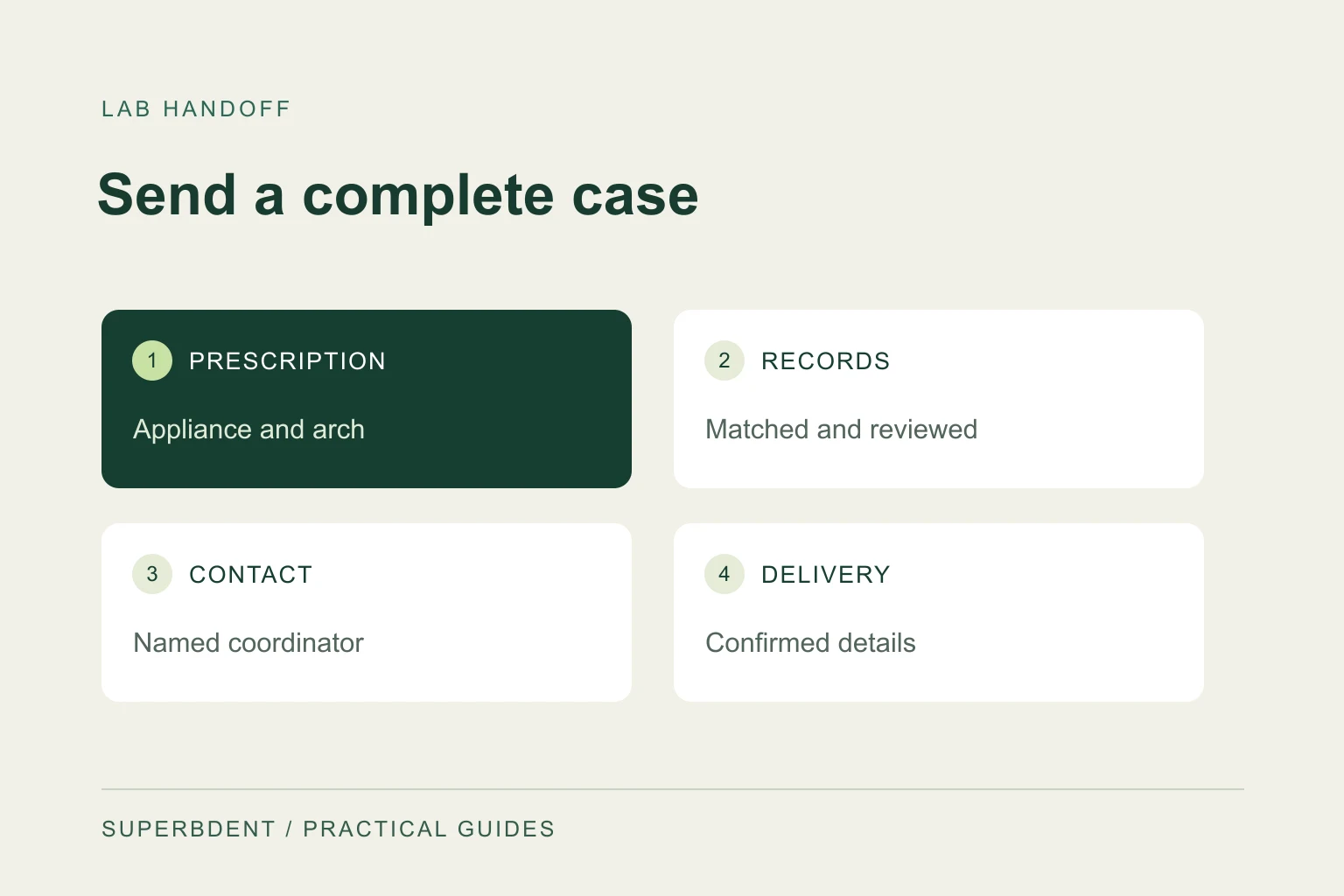
A shared retainer ordering process should make it easy to identify the current prescription, the responsible clinician, and the office receiving the finished appliance. It should also show who is resolving a missing record or a changed delivery location. The template below is a proposed starting point for a multi-site practice to adapt with its lab; it is not a tested SuperbDent service-level agreement.
Standardize the handoff, not every clinical choice
Use consistent field names and status definitions across offices. Leave material selection, appliance design, and the patient’s wear and follow-up plan with the responsible clinician. A default in an ordering template should be reviewed as part of each case, rather than silently becoming the prescription.
Start with the retainer lab prescription checklist for the contents of an individual order. The multi-office layer adds ownership, version control, and destination checks. It should not create a competing clinical record or a second unofficial prescription.
Agree on one set of shared fields
| Field group | Information to confirm |
|---|---|
| Case identity | Approved case reference and the practice’s normal patient-matching checks. |
| Clinical responsibility | Treating clinician and the person authorized to clarify or revise the prescription. |
| Current order | Prescription revision and date, appliance, arches, quantity, and special instructions. |
| Records | Which scan or impression is intended, its date, and whether the lab has accepted it. |
| Destination | Receiving office, delivery address, and a named receiving contact. |
| Schedule | Requested date, accepted estimate, and patient appointment status. |
| Exceptions | Open question, named owner, next action, and next update date. |
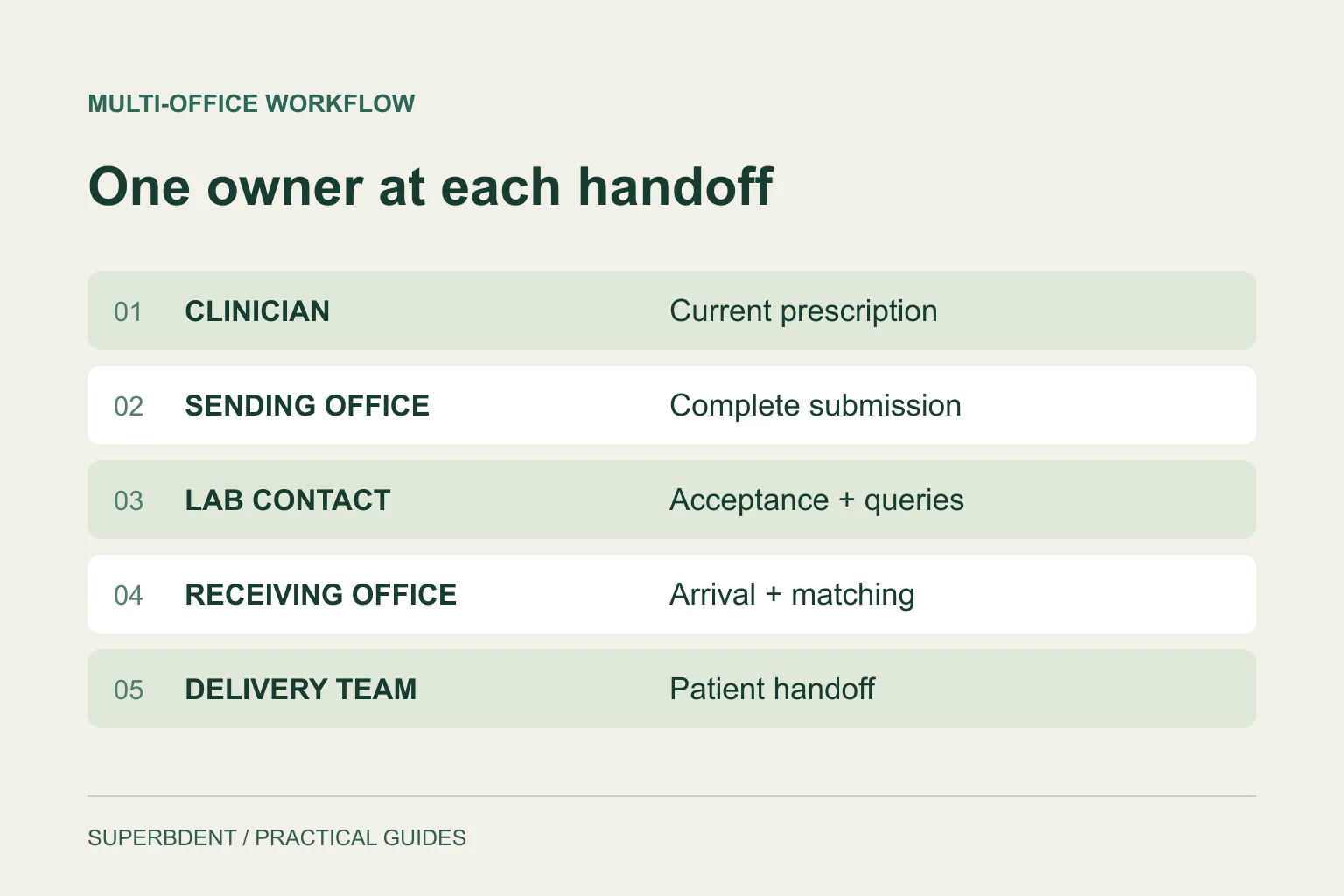
Assign an owner at each handoff
One person can hold several roles in a smaller group, but the responsibilities still need to be explicit. The site coordinator checks submission completeness. The prescribing clinician resolves clinical questions. The lab contact confirms acceptance and production status. The receiving office records arrival and routes the case for delivery. A central coordinator can monitor unresolved items without taking over clinical decisions.
A shared inbox is a contact route, not an owner. For every issue, record a named person or assigned role that is actually staffed, plus the next action. Agree who provides coverage when that person is away. Use the printable handoff sheet in a workflow meeting to make those assignments visible.
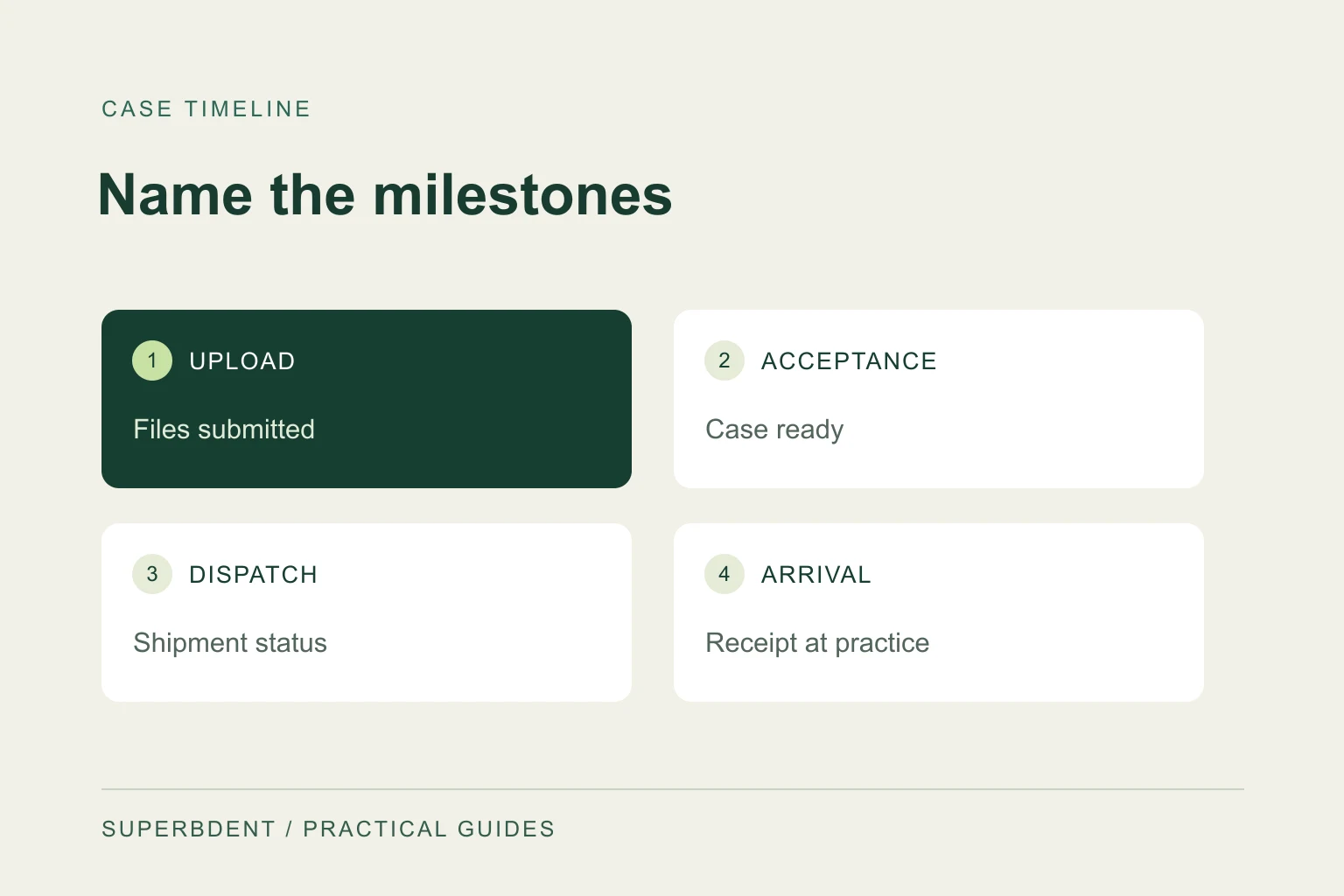
Use status labels that describe an event
- Prepared: the practice is assembling the order; nothing is presumed accepted.
- Submitted: the identified prescription and records have been sent.
- Query open: a named question needs a response before the agreed next step.
- Accepted: the lab has confirmed the case can proceed under the agreed terms.
- Dispatched: shipping details are available; the appliance has not necessarily arrived.
- Received: the named office has checked the delivery.
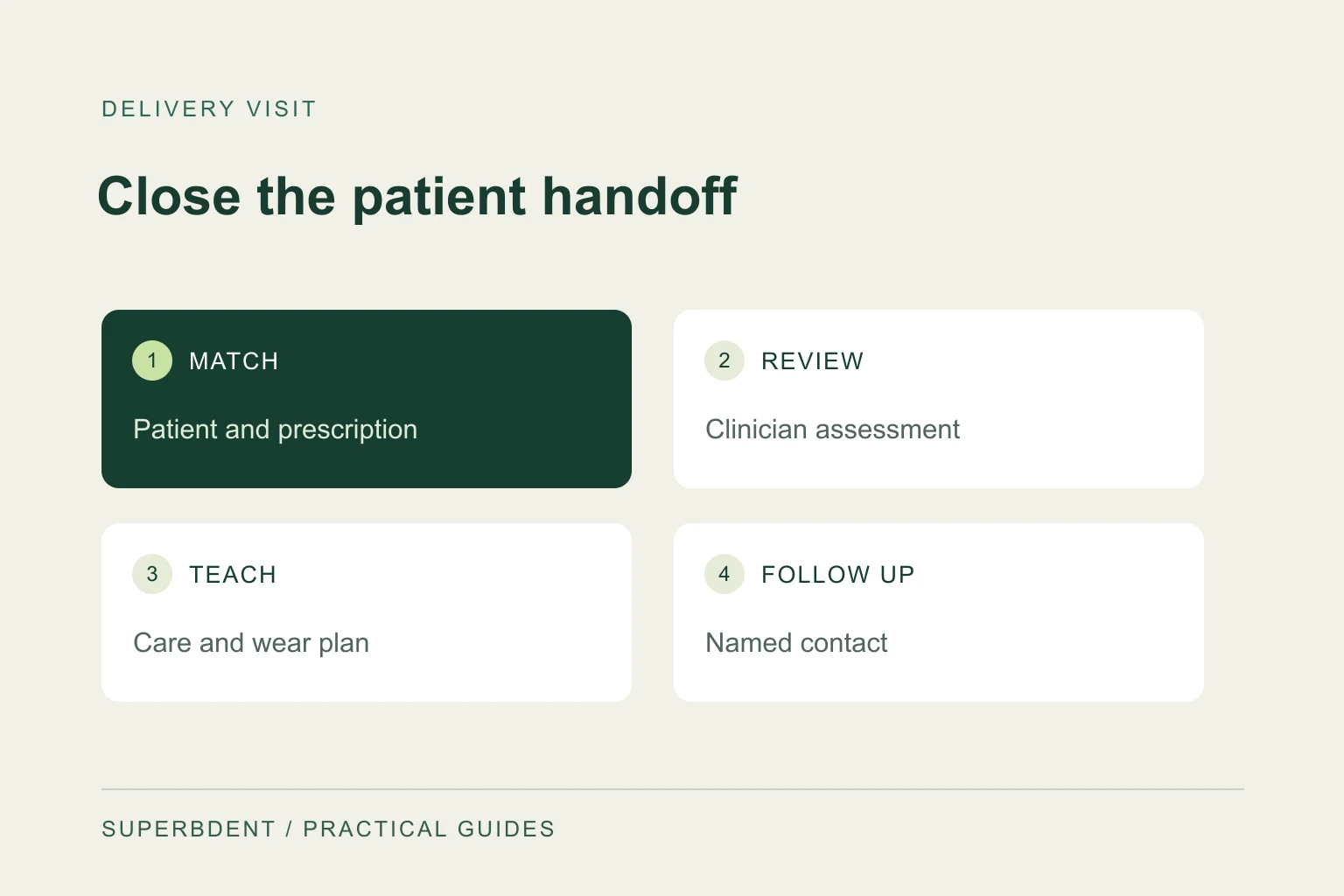
- Delivered or follow-up open: the clinical handoff is recorded, or an issue still has an owner.
These are suggested definitions to agree with your lab. Do not infer production start from a successful file upload. The turnaround and delivery guide explains why acceptance, fabrication, transit, and appointment timing need separate treatment.
A fictional exception example
The important control is the acknowledgement of the change. Sending a message does not establish that the production team has read it. If work has already started, ask the lab what can still change, what a revision would cost, and what happens to the estimate before promising a new patient date.
Pilot the process before expanding it
Have two offices walk through a routine order and an exception using training records. Check whether both interpret the fields and statuses the same way. For actual cases, use the practice’s approved record and communication systems. The printable worksheet is a planning aid; it does not provide secure storage or establish regulatory compliance.
When evaluating the process, define a small set of measures before collecting them: orders returned for missing information, unresolved queries at an agreed checkpoint, and deliveries sent to the wrong location. Establish a baseline and look for repeat causes. Do not assume the template itself will shorten turnaround or reduce remakes.