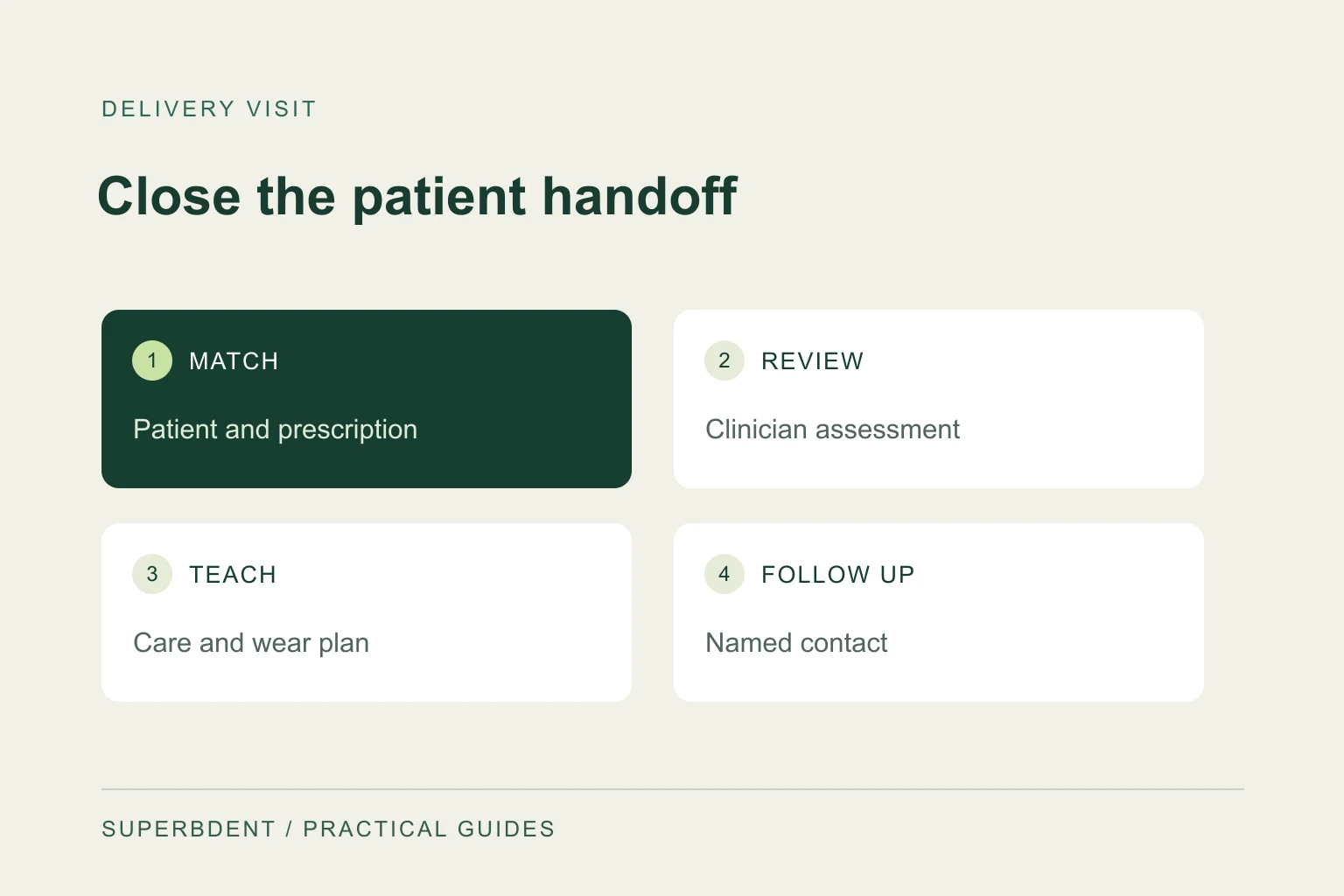
A retainer delivery appointment should close three handoffs: the laboratory order must match the intended case, the treating clinician must assess the appliance, and the patient must leave with usable instructions. The checklist below helps organize that work. It is an administrative and communication aid, not a universal clinical fit protocol.
Before the patient arrives
| Check | Record or resolve |
|---|---|
| Case match | Use the practice’s identity checks to match the patient, prescription, case reference, and package. |
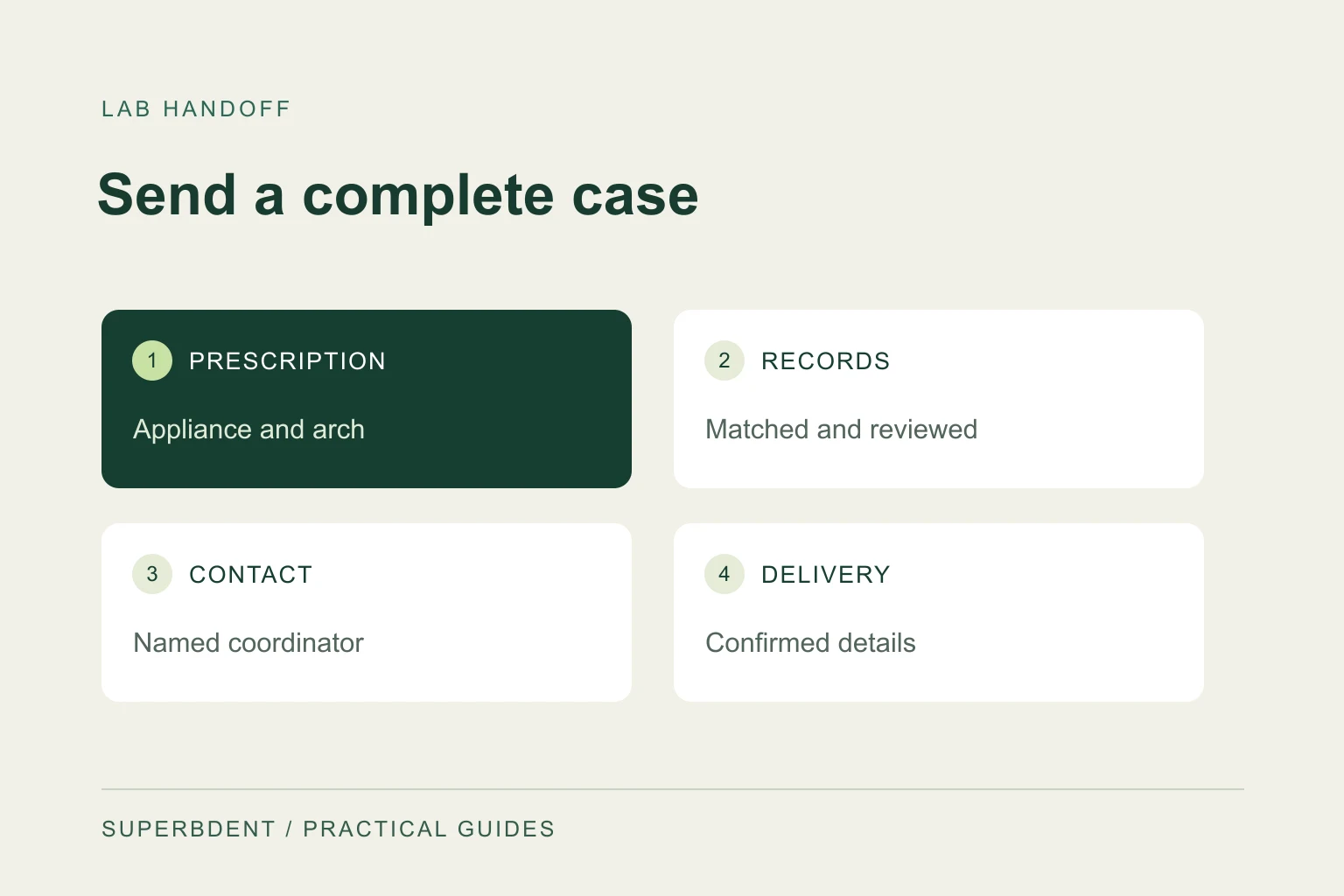
| Appliance details | Confirm arch, quantity, ordered options, and any relevant special instructions. |
| Receipt and condition | Check the received items and packaging; route discrepancies before treating the visit as routine delivery. |
| Available records | Have the prescription, record dates, and relevant lab correspondence available to the clinician. |
| Handling instructions | Identify the material instructions and the practice procedure that applies before patient use. |
For example, Zendura’s manufacturer guidance includes a pre-delivery cleaning step for finished appliances. Follow the current instructions for the actual material and your practice procedures. A home-care handout should not be substituted for instructions intended for laboratory or clinical handling.
Make the clinician’s decision visible
Document who assessed the appliance and the resulting plan using the practice’s normal record system. If a fit, comfort, prescription, or identification question remains, assign it to the appropriate clinician before describing the case as complete. Staff should not resolve a mismatch by guessing that a similar-looking appliance or an older scan is equivalent.
When contacting the lab, provide the approved case reference, a precise description of the concern, and the records requested through the approved channel. Distinguish an observation from a diagnosis of the cause. “The clinician reports a seating concern on the upper right” communicates more clearly than an unsupported conclusion about a manufacturing defect.
Use teach-back for the instructions
After the treating team has established the plan, ask the patient to demonstrate or explain the essential steps in their own words. A handout marked as given does not show whether the person knows which appliance to wear or how to remove it. Record questions that need further explanation.
- Which upper and lower appliances are prescribed, and when should each be worn?
- Can the patient show insertion and removal using the technique taught by the practice?
- Which cleaning method and exact products are suitable for this appliance?
- Where should the appliance be stored when not in use?
- What should the patient report about fit, damage, loss, or discomfort?
- Who should they contact, and when is the planned follow-up?
The AAO’s retention guidance emphasizes individualized wear and care instructions. Put the actual prescribed schedule in the patient’s written plan. Avoid replacing it with a generic “nightly” or “full-time” label copied from a template.
Separate a case record from a patient handout
The case record can include prescription details, the clinician’s assessment, lab correspondence, and the delivery outcome. The patient handout should make everyday actions easy to find: appliance identification, prescribed wear, cleaning directions, contact details, and follow-up. Keep internal manufacturing notes out of the patient instructions unless they affect a meaningful care decision.
Close unresolved items with an owner
| Open item | Useful handoff note |
|---|---|
| Lab clarification needed | Named staff owner, question sent, and expected response check. |
| New records requested | Who will arrange capture and confirm the files are ready. |
| A further appointment is needed | Scheduling owner and the clinician’s interim instructions. |
| Patient needs another demonstration | What remains unclear and who will provide the explanation. |
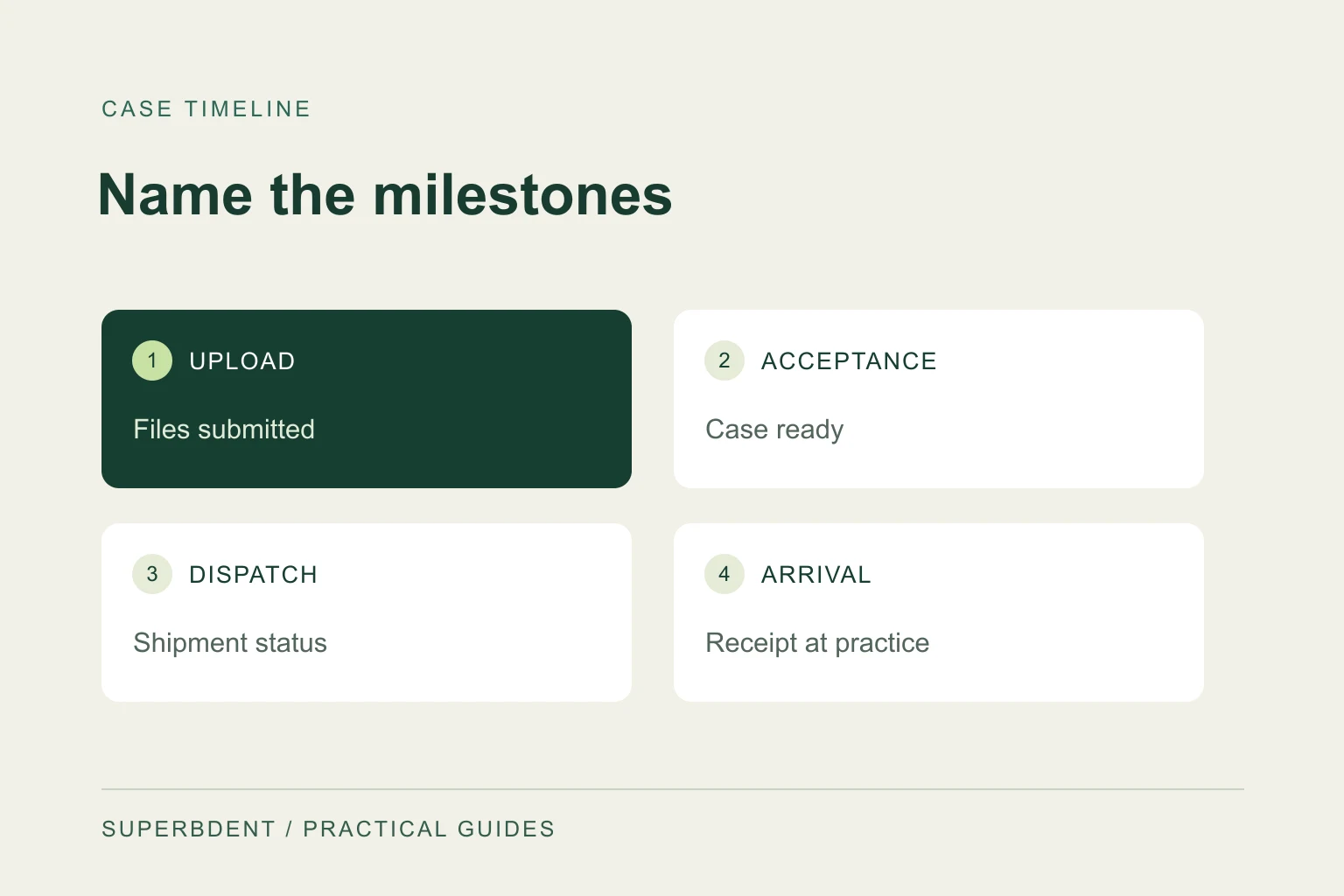
Use the printable delivery checklist as a prompt, then keep the completed record in the approved practice system. It does not collect information online or replace your recordkeeping process. For the earlier order stage, use the lab prescription checklist; for scheduling, distinguish lab turnaround from delivery time.
For practices with several locations, the multi-office retainer ordering workflow adds ownership, prescription revision, and delivery-destination checks before the appointment.
Sources & further reading
- AAO: individualized retainer care, wear, and follow-up
- Zendura: patient care and separate pre-delivery handling guidance
Prepared by SuperbDent Editorial. General education; your treating clinician determines your appliance and care plan.