Retainer lab turnaround and delivery time are not always the same measure. A quoted interval might end when manufacturing finishes, when the parcel leaves the lab, or when it reaches the practice. Before scheduling a delivery appointment, ask what starts the clock, what ends it, and whether the estimate includes transit.
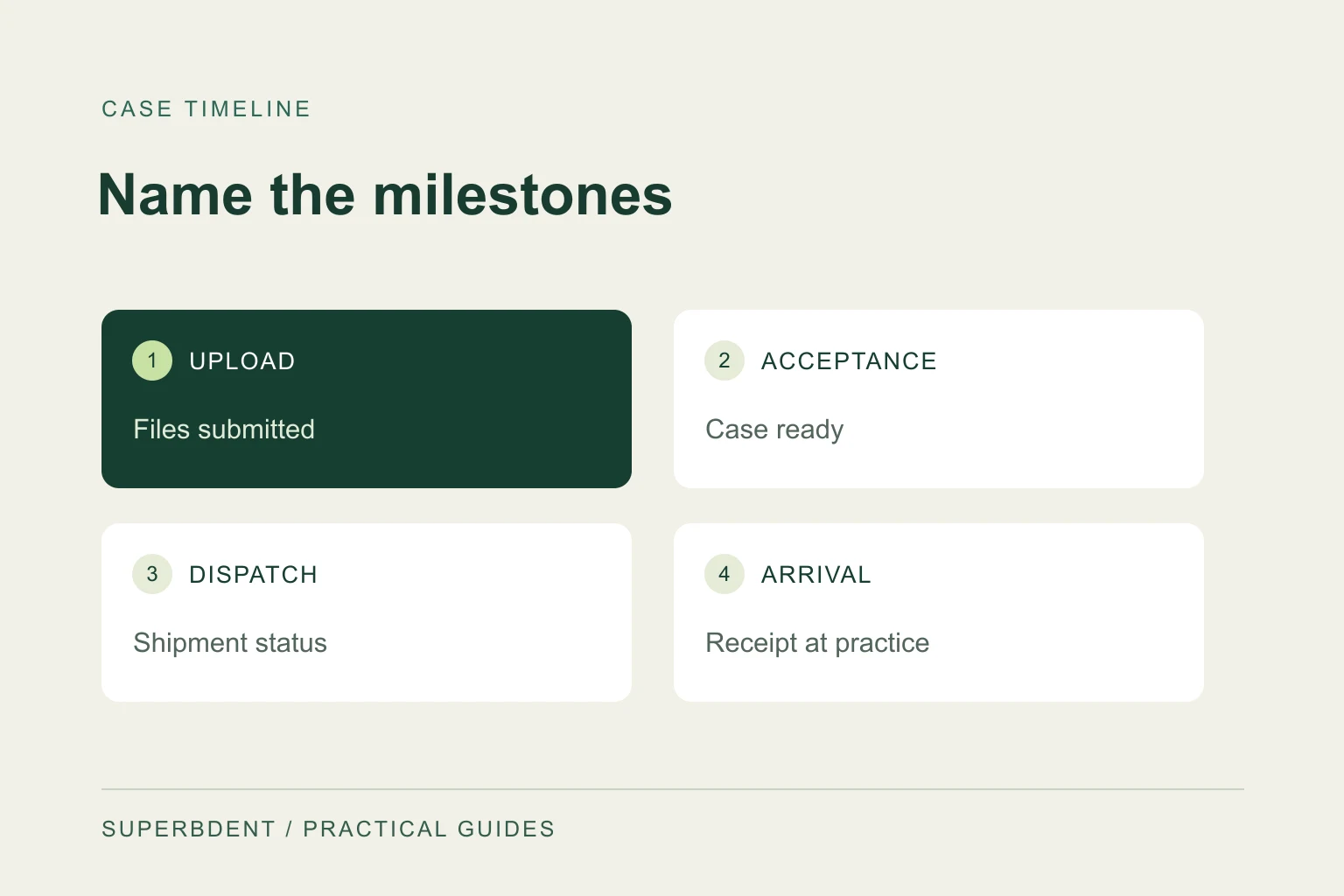
Use a timeline with named milestones
| Milestone | What it tells your team | What it does not establish |
|---|---|---|
| Files uploaded | The transfer has been submitted. | That the records and prescription have been accepted. |
| Case accepted | The laboratory has confirmed the case can proceed under its requirements. | That every later delivery variable is guaranteed. |
| Fabrication complete | Manufacturing is finished under the lab’s process. | That a carrier has collected the parcel. |
| Dispatched | The parcel has entered the stated shipping stage. | That it has arrived or been checked by the practice. |
| Delivered | The shipment reached the recorded destination. | That the patient has attended a fit appointment. |
For example, a shipping label created before collection is a different event from the carrier receiving the package. An upload acknowledgement is also different from a message requesting a better scan. Using precise milestone names prevents your team from treating these events as interchangeable.
What SuperbDent currently advertises
The Superb Retainer service page advertises a 2–3 business-day timeline. Confirm the applicable timing and delivery details for your case with the team, particularly when records need clarification or the patient has a specific appointment date. This guide does not add a cutoff time, expedited service, or geographic guarantee to the published offer.
Put the agreed timing in the case record using the lab’s actual wording. “Expected arrival Thursday” is more useful for scheduling than a note saying only “two days,” especially if different people handle scanning, ordering, and patient calls.
Ask five questions before promising a date
- Does the quoted interval begin at upload, acceptance, payment, or another event?
- Does it end at fabrication, dispatch, or delivery?
- Which business days, holidays, and submission cutoffs apply?
- What happens to the estimate if the lab needs a new record or a prescription clarification?
- Who confirms a revised date and how will the practice receive tracking updates?
A scheduling example
The example does not assume a specific production duration. Its purpose is to show why the accepted case date and the upload date can differ. Record the confirmed dates for the real order instead of trying to calculate them from a generic blog example.
Reduce avoidable questions at the start
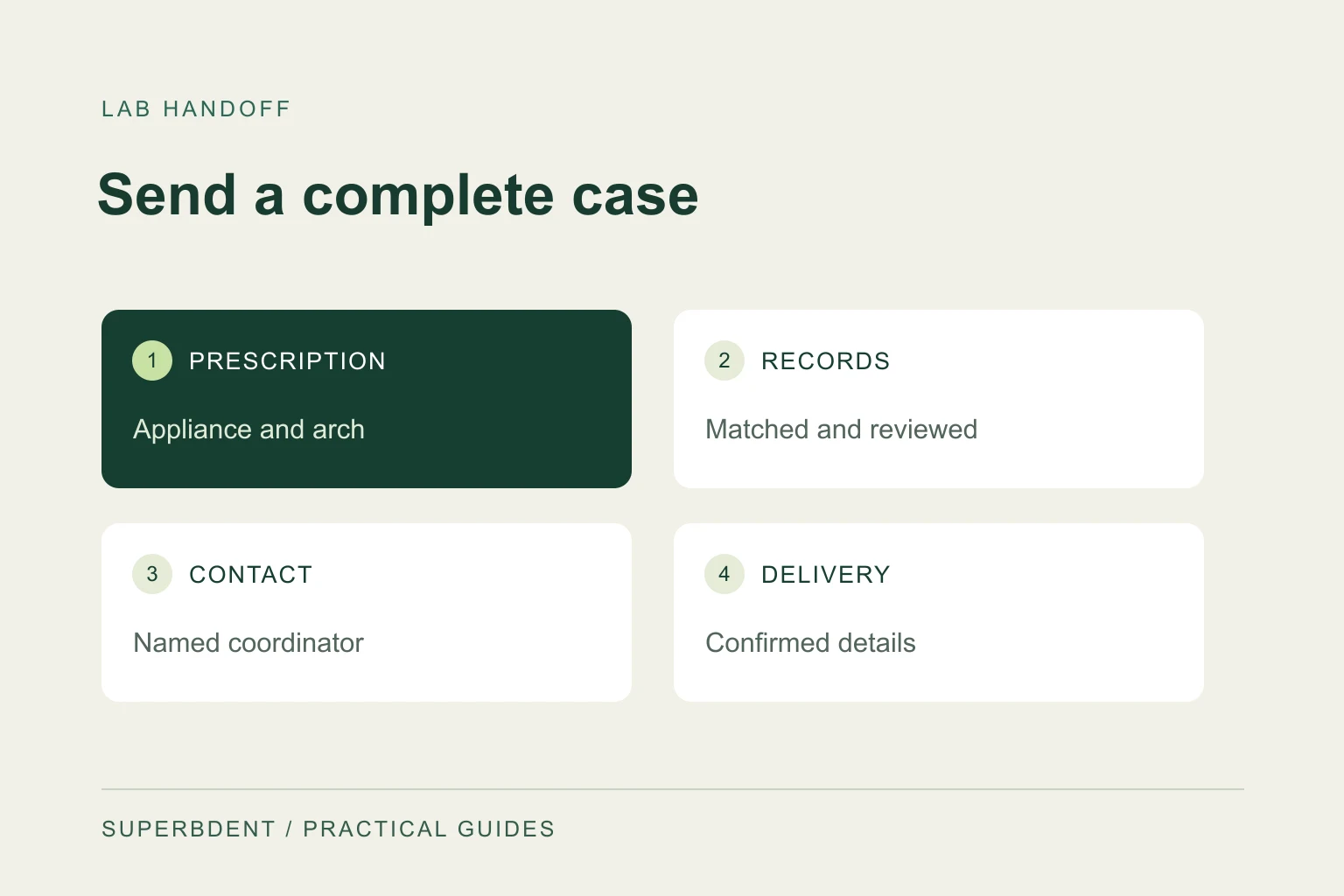
Send an identifiable record package and a complete prescription. Our lab prescription checklist covers the order details, while the scan quality checklist covers record review. A complete submission cannot guarantee transit, but it gives the laboratory the information needed to assess the case.
Coordinate the patient handoff
Assign someone to check the expected arrival and update the patient if it changes. The treating clinician determines the interim retention instructions; the laboratory’s tracking status does not answer what the patient should wear while waiting. If the request follows a loss or breakage, make that clinical communication part of the same workflow.
For ongoing lab evaluation, record upload, acceptance, dispatch, and arrival separately. Comparing the same milestones across cases is more meaningful than one undifferentiated “turnaround” number. Our lab selection checklist explains how to include those observations in a practice pilot.
After arrival, the retainer delivery checklist helps the practice close the handoff to the patient.
Sources & further reading
Prepared by SuperbDent Editorial. General education; your treating clinician determines your appliance and care plan.