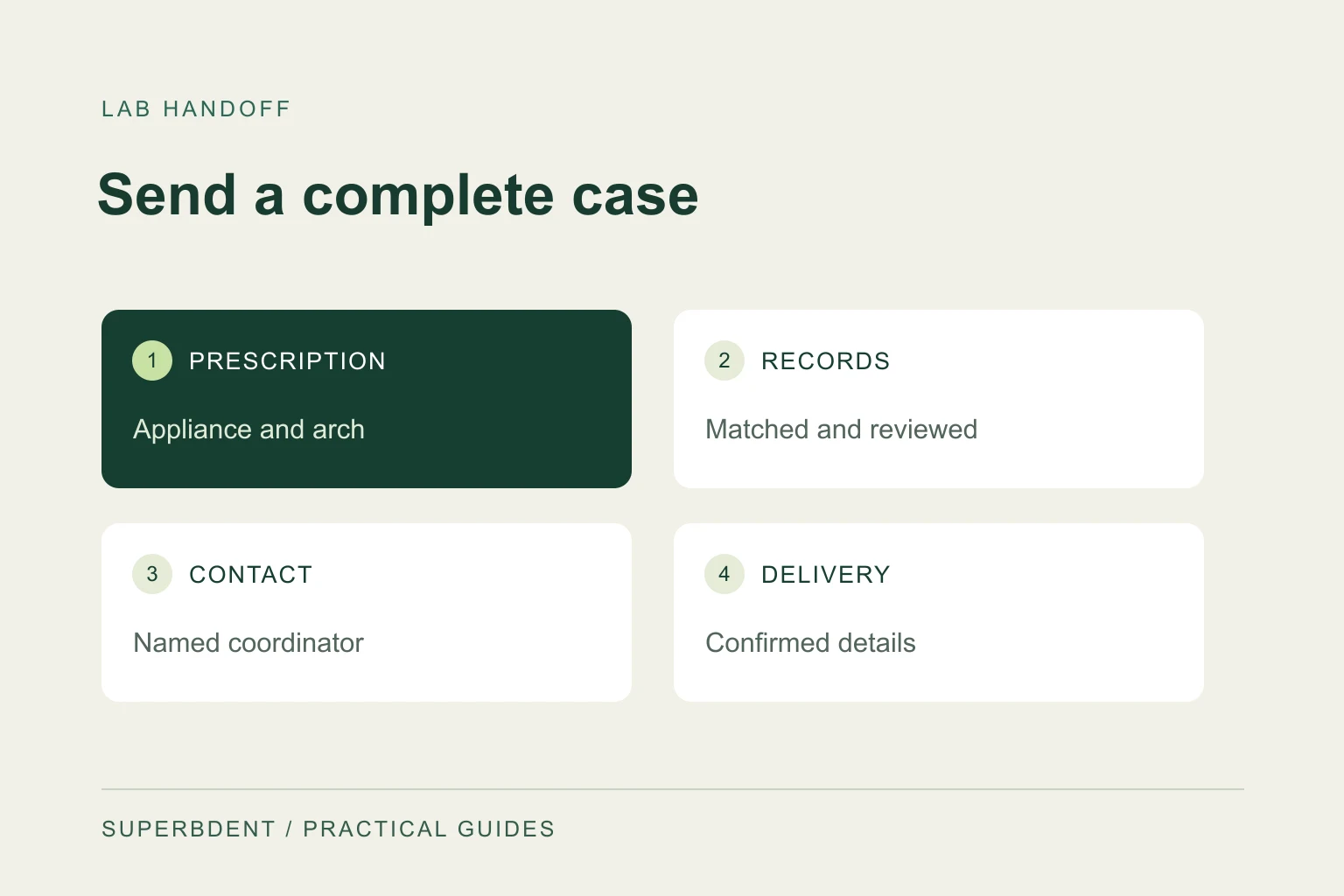
A clear retainer lab prescription should identify the case, the requested appliance and arch, the relevant records, any clinician-approved special instructions, and the delivery requirements. A scan supplies anatomy; it does not explain every ordering decision. Use the checklist below alongside the receiving lab’s current order form and case requirements.
Separate the prescription from the file check
A technically complete scan can accompany an incomplete order. Conversely, a detailed prescription cannot make an unsuitable scan usable. Give those checks separate owners: the prescribing clinician confirms the clinical request, and the submitting team checks that the correct files and instructions travel together.
For missing surfaces, artifacts, and other capture questions, use the existing scan quality checklist. This guide focuses on what the order needs to communicate.
Include these six parts of the handoff
| Part | Information to confirm |
|---|---|
| Case identity | The practice’s approved case identifier, prescribing clinician, and order reference. |
| Appliance | Retainer type, upper/lower/both, quantity, and supported material or thickness options. |
| Records | Scan date, arch labels, file names, and any additional records requested for this appliance. |
| Clinical instructions | Relevant restorative changes, bonded-retainer considerations, or other instructions approved by the clinician. |
| Contact | A named person and approved channel for prescription or file questions. |
| Delivery | Confirmed destination, requested need-by date, and who will arrange the fit appointment. |
Make options unambiguous
Write the requested option rather than asking for the “usual” appliance when the laboratory cannot see what usual means for that patient. SuperbDent’s thickness guide lists 0.76 mm and 1 mm options. The prescribing clinician should specify the supported option intended for this case; the number is not a substitute for the rest of the prescription.
When asking about a special feature, obtain confirmation that the laboratory offers it before treating it as part of the order. An explanatory note is useful, but it is not acceptance of an unsupported design or a delivery promise.
A completed example
The useful feature of this example is completeness, not its particular appliance choice. A real order also needs the identifiers and additional records required by the lab’s secure workflow. Do not reuse fictional dates or infer a patient prescription from the example.
For a reorder, identify the exact record
Use the original case reference and the record capture date rather than “please make another one.” Confirm whether the clinician has approved use of that record for the present case. If dental work, tooth position, or fit has changed, resolve the record question before manufacturing. See replacement retainers from existing scans.
Close the loop after submission
- Save the submitted order reference with the corresponding files.
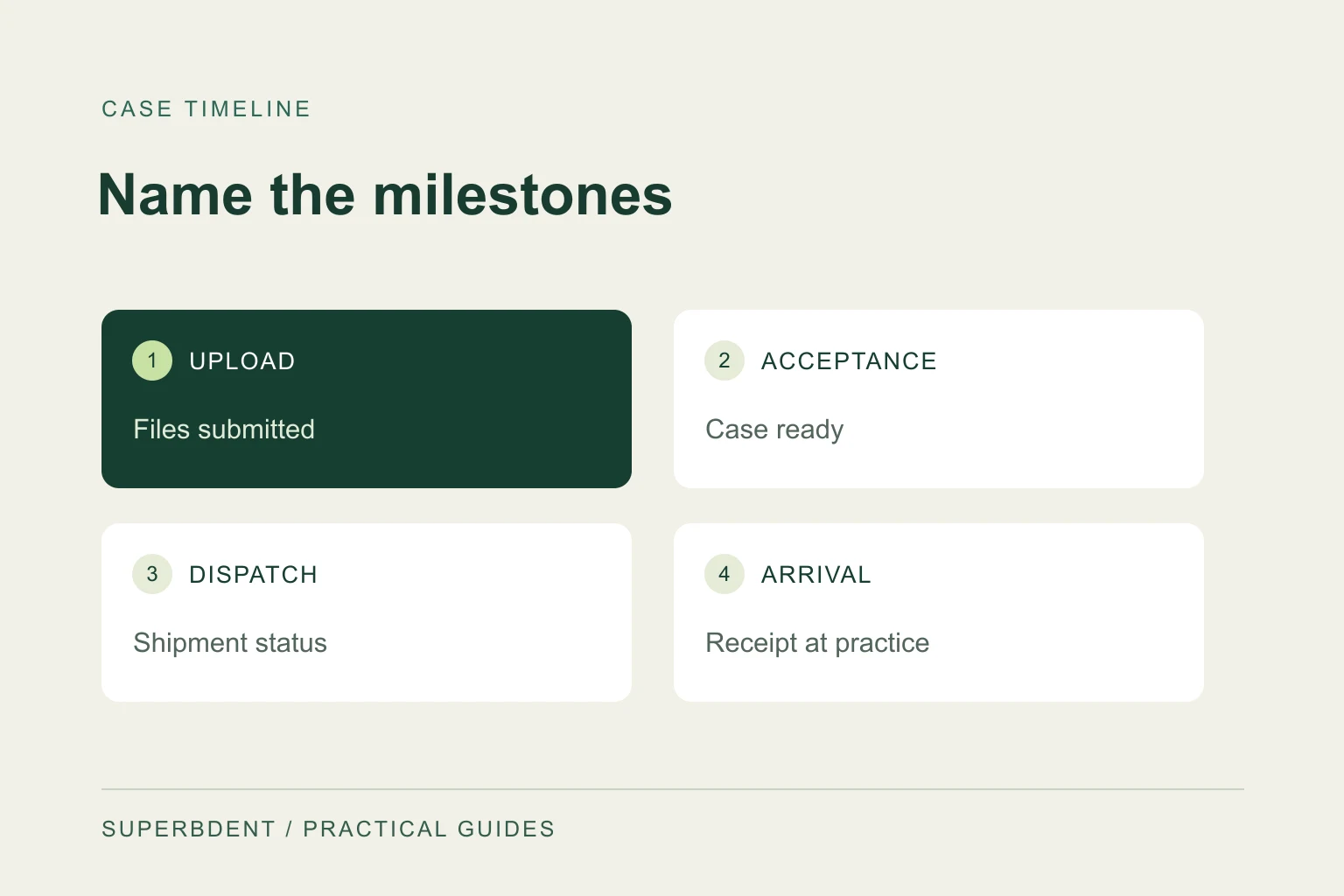
- Check for an acknowledgement and distinguish upload receipt from case acceptance.
- Route clarification questions to the person who can resolve them.
- Confirm delivery timing before making a patient promise.
- Document the agreed prescription if anything changes after submission.
Open the printable lab handoff checklist for team training. Keep patient records in the practice’s approved system. For the next steps after submission, read turnaround versus delivery time and the scan-to-delivery workflow.
When the finished appliance reaches the practice, use the retainer delivery appointment checklist to organize clinical review, patient instruction, and follow-up.
Sources & further reading
- SuperbDent: current retainer service information
- SuperbDent: thickness options and material specifications
- SuperbDent: supported scanner workflows
Prepared by SuperbDent Editorial. General education; your treating clinician determines your appliance and care plan.